
In honor of a recent three-way debate between Stephen Meyer of the Discovery Institute and two evolutionists (one of them a Christian), I am sharing the following link to an earlier post I have re-edited and added pics to:


In honor of a recent three-way debate between Stephen Meyer of the Discovery Institute and two evolutionists (one of them a Christian), I am sharing the following link to an earlier post I have re-edited and added pics to:

The debate can be viewed here.
There were stronger responses to I.D. that were not mentioned. I am including them below along with highlighted links to their sources.

Do Christian apologists provide definitive answers to questions about the cosmos and humanityʼs place in it? The questions are obvious and based on known scientific data.
Leaving aside for a second the question of God, Jesus, heaven/hell, whom the vast majority do not claim to have seen or heard, letʼs look at the cosmos we can see. It may not only be weird but “weirder than we can imagine” (to quote J. B. S. Haldane). And it appears like we do not come into the cosmos so much as come out of it. In fact complexity appears to be how the cosmos flows, click here.
That being said, it appears like the cosmos might also be viewed as an immense experiment with all this matter and energy in constant flux, shaken endlessly—with incessant birth and death going on in teensy portions of the cosmos like on the quaking surface of our particular rock hurtling through space. Incessant life and death, evolution and extinction, even major extinction events, with the odds of another major asteroid strike or super volcano eruption increasing over time, along with the inevitable aging and inflation of our sunʼs diameter whose solar wind will destabilize our moonʼs orbit causing it to approach the earth too close and explode, raining death from above, an inevitable extinction event.
What I am saying is that the cosmos gives with one hand and takes with the other. At best it is in equilibrium with life and death, evolution and extinction. And it appears that if one wanted to reject the idea of a cosmos weirder than we can imagine but instead wished to posit some transcendent God or Demi urge for its origin, then it appears that about the best one could come up with on the basis of what we know is a Tinkerer of some sort. Judging by all the extinction events, both massive and continual and inevitable in the future, one might even wonder how many cosmoses of different types and sizes this Tinkerer might have tried out before setting up this experiment with this much matter and energy roiling about for billions of years.
As for the human species, it just arrived on the scene in the last cosmic second, and could conceivably be snuffed out the next, and the stars could go on burning for eons more. In fact I read two articles recently that said the cosmos has yet to reach its maximum number of either stars or planets!
Or, conversely, if humanity does survive longer than a cosmic blip and our species gets off the cradle planet and starts spreading throughout the cosmos what will humans look like a billion years in the future? Will those humans look back at us a bit like we look back at Australopithecus? How might genetic and cyber technologies alter our species, or the environmental pressures of having to survive on different planets? Will we use new technologies to uplift other species to human-like levels of sentience, or even find ways to join our sentience with theirs? What will AI be like in future? Maybe humanity is a stepping stone to some future silicon based life forms, or advanced sentient non human species? And so we might be here merely to pass along the torch.
Of course if something like the Carrington Event (massive solar storm from 1859) occurs and a solar flare explodes the worldʼs transformers (luckily the only danger was to telegraph lines back then), our present electronic-based civilization might crumble, since we couldnʼt possibly swap out all the exploded bits and get all the electronics back online even for water pumping or refrigeration in over a year. Same thing if the super volcano in Yellowstone erupts, or antibiotic-resistant microbes continue to evolve.
Does any Christian apologist really imagine he has definitive answers to all such questions, very real questions too, since new stars and planets are indeed continuing to form, and by all astronomical data they have enough fuel to continue to burn for billions of years should humanity take a tumble back toward barbarism or even extinction. Heck, humanity might even evolve into something less cerebral and more ape like. That appears to be yet another possibility.
Also, nature is basically one big buffet. Sometimes they eat you to death, or weaken you to death, sometimes they live off your juices just a little and are relatively benign, and sometimes they produce juices you can eat too (i.e., symbiosis — like the way we breathe the farts of algae and trees). But basically nature is constantly grinding up old organisms and spitting out new ones. How can one be sure what kind of weird ass Designer or Tinkerer came up with such a scheme?

There is plenty of evidence from geology and cosmology that organic chemicals form naturally in space, and on some planets and moons and probably inside the watery heart of comets, as well as having formed on the ancient earth. There is also evidence that the earliest fossils are from single-celled organisms. But we donʼt have fossils that allow us a peek at the internal structures of the earliest replicators, to study and compare their chemical structures and trajectories over the three to four billion years when only single celled organisms existed on earth, i.e. not like the way we can study and compare the fossilized remains of vertebrates (animals with backbones) throughout geologic time. So investigating the question of abiogenesis leaves us with a far wider range of possible variables to consider and experimentally study and compare, and more hypotheses.
Let me add that the cosmos contains at least two trillion galaxies per 2017 data. Furthermore, if the inflation model is true then there are more galaxies out there that we canʼt see/detect, lying further out in the darkness than the ones we can see/detect. Also, the universe features energies and atoms mixing and remixing in far more ‘experiments’ than any origin of life lab. So who knows what mixes might not lead to what?
The cosmos itself is a great mystery since we have nothing to compare it to, and since it seems to naturally lead to more complexity and differentiation as it cools down from the Big Bang. As the cosmos cooled, hydrogen and helium atoms formed, and stars, and then as the stars aged they turned those two basic elements into all the rest, and this occurred naturally, as even creationists admit. So given elements naturally forming from simpler more basic elements, and then with further cooling those elements attaching to one another in simple organic molecular forms, why would anyone be averse to trying to discover how some of those organic molecules might have formed self-replicating chains of molecules?
We even know from experiments that a small chain of RNA can replicate itself given some organic building blocks and a little zinc as a catalyst, no proteins needed, happens naturally.
Let me add that the odds of one PARTICULAR self-replicating molecule forming (like creationists and I.Dʼists calculate, such as a particular arrangement of RNA or DNA or a particular protein like hemoglobin) has much less to do with the odds of some self-replicating molecules forming somewhere via some natural interactions in a cosmos as huge as this one—the latter appears to defy calculation.
Also, the question of whether we are alone in the cosmos, or whether life of a simple sort exists elsewhere, or whether intelligent life exists elsewhere, are all good questions to which we donʼt know the answer. But then, our species has barely just arrived on the cosmic scene, and we remain on the cradle planet, we havenʼt investigated the rest of our own solar system let alone the galaxy and the cosmos.
Also, our telescopes are viewing galaxies and planets from the cosmic past, i.e., we are looking at the light from galaxies that began its journey to our planet millions to billions of years ago. So we canʼt see what is happening NOW on the vast majority of galaxies and planets out there. We canʼt even see planets outside of those circling stars nearest our own star in this one tiny portion of this one galaxy.
Also, astronomers note that the cosmos has not yet reached its maximum of stars and planets! Stars and planets are still forming! And there will be more of them in the future than at present. So we canʼt say what will be going on or not going on then.
Stellar nurseries in some portions of the cosmos are still pumping out stars. Stars will continue being born (and then reborn from the remnants of exploded stars) for tens of billions of years to come. Will the human species still be around tens of billions of years to come? If it survives then will it survive in the same form as it is now? It seems a real possibility that the human species may become extinct with so much energy and matter continually moving around. I can easily imagine a cosmos without humans—with stars burning silently for tens of billions of years as even creationists admit is the lifetime of stars since even creationist astronomers admit the evidence of fusion taking place inside stars is clear, and such a process would take a couple billion years to complete for the majority of stars.
And the lifetime of black holes is a hundred billion years or more since they decay via emitting tiny amounts of Hawking radiation.
Also, a “huge” amount of “non-biotic organic materials” covering the whole earth is not necessary according to some hypotheses, only the gradual accumulation of some biotic materials in some regions of the earth. One such hypothesis is based on the fact that tiny holes form in rocks deep undersea near thermal vents. Beyond the tiny holes are hollowed out regions within the rock where organic materials can accumulate in two-dimensional fashion clinging to the inside of the hollowed out rock.
Matthew Pocock adds, “Personally Iʼm liking the thermal vent idea. Some of the core chemistry of the cell is suspiciously similar to that within the matrix of the rock in these vents.”
And see this fascinating video

Roger Sperry (1913–1994) was a neuropsychologist, neurobiologist and Nobel laureate who, together with two others , won the 1981 Nobel Prize in Physiology and Medicine for his work with split-brain research. A Review of General Psychology survey, published in 2002, ranked Sperry as the 44th most cited psychologist of the 20th century.
Sperryʼs writings on emergence in nature, as well as what he had to say on free will versus determinism are fascinating to read:
“Recall that a molecule in many respects is the master of its inner atoms and electrons. The latter are hauled and forced about in chemical interactions by the over-all configurational properties of the whole molecule. At the same time, if our given molecule is itself part of a single-celled organism such as a paramecium, it in turn is obliged, with all its parts and its partners, to follow along a trail of events in time and space determined largely by the extrinsic over-all dynamics of that paramecium. When it comes to brains, remember that the simpler electric,atomic, molecular, and cellular forces and laws, though still present and operating, have been superseded by the configurational forces of higher-level mechanisms. At the top, in the human brain, these include the powers of perception, cognition, reason, judgment, and the like, the operational, causal effects and forces of which are equally or more potent in brain dynamics than are the outclassed inner chemical forces…”
“We deal instead with a sequence of conscious or subconscious processes that have their own higher laws and dynamics…that move their neuronal details in much the way different program images on a TV receiver determine the pattern of electron flow on the screen…”
“And the molecules of higher living things are… flown… galloped… swung… propelled… mostly by specific holistic, and also mental properties—aims, wants, needs—possessed by the organisms in question. Once evolved, the higher laws and forces exert a downward control over the lower.”
“Evolution keeps complicating the universe by adding new phenomena that have new properties and new forces that are regulated by new scientific principles and new scientific laws—all for future scientists in their respective disciplines to discover and formulate. Note also that the old simple laws and primeval forces of the hydrogen age never get lost or canceled in the process of compounding the compounds. They do, however, get superseded, overwhelmed, and outclassed by the higher-level forces as these successively appear at the atomic, the molecular and the cellular and higher levels.”
“This does not mean these (higher forces) are supernatural. Those who conceived of vital forces in supernatural terms were just as wrong as those who denied the existence of such forces. In any living or nonliving thing, the spacing and timing of the material elements of which it is composed make all the difference in determining what a thing is.”
“As an example, take a population of copper molecules. You can shape them into a sphere, a pyramid, a long wire, a statue, whatever. All these very different things still reduce to the same material elements, the same identical population of copper molecules. Science has specific laws for the molecules by no such laws for all the differential spacing and timing factors, the nonmaterial pattern or form factors that are crucial in determining what things are and what laws they obey. These nonmaterial space-time components tend to be thrown out and lost in the reduction process as science aims toward ever more elementary levels of explanation.”
One might add that taking simple elements found in rocks and arranging them into just the right configurations can lead to the production of not just another rock, but a computer (perhaps even a ‘quantum computer’ one day).
“In determinism, humans are not free from the higher forces in his own decision-making machinery. In particular, our model does not free a person from the combined effects of his own thought, his own impulses, his own reasoning, feeling, beliefs, ideals, and hopes, nor does it free him from his inherited makeup or his lifetime memories. All these and more, including unconscious desires, exert their due causal influence upon any mental decision, and the combined resultant determines an inevitable but nevertheless self-determined, highly special, and highly personal outcome. Thus the question: Do we really want free will, in the indeterministic sense, if it means gaining freedom from our own minds? There may be worse fates, perhaps, than causal determinism. Maybe after all it is better to be an integral part of the causal flow of cosmic forces than to be out of contact with these—free-floating, as it were, with behavioral possibilities that have no antecedent cause, and hence no reason nor any reliability relative to future plans, predictions, or promises. If one were assigned the task of trying to design and build the perfect free-will model, consider the possibility that the aim might be not so much to free the machinery from causal contact as the opposite, that is, to try to incorporate into the model the potential value of universal causal contact. In other words, contact with all related information in proper proportion—past, present, and future.”
“At any rate it is clear that the human brain has come a long way in evolution in exactly this direction [from determinism to free will], when you consider the amount and the kind of causal factors that this multidimensional, intracranial vortex draws into itself, scans, and brings to bear in turning out one of its preordained decisions; potentially included, through memory, are the events and wisdom of most of a human lifetime. Potentially included, also, with a visit to the library, is the accumulated knowledge of all recorded history. And we can add, thanks to reason and logic, much of the forecast and predictive value extractable from all these data as well as creative insights newly conceived. Maybe the total falls a bit short of universal causal contact; maybe it is not even up to the kind of thing evolution has going for it over on galaxy nine; and maybe, in spite of all, any decision that comes out is still predetermined. Nevertheless it certainly represents a very long jump in the direction of freedom from the primeval slime mold, the Pleistocene sand dollar, or even the latest model orangutan.”
Hence, Sperryʼs naturalism does not appear to pose any ‘cardinal difficulties’ for itself, contra C. S. Lewisʼ ‘argument from reason.’
Marvin Minsky, one of the pioneers of computer science, notes in a similar vein to Sperry:
“Even if we understood how each of our billions of brain cells work separately, this would not tell us how the brain works as an agency. The ‘laws of thought’ depend not only upon the properties of those brain cells, but also on how they are connected. And these connections are established not by the basic, ‘general’ laws of physics, but by the particular arrangements of the millions of bits of information in our inherited genes. To be sure, ‘general’ laws apply to everything. But, for that very reason, they can rarely explain anything in particular…”
“It is not a matter of _different_ laws, but of _additional_ kinds of theories and principles that operate at higher levels of organization… Each higher level of description must _add_ to our knowledge about lower levels, rather than replace it.”
And contrary to C. S. Lewisʼ claim that “[Naturalism] leaves no room for the acts of knowing or insight on which the whole value of our thinking depends,” cognitive scientists have clearly demonstrated the validity of positing a level of mental representation. They study “perceptual apparatus, mechanisms of learning, problem solving, classification, memory, and rationality… The conjecture about the various vehicles of knowledge: what is a form, an image, a concept, a word; and how do these ‘modes of representation’ relate to one another… They reflect on language, noting the power and traps entailed in the use of words… Proceeding well beyond armchair speculation, cognitive scientists are fully wedded to the use of empirical methods for testing their theories and hypotheses… Their guiding questions are not just a rehash of the Greek philosophical agenda: new disciplines have arisen; and new questions, like the potential of man-made devices to think, stimulate research.”
“Given the most optimistic scenario for the future of cognitive science, we still cannot reasonably expect an explanation of mind which lays to rest all extant scientific and epistemological problems. Still, I believe that distinct progress has been made on the age-old issues that exercised… Plato, Descartes, Kant, and Darwin.” After all, “If the brain were so simple we could understand it, we would be so simple that we couldnʼt.” [Lyall Watson]

The fine tuning argument… depends upon making judgments about the likelihood, or probability of something, like, “How likely is it that the mass of the electron would be related to the mass of the proton in a certain way?” Now, one can first be a little puzzled by what you mean by ‘how likely’ or ‘probable’ something like that is. You can ask how likely it is that Iʼll roll double sixes when I throw dice, but we understand the way you get a handle on the use of probabilities in that instance. Itʼs not as clear how you even make judgments like that about the likelihood of the various constants of nature (an so on) that are usually referred to in the fine tuning argument.
Now let me say one more thing about fine tuning. I talk to physicists a lot, and none of the physicists I talk to want to rely on the fine tuning argument to argue for a cosmology that has lots of bubble universes, or lots of worlds. What they want to argue is that this arises naturally from an analysis of the fundamental physics, that the fundamental physics, quite apart from any cosmological considerations, will give you a mechanism by which these worlds will be produced, and a mechanism by which different worlds will have different constants, or different laws, and so on. If thatʼs true, then if there are enough of these worlds, it will be likely that some of them have the right combination of constants to permit life. But their arguments tend not to be “we have to believe in these many worlds to solve the fine tuning problem,” they tend to be “these many worlds are generated by physics we have other reasons for believing in.”
If we give up on that, and it turns out there arenʼt these many worlds, that physics is unable to generate them, then itʼs not that the only option is that there was some intelligent designer. It would be a terrible mistake to think that those are the only two ways things could go. You would have to again think hard about what you mean by probability, and about what sorts of explanations there might be. Part of the problem is that right now there are just way too many freely adjustable parameters in physics. Everybody agrees about that. There seem to be many things we call constants of nature that you could imagine setting at different values, and most physicists think there shouldnʼt be that many, that many of them are related to one another. Physicists think that at the end of the day there should be one complete equation to describe all physics, because any two physical systems interact and physics has to tell them what to do. And physicists generally like to have only a few constants, or parameters of nature. This is what Einstein meant when he famously said he wanted to understand what kind of choices God had —using his metaphor— how free his choices were in creating the universe, which is just asking how many freely adjustable parameters there are. Physicists tend to prefer theories that reduce that number, and as you reduce it, the problem of fine tuning tends to go away. But, again, this is just stuff we donʼt understand well enough yet.
—Tim Mauldin, Prof. of Philosophy, NYU.
Above quotations is from an interview in What Happened Before the Big Bang? The New Philosophy of Cosmology: On the big questions science cannot (yet?) answer, a new crop of philosophers are trying to provide answers by Ross Andersen, Atlantic Monthly, Jan 19, 2012
See also, Fine-Tuning Argument Raises More Questions Than It Answers

In 2014, 116 people died when a multistory guesthouse of the Synagogue Church of All Nations collapsed in Lagos, Nigeriaʼs largest city. Most victims were visiting South African followers of the megachurchʼs influential founder T.B. Joshua. Then in 2016 a church in the Nigerian city of Uyo collapsed during services killing at least 23 people. “A building contractor was lifting the steel with cranes to get at dead and injured,” he said.
Over a hundred children were taken captive in a schoolhouse hostage situation in Russia (2004), which included several children of Baptist missionaries, who died in the final act of that hostage tragedy. Prior to the childrenʼs deaths an email was sent out worldwide by the Baptist World Alliance begging for prayers for the children.
“Peyton Townsend was killed just minutes before a vacation Bible school study. The kids were just burning off energy before the start of class. The churchʼs backyard doubles as a small cemetery, where about two dozen people are buried. The pastor says Peyton was standing on a headstone when a massive cross fell on top of her and crushed her. The pastor estimates the cross weighed more than 1,200 pounds.”
4-Year-Old Girl Killed by Part of Headstone, Deep Gap, N.C., Saturday, June 9, 2012
Sunday morning, August 30, 2015, a woman in the car with her two children tried to cross a busy street and drove in front of a moving truck she had not seen which caused her to swerve into the front window of a branch of Arthur State Bank in Greenville, SC after which the bank caught fire. One child ran inside the building that had begun to burn and the mother ran after that child, then the other child ran in after the mother [according to news reports]. The County Coroner said the two boys, ages 3 and 5, died from smoke inhalation. The mother and a passenger made it out alive. A relative said the family was on the way to church.
2 Dead After SUV Crashes into Bank in Fiery Wreck, Updated Sep 01, 2015
In May, 2008, Maria Sue, the 5-year-old adopted daughter of Grammy-winning Christian music star Steven Curtis Chapman was struck and killed in the familyʼs driveway by a vehicle driven by Chapmanʼs teenaged son. (Previously Chapman had released a book about Maria Sue titled “Cinderella: The Love of Daddy and his Princess”)
Rich Mullins, whom some called the “John Lennon” of Christian Rock, was best known for his worship songs “Awesome God” and “Sometimes by Step,” both of which have been embraced as modern classics by many Christians. On September 19, 1997, Mullins and his friend Mitch McVicker were traveling to a benefit concert when his Jeep rolled over. They were not wearing seat belts and were both ejected from the vehicle. When a passing semi-trailer truck swerved to miss the overturned Jeep, Mullins, who was too injured to move out of the path of the oncoming truck, was hit and died instantly. McVicker was seriously injured but survived.
Another notable Christian rocker killed in a traveling accident is Keith Green. On July 28, 1982, at the age of 28, Keith and two of their young children, Josiah and Bethany, were in a small plane crash. Keith was one of Americaʼs best-selling Christian musicians and songwriters, recording 5 albums in his lifetime with over 1.5 million in distribution.
Five Southern Baptist aid workers were in Mosul, Iraq, to provide clean water to the city. While driving on the east side of the city the Baptistsʼ car came under attack. One couple was new to the mission field. The husband had just graduated from Southwestern Baptist Theological Seminary in 2002, and his wife was still officially a student there. Another couple were longtime missionary veterans, having worked most of the last 25 years in Honduras. They were scheduled to leave Iraq later this month to close their Honduran headquarters and permanently relocate to Iraq. Also killed in the attack was a single woman who converted to Christianity in 1997 and had recently quit her job . . . to work full-time in missions . . . In February, a taxi carrying several Independent Baptist church planters (not Southern Baptists) was attacked as it returned from Babylon to Baghdad. John Kelley, pastor of Curtis Corner Baptist Church in Wakefield, Rhode Island, was killed in the shooting. Three others were injured. [The article further explained that it was not the fact that they were missionaries that got them killed, but they had lost their way in the streets and simply driven into the wrong side of town and were gunned down simply for appearing to be Americans.] — reported in
Christianity Today
In Pucuro, Panama, three missionary men were taken away from their families in 1993. After eight long years of praying for the safe return of the men, their families recently learned that they had been killed by their captors five years previously.
The Christian (who later became a missionary) and about whom the Oscar winning movie, “Chariots of Fire” was made, died of a brain tumor while a missionary in China.
A few years prior to 2006 on the television news program, 20/20, the story was told of a South American missionaryʼs small airplane that was gunned down with the missionary inside by a military jet aircraft who mistook the tiny missionaryʼs plane as a drug-runnerʼs plane.
In the 1800s Francis Galton examined the insurance rates for ships. He reasoned that ships carrying missionaries and pilgrims should have lower rates since frequent praying by the occupants should decrease the number of accidents. He found that the rates were the same; ships carrying missionaries and pilgrims sank just as often as other ships.
Kyle Lake, 33, pastor of University Baptist Church in Waco, Texas, died Sunday after being electrocuted while standing in the church baptismal during a morning service. Lake received a shock while adjusting a microphone before baptizing a woman… About 800 people were attending the service, which was more than usual due to Baylor Universityʼs homecoming weekend, reports the Associated Press. Lake was a rising leader in new church movements such as Emergent. Lake is survived by his wife and three children.
—CT Staff, “Pastor Electrocuted in Baptismal: Pastor of University Baptist Church in Waco Dies After Adjusting Microphone.” Christianity Today, posted 10/31/2005
Kris Guglielmucci, 39, was a man of God who loved his music and mentoring members of his young congregation. He was a respected Victory Church youth pastor and father of four. He was struck and killed by a bolt of lightning at Cornerstone College, Mt Barker. He had been running a two-day Summerfest Youth Camp for about 100 high school students when he was fatally struck down. My Christian Daily 2016-01-23
I looked up the survival rate for his disease. “According to the American Cancer Society, the overall 5-year relative survival rate for patients with non-Hodgkinʼs lymphoma is 63% and the 10-year relative survival rate is 51%.” But even with thousands praying for him, he lasted a month.
- John Tyrrell
Asa Alonzo Allen (1911-1970) was a prominent, flamboyant and controversial Pentecostal ‘healing evangelist’ of the 1940s-1960s. On June 14, 1970, listeners in the United States, the United Kingdom, and the Philippines were hearing a recorded message from A. A. Allen on his radio program saying: “This is Brother Allen in person. Numbers of friends of mine have been inquiring about reports they have heard concerning me that are not true. People as well as some preachers from pulpits are announcing that I am dead. Do I sound like a dead man? My friends, I am not even sick! Only a moment ago I made a reservation to fly into our current campaign. Iʼll see you there and make the devil a liar.” At that moment, at the Jack Tar Hotel in San Francisco, police were removing A. A. Allenʼs body from a room strewn with pills and empty liquor bottles. The man who had once said that ‘the beer bottle and gin bucket’ should have been on his family coat of arms was dead at 59 from what was said to be a heart attack but was in reality liver failure brought about by acute alcoholism.
(p.88, The Faith Healers by The Amazing Randi)
Some 400 church towers were damaged by lightning and 120 bell ringers killed in a 30 year period (after which lightning rods were installed). In one church a bolt of lightning struck the tower and melted the bell, electrocuted the priest, deprived a parishioner of her sensibilities and destroyed a painting of the Savior. The Republic of Venice had stored in the vaults of the church of San Nazaro at Brescia, over two hundred thousand pounds of gunpowder. In 1767 it was struck by lightning, the powder in the vaults was exploded, one sixth of the entire city destroyed, and over three thousand lives were lost. In Austria the church of Rosenberg was struck so frequently and with such loss of life that the peasants feared to attend services. Three times the spire had to be rebuilt. Such was also the history of St. Brideʼs and St. Paulʼs in London, the cathedrals of Sienna and Strasburg and of other churches throughout Europe and America. The tower of St. Markʼs in Venice (prior to installing a lightning rod) had been struck again and again by lightning, sometimes with such disastrous effects that it had been almost destroyed.
Five children between 9 and 16 years old died and several others suffered burns when lightning struck a white-painted metal cross set on a hill in the town of Santa Maria del Rio, Mexico, early on Sunday. “The lightning went straight into them and killed them instantly,” local Red Cross chief Eduardo Suarez said. Several families had been participating in a midnight ceremony as part of a local religious festival that centers around the cross.
“Lightning kills 5 Mexican children in prayer,”
Youths between 9 and 16 die praying at metal cross in central Mexico Reuters, April 24, 2006
About 40 people had gathered in the Church of Central African Presbytery in Mzimba, South Africa, when lightning struck on Saturday afternoon, said Fletcher Ndhlovu, an elder of the church. “Strong lightning struck the church building, sending everybody into shock,” Ndhlovu told AFP. The victims were taken to the district hospital “where 11 people were pronounced dead on arrival,” said Mzimba hospital physician Barton Jere. “The persons arrived here when they were already dead but we admitted eight people and 10 others were treated as out patients,” Jere told AFP. “They were all in a state of shock.”
“Lightning Kills 11 In Church,” Dec. 18, 2005
A man died after lightning struck a metal cross he was holding during a funeral in a village near Ljubljana, the Slovenian news agency STA reported Thursday. It said the 62-year-old man died in hospital Wednesday evening, several hours after the incident in the village of Brezovica. Another person at the funeral was slightly injured.
— Reuters, “Man Dies After Lightning Strikes Metal Cross,” June 23, 2005
A 15-year old Boy Scout (the Boy Scouts of America do not tolerate people who are openly atheist, agnostic, or unwilling to say in the Scout Oath they they will serve God) was killed and three others were injured last night when a bolt of lightning hit the log shelter they were sleeping in. Last Thursday, a 13-year-old Scout was killed by lightning in California. Four Scout leaders were electrocuted in Virginia earlier that week. — “
Scout killed by lightning strike, Another Tragedy Hits Organization,” August 3, 2005
Worried about the safety of her family during a stormy Memorial Day trip to the beach, Clara Jean Brown, 65, stood in her kitchen and prayed for their safe return as a strong thunderstorm rumbled through Baldwin County, Alabama. She said “Amen” and… lightning suddenly exploded in her house, blowing through the linoleum and leaving a blackened area on the concrete. Brown wound up on the floor, dazed and disoriented by the blast but otherwise uninjured. Fire officials think the lightning likely struck across the street from the coupleʼs home and traveled into the house through a water line. The lightning continued into the coupleʼs backyard and ripped open a small trench.“
Woman Hit By Lightning While Praying,” (WSBTV.com), Associated Press, May 30, 2006
Century-old church destroyed by fire: Lightning bolt seen striking buildinga… Charter Oak had completed a new addition within the last year and had plans for further expansion. It is part of the Independent Fundamentalist Churches of America, an association of independent churches.
“Lightning Destroys Century-Old Church,” November 17, 2005
Hailu Kidane Marian was a young man working with others, selling their religious materials door-to-door (to raise money for their religious education) when he was struck by lightning. “I heard a boom, and I looked and the guy jumped back, and he just laid there, stiff,” said witness Maria Martinez. Paramedics say Marian was not breathing and his heart was not beating when they arrived, but they were able to revive him and rushed him to Jackson Memorial hospital, where lay comatose.
Members of his religious group waited outside the hospital throughout the night for word of his condition, praying for a miracle, and sending emails to others around the world to pray for his recovery. But Hailu died.
Instead of taking this as a mixed message from God, his fellow believers saw it as a sign that once again their religion, Seventh-Day Adventism, was the right one:
“I donʼt belive this story is mere coincidence, or God scolding him as some have speculated. He may in fact be sending a wake up call to those of us who remain.”
here“In considering the facts, hereʼs a guy visiting a country other than his own spreading the Gospel. In the very middle of him taking the Word to the streets, heʼs taken out with one deadly strike. As a missionary, what better testimony? What better strategy to leave this planet than with your last breath honoring and glorifying the One itʼs all about? Even in his death, his dedication to Christ in his life story lives on and has touched the hearts of many. Itʼs unfortunate… this sudden tragedy. But when I consider the widespread coverage of what was supposed to be just an ordinary missionaryʼs venture into America… I know God must have been the mastermind behind this exit strategy. He will be remembered for his passion.”
—Janice A. Becca, “Preferred Exit Strategy” on her blog, Adventist Youth
ENDNOTE This was the second incident in as many months of someone being struck down by lightning from a clear sky in South Florida. Last month David Canales, a gardener who worked in the Pinecrest area, was killed when lightning apparently struck him from a rainless sky. CBS Miami Meteorologist Jeff Berardelli said ‘dry lightning,’ which can strike even when the sky is clear, can be very dangerous because victims are not expecting it and donʼt prepare as they might with a storm threatening. Measurement of lightning strikes in the area Sunday showed only a few bolts compared to the last few days, making Marian especially unlucky to be struck by one of them.
Religious Book Seller Struck By Lightning, Jul 9, 2007
Rev. Oral Roberts claimed he had a dream in which God told him that his daughter-in-law, Patti, would be killed in a plane crash if she ever left his ministry. Patti did leave the ministry, distressed at the way her husband, Richard Roberts, was being turned into a clone of Oral, and the way they rationalized their expensive lifestyles. But the year Patti left his ministry, she did not die in a plane crash, while Rebecca, Oralʼs own daughter, did. See Patti Robertsʼ book,
Ashes to Gold
On November 2, 1982, Rev. Lester Roloff (who had appeared a year earlier on “60 Minutes” stating his defiance of the what he called “Texasʼs Godless juvenile home system”), along with a female staff member and a ladies singing trio, were killed when their plane crashed during a storm near Normangee, Texas, on their way to a preaching and singing service they were scheduled to conduct.

We donʼt know if any other set of constants and laws are even possible. It could be that the cosmos is as the cosmos is and does what the cosmos does, and asking why makes as much or as little sense for naturalists as the question of why God is as God is—and does what God does—makes for theists.
We also donʼt know that the constants can vary independently from one another. They may all be related to one another or to some more fundamental feature. Kind of like saying that maybe you cannot stretch just one characteristic of the cosmos because it is connected with all the other characteristics, so hypothetical cosmoses with different constants canʼt exist, or, stretching one part a little results in other constants nudging it back into equilibrium, because a cosmos is a single interconnected whole.
Physicists disagree over just how many absolutely fundamental constants there are. We used to think there were as many as 40 fundamental constants, including the boiling point of water. Now we know that this derives from quantum mechanics, and the number of fundamental constants is now down to six or less. So this universe may be the only way it can go. In 2000 Martin Rees wrote Just Six Numbers: The Deep Forces that Shape the Universe, the genesis of the universe elegantly explained in a simple theory based on just six numbers by one of the worldʼs most renowned astrophysicists. In 2007 a team of physicist in Brazil whittled down that number to just two (according to this article). Two constants should be enough to explain the cosmos. Their work shows how some constants are more fundamental than others— some are merely useful, whereas perhaps precisely two are indispensable. While others have argued that no constants are needed: that the universe can be described using ratios alone, so that there are no ‘natural’ units.
It may not be that our universe is as special as we think; there could be many others that are special or interesting in different ways. Life could arise through different means or different chemistries or different physical laws, if those even exist.
There may be standard physical mechanisms for producing multiple separate universes with different laws. If so, the existence of one like ours would no longer be unexpected. We might never be able to detect the other universes, but we may able to prove they should be there.
—Richard Smith, a brief excerpt from Scientist-Believers: Troublesome Routes Across the Compatibility Chasm with added edits by EB
The Fine-Tuning Question is “Something We Donʼt Understand Well Enough Yet”—Tim Mauldin, Philosopher
Astrobiology Has Not Made the Case for God, Lawrence Krauss, Jan. 24, 2015
Ways in Which a Fine-Tuned Cosmos Might Imply the Truth of Atheism by Cole Hellier, Professor of Astrophysics at Keele University in the UK
The late Victor Stegner had his final reply to the “fine-tuning” argument published in his 2014 work, God and the Multiverse
Astronomer and Christian, Luke Barnes, who specializes in defending the “fine-tuning” argument, provides hyperlinks to “decent critiques of the [fine-tuning] argument” in the last sentence of this blog piece in which he says, “Try Sean Carroll, Paul Davies, Alex Vilenkin, Leonard Susskind, Bradley Monton”
Physicist and Christian, Don Page, is not impressed with the fine-tuning argument, listen here and here.
Atheist Richard Carrier briefly sums up his arguments against Design (Fine Tuning and Biogenesis)
Questions concerning Fine-tuning and Intelligent Design
I.D.ists argue for fine-tuning for “intelligent life,” but what does fine-tuning mean exactly? Is “intelligent life” merely a euphemism for the human species, or does fine-tuning predict that species other than humans will also arise with higher than average levels of “intelligence” like apes, dolphins, elephants, crows, and grey parrots? And what do the vast majority of less highly intelligent forms of life have to do with the goal of fine-tuning? Does fine-tuning also predict malaria and thousands of organisms that parasitize or prey on humans? How specific is fine-tuning really?
Does fine-tuning predict common descent? Does it predict both common descent and natural mutations (deleterious, neutral, beneficial) and the small ratio of organisms that successfully pass along their genes each generation, and the multitude of species that simply go extinct along the way? What would falsify Fine-Tuning?
If the properties of carbon, water, DNA, and the conditions on the early earth count as evidence in favor of fine-tuning, then what does the so-called impossibility of the spontaneous origin of life (as alleged by I.Dʼists) count as? Does it count as evidence against fine-tuning?
Is fine-tuning both necessary and sufficient to explain life on earth? If fine-tuning is not sufficient, and additional designing or intervention must be done in many steps over billions of years, does that mean the cosmos was not sufficiently fine-tuned for life? A seeming majority of I.Dʼists claim that the major architectural features of life - molecular machinery, cells, genetic circuitry - had to have been added separately one-by-one at widely different times in a manner that violates the genetic continuity of life.
Does fine-tuning mean anything more than the trivial statement that certain properties of matter and energy are necessary for the origin and the existence of life?
—Gert Korthofʼs questions in his review of Beheʼs The Edge of Evolution, edited by EB
The fact that we have nothing to compare this cosmos with makes the fine-tuning argument problematic. Thereʼs our lack of knowledge concerning what preceded the cosmos. And our lack of knowledge concerning how it will end (Big Freeze, Big Crunch, Big Rip, Big Bang Sprouting More Big Bangs, Big Collision?), or how such an ending may relate to the existence or birthing of new cosmoses. Nor do we know whether or not other cosmoses already exist or what any of them are like, or why they might be like they are. In short we have nothing to compare our cosmos with. Kind of like waking up one day with no memory of the past and no sure ideas about the future, looking in a mirror and imagining that the face of the upright ape staring back at you has been fine-tuned to be exactly so. How would you know that for sure?
The fine-tuning argument does not say any species is extinction-proof. The cosmos gives via evolution and takes away via extinction. The most one can say is that at present life and death in this cosmos appear to be in equilibrium with one another, with individual living things existing on relatively teensy time scales (compared with the length of time stars and black holes can exist). Also, living things only seem to flourish in the smallest corners of the cosmos.
Nor do we know whatʼs in store for our own species in the future, how our species may change, split or diversify, or how our future human cousins will view us. We might seem to them like mere upright apes or at best Neanderthals in their eyes, if they have what we would call eyes. Or our civilization and species might devolve and our cranial capacity shrink (speaking of which some of our ancestorʼs craniums from the Ice Age reveal larger cranial capacities than our species has today), until our species in the future canʼt speak at all, or becomes extinct and the cosmos burns on without us for eons (it certainly has enough fuel to do so). There might be aliens out there with more advanced technology whose success at focusing on their own long term survival far exceeds ours. Or maybe we (or some alien species) will learn to compliment or enhance our brains via genetics or quantum computer implants, or do the same for cousin species, raising them to our level of consciousness, or perhaps linking our consciousness with theirs.
The odds of the earth staying completely “asteroid-strike-free” diminish year by year, and the sun-earth system can last for at least another billion years during which time any number of purely natural disasters grow increasingly more likely to occur, not just climate change. Even a single solar flare could throw civilization back to the dark ages. And after the next billion or two years the sun will most likely expand as older stars do and devour our planet in flames, or our galaxy will collide with the oncoming Andromeda galaxy. Planet earth may not have been struck by a major-extinction-causing asteroid in a while but the large crater in Arizona was formed by a fairly large asteroid that hit that region about 30,000 years ago, and I read an article that said the earliest humans to reach North America via the land bridge from Asia during the ice age may have been wiped out by meteors that landed in North America at that time because archaeologists discovered a gap between the earliest evidence of settlers in North America who died at the time of such impacts, and a second wave of humans who crossed the land bridge into North America. Also, humans only evolved recently but the cosmos has a far longer “sell by” date, billions of years to go, so itʼs not remarkable that an asteroid has not yet wiped us out, but also watch out for quakes beneath Yellowstone and the super volcanoes elsewhere on the planet the could erupt since thereʼs whole buried forests in the fossil record from past series of such eruptions.
Fine-tuned for what? The cosmos supports all manner of living things, suffering things, and dead or extinct things.
We live in a cosmos just as fine-tuned for living things as for the cancers that arise inside them.
We live in a cosmos just as fine-tuned for mega-viruses as they are for the smaller average-sized viruses that attack the mega-viruses. Hot virus on virus action.
If the cosmos is fine-tuned or designed, then what am I to make of human beings who only seem “designed” or “fine-tuned” enough to be miscarried (happens about 50% of the time to every human egg cell that is fertilized, as even pro-lifers admit).
Other humans only seem “designed” or “fine-tuned” to be the twin in the womb that vanishes (google “Vanishing Twin Syndrome”)—about 30% of all single children born used to have a twin in the womb that was either absorbed by the womb or the remaining twin.
Others only seem “designed” or “fine-tuned” to become chronically ill, crippled, deformed, due to malnutrition (through no fault of their own if they happen to live in a place with zinc-poor soil, or iodine poor soil), or their nutritional deficiencies lead to inadequate brain maturation.
Others only seem “design” or “fine-tuned” to be born with genes that rolled out of their parents gonads like a pair of snake-eyed dice, leaving the child to suffer any number of painful or hideous consequences. Including one defect that makes the childʼs skin blister with pain at the touch of objects and people (epidermolysis bullosa, a virtually untreatable disorder characterized by widespread and constant blistering of the skin, so that there is no part of the body on which an infant can lie without pain).
Others only seem “designed” or “fine-tuned” to be the food for microbes and parasites (not only human young, but the young of all species). In the mid 1700s, the French naturalist, Buffon, remarked that among children who survived birth, half of them died before reaching the age of eight.
For further examples from the natural world see this piece at the Talk Origins Archive.
When discussing probabilities it looks like any number of persons other than me could have arrived on the scene (judging by the numbers of sperm, eggs, different genetics, different upbringings, different circumstances possible). The same thought occurs concerning the particular species of which I happen to be a member. Was it necessary for the human species as we now know it, to have arrived on the scene? Same question applies to all other species of course, not just ours, but every species that arose before ours. How fine-tuned was the entire evolutionary tree of life? Or was chance and randomness a part of the picture from the beginning of life on earth right up to the circumstance of which sperm reached which egg to produce me?
The cosmos also appears just as fine-tuned for evolution as it is for extinction. Life is at best in equilibrium with death throughout the cosmos. And the cosmos is just as fine-tuned for the microbes that eat us as it is for the microbes and other organisms we eat.
“Coincidence” is not a very clear word since it could refer to either planned or unplanned things that coincide with one another. The cosmos at this particular point in time is filled with relatively pleasant coincidences for our species and also many natural horrors that include microbes and parasites that exist by devouring and/our crippling our species which a relatively pleasant cosmic coincidence for them and their species. And who knows how pleasant or not things will be for our species in the near future? Our species is a cosmic newcomer and might vanish soon after our arrival, or devolve, or hopefully find ways to survive. But even if our species becomes extinct the stars and black holes will be around for billions of years to come.
What if the human species vanishes soon? Will “fine-tuners” admit the cosmos was only fine-tuned enough to sustain intelligent life for a miniscule amount of cosmic time?
What can we tell about design from studying nature?
The multi-cellular organisms with the greatest known number of species are beetles and mites. We know of hundreds of thousands of species of each. The number of species of beetles as well as mites might even reach over 1 million according to some estimates as more beetles and mites continue being discovered all the time. (I had a dog once that was suffering from an infestation of mites. Not pretty.)
If the earth was designed with the forethought of an infinitely wise and infinitely resourceful Being, why all the volcanoes, tsunamis, cold snaps, heat waves, large tracts of barely walkable or useable land? Why such a large percentage of humans throughout history never able to obtain all the vitamins, minerals and proteins they require to grow up maximally healthy? To give but one example, there are tracts of land on earth where zinc is naturally deficient in the soil and percentages of children grow up cretinous as result. Thatʼs just one example.
And if the cosmos was designed via the forethought of an infinitely wise and infinitely resourceful Being why do things keep bumping into one another? Not just meteors and comets striking planets and leaving behind evidence of such strikes in endless craters, but exploding suns and flaring stars that destroy planets, as well as whole galaxies colliding with one another, and even whole clusters of galaxies colliding with one another. And if the body is so perfectly designed, why the need for medical science to treat us for so many things that can and do go wrong?
One has to wonder. The questions are always there.
Including the fact that a wide range of alternatives that lie between the God of orthodox Christianity and atheism. Speaking of which, how can one tell the difference between a Designer and a Tinkerer? The cosmos includes enormous amounts of pain, death, extinction over time, trial and error, and also jury-rigged systems that arise from attempting to stretch the use of previous designs by reusing them in new ways for which they never were originally intended, or build new designs right on top of old ones. The human body is a kluge. So is the human brain. All of which leads one to at least suspect that any Designer one chooses to believe in was less than infinitely competent.
Only recently in the human drama has science, technology, engineering and medicine allowed large numbers of humans to live in relative comfort and safety, with enough food, well built shelters, treatments for illness, and early warning systems of weather patterns. But for countless years neither our species nor any other enjoyed such comfort and relative peace and safety. We have only recently solved many problems concerning a host of illnesses, discomforts and dangers inherent in life on this rock spinning through space, allowing us to say goodbye to many of the ways the earth was “fine-tuned” for suffering, natural disasters, pandemics, or just plain confusion of languages, let alone confusion of religions and philosophies, politics and sexuality.
During a debate ask the theist if they are experiencing the presence of God right now, or the Holy Spirit. Then ask them to describe in detail what they are experiencing to the crowd, and if there are any explicit messages God or the Holy Spirit is telling them to share? If they canʼt come up with anything specific to relate then admit you donʼt appear to be experiencing the presence of God nor hearing any words from Him either, so youʼre both on equal footing.
A question theists ask
“Why do we live just to die?”
“Why do we wake up just to sleep?”
Response by atheist David G. McAfee
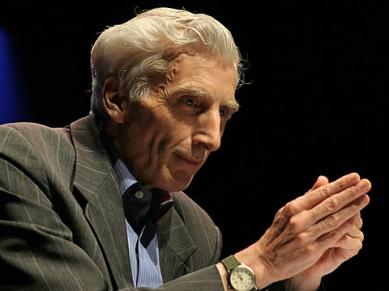
Our sun is less than halfway through its life. It formed 4.5 billion years ago, but itʼs got 6 billion more years before the fuel runs out.
—Martin Rees, professor of cosmology & astrophysics, Trinity College and the University of CambridgeMany people [who accept evolution] think we humans are the culmination, the end part of the process, but no astronomer accepts that because one thing we do learn in astronomy is that the universe has more time ahead of it than itʼs had up till now. I mean the sun has been shining for four and a half billion years and it will go on for another six billion so the sun is only halfway through its life and the universe may go on forever. As Woody Allen said, “Eternity is very long especially toward the end.” And so thereʼs plenty of time, and so the message I draw from that is that evolution may not be even at the halfway stage, and any creatures that witness the demise of the sun in six billion years time, they wonʼt be humans, theyʼll be as different from us as we are from a dog, because the time between now and then is even greater. And you can make that statement even stronger because evolution in the past has happened on the timescale of Darwinian natural selection, a few million years for species to evolve and become extinct, whereas future evolution here on earth, and of course even more so if communities move away from the earth into space, is going to take place on the technological time scale, within a few generations any people living away from the earth will use all the resources of genetic understanding to modify their descendants to adapt to that alien world. And so the post-human era will begin, the human species will diversify, and that could happen in a few centuries. And so weʼve not only got as much time lying in the future as weʼve had in the past, but evolution controlled by humans or their descendants (and their descendants may be organic, they may be machines) will be much much much faster. And so to answer your question of what special message astronomy gives me, it gives me the message that… we are not the end, we are the century that will determine what happens in the far distant future. We could snuff ourselves out, on the other hand we could see the initiation of a post-human era here on earth and far beyond.
—Astronomer Royal of the United Kingdom, Martin Rees (he describes himself as a practicing Christian who doesnʼt actually believe) Emeritus Prof. of Cosmology and Astrophysics, Univ. of Cambridge, interviewed on The 7th Avenue Project, KUSP, central coast public radio, Oct. 14, 2012
Astronomers have a special perspective on the far future, for reasons I can explain quickly. The stupendous time spans of the evolutionary past are now part of common culture — except, maybe, in the US Bible Belt, and in parts of the Islamic world. But most people still somehow think that humans are the culmination of the evolutionary tree. That hardly seems credible to astronomers. Our Sun formed 4.5 billion years ago, but itʼs got 6 billion more before the fuel runs out. It then flares up, engulfing the inner planets. And the expanding universe will continue — perhaps forever — destined to become ever colder, ever emptier. To quote Woody Allen, eternity is very long, especially towards the end. Post-human evolution — here on Earth and far beyond — could be as prolonged as the Darwinian evolution thatʼs led to us — and even more wonderful. And of course evolution is even faster now than it was when it was governed by natural selection — intelligent species can use genetic technology, and perhaps machines will take over.
I am not comfortable answering the question “Why do you believe in God?” because you havenʼt defined “God”. In any case, as a scientist, I prefer not to deal in “belief” but rather in the usefulness of concepts. I am sure I donʼt believe in any sort of god with which most readers of your article would identify.
I do, however, assume (along with all scientists) that there is a rational and intelligible scheme of things that we uncover through scientific investigation. I am uncomfortable even being linked with “a god” because of the vast baggage that this term implies (a being with a mind, able to act on matter within time, making decisions, etc).
I want to stay away from a pre-existing cosmic magician who is there within time, for all eternity, and then brings the universe into being as part of a preconceived plan. I think thatʼs just a naive, silly idea that doesnʼt fit the leanings of most theologians these days and doesnʼt fit the scientific facts. I donʼt want that. Thatʼs a horrible idea. But I see no reason why there canʼt be a teleological component in the evolution of the universe, which includes things like meaning and purpose. So instead of appealing to something outside the universe — a completely unexplained being — Iʼm talking about something that emerges within the universe. Itʼs a more natural view. Weʼre trying to construct a picture of the universe which is based thoroughly on science but where there is still room for something like meaning and purpose. So people can see their own individual lives as part of a grand cosmic scheme that has some meaning to it. Weʼre not just, as Steven Weinberg would say, pointless accidents in a universe that has no meaning or purpose. I think we can do better than that.
We can — if we try hard enough — come up with a complete explanation of existence from within the universe, without appealing to something mystical or magical lying beyond it. I think the scientists who are anti-God but appeal to unexplained sets of laws or an unexplained multiverse are just as much at fault as a naive theist who says thereʼs a mysterious, unexplained God.
Perhaps we have reached a fundamental impasse dictated by the limits of the human intellect.
If future scientists are human beings, they may be stuck with the same problems that we have. The way we think, the way we like to analyze problems, the categories that we define — like cause and effect, space-time and matter, meaning and purpose — are really human categories that cannot be separated from our evolutionary heritage. We have to face up to the fact that there may be fundamental limitations just from the way our brains have been put together. So we could have reached our own human limits. But that doesnʼt mean there arenʼt intelligent systems somewhere in the universe, maybe some time in the future, that could ultimately come to understand. Ultimately, it may not be living intelligence or embodied intelligence but some sort of intelligent information-processing system that could become omniscient and fill the entire universe. Thatʼs a grand vision that I rather like. Whether itʼs true or not is another matter entirely.
Both religion and science appeal to some agency outside the universe to explain its lawlike order. Dumping the problem in the lap of a pre-existing designer is no explanation at all, as it merely begs the question of who designed the designer. But appealing to a host of unseen universes and a set of unexplained meta-laws is scarcely any better… I propose instead that the laws are more like computer software: programs being run on the great cosmic computer. They emerge with the universe at the big bang and are inherent in it, not stamped on it from without like a makerʼs mark. Man-made computers are limited in their performance by finite processing speed and memory. So, too, the cosmic computer is limited in power by its age and the finite speed of light. Seth Lloyd, an engineer at MIT, has calculated how many bits of information the observable universe has processed since the big bang. The answer is one followed by 122 zeros. Crucially, however, the limit was smaller in the past because the universe was younger. Just after the big bang, when the basic properties of the universe were being forged, its information capacity was so restricted that the consequences would have been profound. Hereʼs why. If a law is a truly exact mathematical relationship, it requires infinite information to specify it. In my opinion, however, no law can apply to a level of precision finer than all the information in the universe can express. Infinitely precise laws are an extreme idealization with no shred of real world justification. In the first split second of cosmic existence, the laws must therefore have been seriously fuzzy. Then, as the information content of the universe climbed, the laws focused and homed in on the life-encouraging form we observe today. But the flaws in the laws left enough wiggle room for the universe to engineer its own bio-friendliness. Thus, three centuries after Newton, symmetry is restored: the laws explain the universe even as the universe explains the laws. If there is an ultimate meaning to existence, as I believe is the case, the answer is to be found within nature, not beyond it. The universe might indeed be a fix, but if so, it has fixed itself.
Yes, the universe looks like a fix. But that doesnʼt mean that a god fixed it.
We will never explain the cosmos by taking on faith either divinity or physical laws. True meaning is to be found within nature.
In science, a healthy skepticism is a professional necessity, whereas in religion, having belief without evidence is regarded as a virtue.
Cancer cells come pre-programmed to execute a well-defined cascade of changes, seemingly designed to facilitate both their enhanced survival and their dissemination through the bloodstream. There is even an air of conspiracy in the way that tumors use chemical signals to create cancer-friendly niches in remote organs… It will be in the convergence of evolutionary biology, developmental biology and cancer biology that the answer to cancer will lie. Nor will this confluence be a one-way street.
(End of quotations from Paul Davies)
If they can admit such a thing then go further, ask them if they can admit that the birth of the entire species known as Homo sapiens MIGHT be the result of impersonal probabilities.
If they can admit such a thing then go further, ask them if they can admit that the cosmos becoming this particular cosmos MIGHT be the result of probabilities that were impersonal. Perhaps this cosmos arose out of some great mystery, but what do we know about that great mystery? And what do we know about the limits of what the great mystery behind our cosmos can or canʼt produce in the way of cosmoses?
If God is the proposed answer to this and all other great mysteries, then can one be certain that God is a fine-tuner? The evidence of the frequency of extinctions (including five MASS extinction events) and the evidence that most offspring die before they reach the age of sexual reproduction, and the evidence that each evolutionary bush of species that blossoms forth gets countless branches snipped off, might all suggest that God was a tinkerer rather than a fine-tuner. Might not God also tinker with vast numbers of cosmoses before arriving at this one, leaving the rest to simply go extinct? Perhaps God even employed mass extinction events of multitudes of cosmoses at various times? We donʼt know, but if you accept what evidence we have gained concerning so many things from the deaths of countless sperm and eggs to produce a single individual, and the deaths of countless species for each one that thrives, and even mass extinction events, can we really say with assurance that such things can only be explained by a fine-tuning deity, rather than say, one that tinkers around? And lastly, how different is a tinkering God from say, a mysterious evolutionary cosmos?
But letʼs not speak merely in generalities, letʼs look more carefully at the evidence…
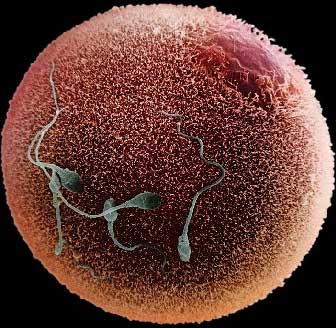
Letʼs start small with the question of how you in particular came to be born and became the person you are today. A study of nature tell us that men produce enough sperm on a daily basis to repopulate the earth in six months. However, many of those sperm are deformed, many have two heads, or two tails, or squiggly tails, or heads that are too large or two small, etc. Was that part of some design or fine-tuned plan to make you? And in the average human ejaculate there are two hundred million sperm. If God wanted specifically to make ‘you’ then only one sperm would have been required. Two to decide between a specific boy or girl. But two hundred million? Talk about a roll of the biological dice that made ‘you.’
Sperm are also subjected to physical stresses during ejaculation and contractions of the female tract, and may sustain oxidative damage, or even encounter the defenses of the female immune system meant for infectious organisms.
Also, in a 5 year study of 11 female volunteers Baker and Bellis (1993) examined the characteristics of sperm loss from the vagina following coitus (also called ‘flowback’). They found that flowback occurred in 94% of copulations with the median time to the emergence of ‘flowback’ of 30 min (range 5—120 min). Furthermore they estimated that a median of 35% of spermatozoa were lost through flowback but that in 12% of copulations almost 100% of the sperm inseminated were eliminated. Does the high flowback ratio sound like efficient design? This suggests that less than 1% of sperm might be retained in the female reproductive tract and this supports the notion that only a minority of sperm actually enter cervical mucus and ascend higher into the female reproductive tract.
Even being the first sperm to reach the egg assures nothing, since the eggʼs wall is too thick at that point and has to be weakened first by a couple thousand sperm attempting to breach it. And on occasion two or more sperm enter the egg before it begins to reharden, in which case the fertilized egg divides a few times then stops, or it may grow to the point of early implantation, implant on the uterine wall and then result in a miscarriage. Sometimes after the sperm enters the egg it triggers a second set of female chromosomes to be produced, and the fertilized egg dies. Sometimes the sperm enters the egg but does not go on to form a pronucleus, leaving only the eggʼs chromosomes functional, and again the process of development shuts down.
In short, your genetic compliment appears to be the result of trivial differences between hundreds of millions of dead sperm, i.e., purely statistical odds. SEE INFOGRAPHIC, “THE ODDS OF YOU BECOMING YOU”.
Now letʼs talk about eggs. During childhood a girlʼs ovaries absorb almost half of the million immature eggs with which she was born. Of the four hundred thousand eggs present during her first menstrual period, only 300 to 500 of them will develop into mature eggs across her reproductive life span. Her body reabsorbs the rest before they complete development. Again, does that sound like efficient design, or a case of the roll of the dice?
Even the circumstances by which oneʼs parents meet, and the time of year or day they make love, and the position they are in during coitus, along with a host of other circumstance, can affect which sperm reaches which egg. So it appears like a crap shoot. Also, what lessons can one be sure that God is teaching us when a baby dies in the womb, or dies during birth, or is born with defects? Up to the mid 1700s half of all children who were born died before reaching the age of eight (according to Buffonʼs estimate). So if we canʼt be sure of what God may be teaching us when lightning strikes one tree or power line rather than another, then what can one say with certainty concerning why one particular egg happened to become fertilized by one particular sperm, or why spontaneous abortions or birth defects occur?
Now letʼs take our discussion to a highest level. If the conception of each individual seems like a crap shoot or toss of the genetic dice due to a plethora of circumstances that do not seem personally planned, then what about the evolution of a species? What if God lets evolution be evolution just as He lets sperm be sperm and eggs be eggs, and lightning strikes be lightning strikes? The human species constitutes one of a small number of extremely large-brained species of mammals on earth, including cetacea (whales, dolphins), elephants, early apes and upright hominids. All with larger brains than average. However many species of cetacea, elephants, early apes, and upright hominids, became extinct, rather like the aforementioned hundreds of millions of eggs and sperm with different compliments of genes that naturally perish during coitus leaving either nothing behind or a single fertilized zygote.
Is our species the apex of creation, or a passing phase? Will future humans look back at our species like we look back at Homo habilis?
Paleontologists have discovered that before the earliest upright hominids arose, the world was covered with diverse ape species, the majority of which went extinct. That same was true in the case of other large-brained mammal species, like dolphins and whales, their ancestors also went extinct. And they appear to have passed through a tinkering period where their rear legs had yet to disappear and their blowholes moved from the nostrils at the ends of their noses to the middle of their noses before reaching their current position atop their heads. Same with the ancestors of birds that have gone extinct. They went through a tinkering period when their bones were still solid and heavy, their skulls still triangle shaped and thick-boned like reptiles, with teeth, and long bony tails that create drag, and a small keel bone in their chests that could not have anchored wide and thick muscles for flapping their wings. Modern birds have light bones, smooth thin helmet shaped skulls, no teeth, a super short bony tail that does not create drag, and a keel bone in their chests so wide and large it extends the entire length of their torso. I guess God spent some time tinkering dolphins, whales, and birds, etc. into existence.
And what of the future? Even if we suppose fine-tuning ended with humanity, that does not mean humanity has plans for its own evolution to end. Humans have learned ways to fiddle with genes, and augment their brains with machines, and it now seems within the realm of possibility that we could produce hybrid species of animals raised to human or greater levels of consciousness. In fact, some human embryonic brain cells were implanted in a rat embryo and thrived inside the ratʼs brain as it grew, but only a small number of such cells were inserted in that experiment. We donʼt know what might happen if the majority of an embryonic ratʼs brain cells were replaced with human cells. Or what would happen if we performed a similar experiment on a dolphin or elephant embryo whose brains naturally grow far larger than a ratʼs.
Or we might create quantum computers with artificial intelligence that wind up superseding humanity. In such a case a learning program might learn to upgrade itself faster than humans can upgrade it so it surpasses humanity—in that case carbon-based life forms will have been superseded by something we gave birth to, and humanity will simply have been a stepping stone in the process toward new entities. Will such new entities then claim the cosmos was fine-tuned so that they would be the premier product?
On the other hand if our species becomes extinct or civilization collapses and we devolve into less brainy animals, will it then be said that God fine-tuned or designed the cosmos such that things would turn out that way?
On the third hand, letʼs say humanity reaches livable planets throughout the cosmos and evolves in different directions on each of them with some or all of the results mentioned above occurring on different planets. Our species fills niches on different planets, evolving into multitudes of diverse species of humans, raising up animal consciousness on some, raising up artificial intelligences on others, and such diversification is followed by extinction events on some or all of those planets, again we would see a whittling process of trial and error, of probabilities. Who knows what future version of humanity (or humanityʼs creations) will be the last one standing?
Need I add that the cosmos still has billions of years ahead of it. New stars are still being churned out in stellar nurseries, and the stars that already exist have enough fuel to continue burning for billions of years via nuclear fusion. It takes even longer for black holes to dissipate, around 100 billion years to release their energy via Hawking Radiation (which is the only kind of energy known at present to escape from black holes). So the cosmos could easily outlive our species and in fact that outcome seems likely given all the objects and energies careening throughout the cosmos, and wild energies beneath the earth, all of which pose dangers for our speciesʼ continued existence. Itʼs only a matter of time before any of the hundreds of objects already known to cross earthʼs orbit collide with our planet again—as evidence of past collisions demonstrates.
Nor can we say with certainty how the cosmos will end, either with a Big Freeze, or Big Rip (if the cosmos continues to expand at the present rate of increasing acceleration then time and space could begin to tear apart at its furthest seams), or, Big Crunch (if the cosmos eventually slows down and begins to contract), or perhaps our cosmos will give birth to another cosmos or several, spontaneously via internal Big Bangs. Cosmologists donʼt know.
Now letʼs take the discussion to an even higher level. Was it Godʼs specific intention to bring this particular cosmos into being? Maybe God allows cosmoses to produce other cosmoses in endless cycles of change and experimentation? Maybe God is a tinkerer of cosmoses?
This cosmos is constantly mixing and swirling, statistically allowing for life to arise in very small regions of the cosmos, and probably only for limited amounts of time due to the explosive swirling nature of the cosmos. And life in this cosmos continues via cycles of reproduction and death. Life does not appear to be a particularly stable phenomena, though single-celled forms have demonstrated better chances of long-term survival than more complex multi-cellular forms.
So, the design in the above case might be a never ending process of change, including the possibility of extinction at every level of such changes. It looks like randomness or chance plays a role in each individualʼs origins, as well as the origin of each species. If one says it was fine-tuned or designed that way, then fine-tuning or design including trial and error or tinkering.

