Showing posts with label god. Show all posts

Tyler Cowen on "Why I Don't Believe in God" and Ross Douthat on "Should Tyler Cowen Believe in God?"

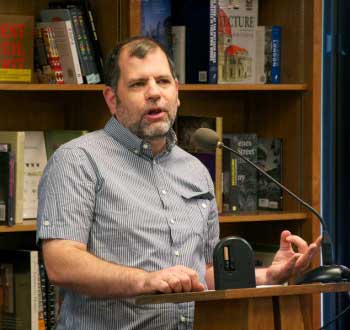
Tyler Cowen

Ross Douthat, the 37 year old Catholic New York Timesʼ wunderkind op ed columnist is on a quest to save intellectual conservatism, and tried to lead prof. Tyler Cowen at George Mason University toward the Christian fold or at least back toward classical theism, because Tyler recently wrote, Why I Donʼt Believe in God.

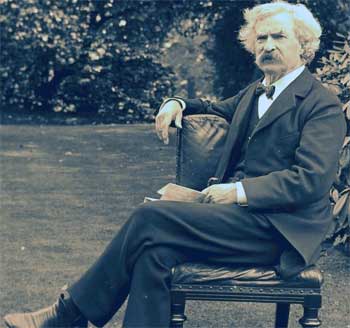
Mark Twain on the Problem of Evil

Mark Twain and Intelligent Design

“Little Bessie,” The Myth of Providence by Mark Twain

“In His wisdom and mercy the Lord sends us afflictions to discipline us and make us better…All of them. None of them comes by accident; He alone sends them, and always out of love for us, and to make us better, my child.”

Fine-Tuning question is something “we don't understand well enough yet”

Fine-Tuning Question

The fine tuning argument… depends upon making judgments about the likelihood, or probability of something, like, “How likely is it that the mass of the electron would be related to the mass of the proton in a certain way?” Now, one can first be a little puzzled by what you mean by ‘how likely’ or ‘probable’ something like that is. You can ask how likely it is that Iʼll roll double sixes when I throw dice, but we understand the way you get a handle on the use of probabilities in that instance. Itʼs not as clear how you even make judgments like that about the likelihood of the various constants of nature (an so on) that are usually referred to in the fine tuning argument.

Now let me say one more thing about fine tuning. I talk to physicists a lot, and none of the physicists I talk to want to rely on the fine tuning argument to argue for a cosmology that has lots of bubble universes, or lots of worlds. What they want to argue is that this arises naturally from an analysis of the fundamental physics, that the fundamental physics, quite apart from any cosmological considerations, will give you a mechanism by which these worlds will be produced, and a mechanism by which different worlds will have different constants, or different laws, and so on. If thatʼs true, then if there are enough of these worlds, it will be likely that some of them have the right combination of constants to permit life. But their arguments tend not to be “we have to believe in these many worlds to solve the fine tuning problem,” they tend to be “these many worlds are generated by physics we have other reasons for believing in.”

If we give up on that, and it turns out there arenʼt these many worlds, that physics is unable to generate them, then itʼs not that the only option is that there was some intelligent designer. It would be a terrible mistake to think that those are the only two ways things could go. You would have to again think hard about what you mean by probability, and about what sorts of explanations there might be. Part of the problem is that right now there are just way too many freely adjustable parameters in physics. Everybody agrees about that. There seem to be many things we call constants of nature that you could imagine setting at different values, and most physicists think there shouldnʼt be that many, that many of them are related to one another. Physicists think that at the end of the day there should be one complete equation to describe all physics, because any two physical systems interact and physics has to tell them what to do. And physicists generally like to have only a few constants, or parameters of nature. This is what Einstein meant when he famously said he wanted to understand what kind of choices God had —using his metaphor— how free his choices were in creating the universe, which is just asking how many freely adjustable parameters there are. Physicists tend to prefer theories that reduce that number, and as you reduce it, the problem of fine tuning tends to go away. But, again, this is just stuff we donʼt understand well enough yet.
Tim Mauldin, Prof. of Philosophy, NYU.

Above quotations is from an interview in What Happened Before the Big Bang? The New Philosophy of Cosmology: On the big questions science cannot (yet?) answer, a new crop of philosophers are trying to provide answers by Ross Andersen, Atlantic Monthly, Jan 19, 2012

See also, Fine-Tuning Argument Raises More Questions Than It Answers

The Fine-Tuning Argument... Raises As Many Questions As It Answers

Fine-Tuning Argument

Questions Concerning the Fine-Tuning Argument

We donʼt know if any other set of constants and laws are even possible. It could be that the cosmos is as the cosmos is and does what the cosmos does, and asking why makes as much or as little sense for naturalists as the question of why God is as God is—and does what God does—makes for theists.

We also donʼt know that the constants can vary independently from one another. They may all be related to one another or to some more fundamental feature. Kind of like saying that maybe you cannot stretch just one characteristic of the cosmos because it is connected with all the other characteristics, so hypothetical cosmoses with different constants canʼt exist, or, stretching one part a little results in other constants nudging it back into equilibrium, because a cosmos is a single interconnected whole.

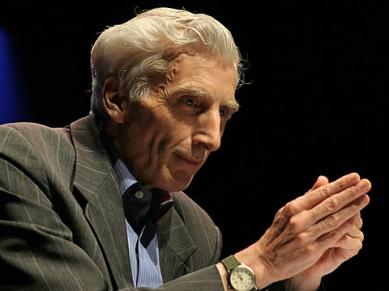
Physicists disagree over just how many absolutely fundamental constants there are. We used to think there were as many as 40 fundamental constants, including the boiling point of water. Now we know that this derives from quantum mechanics, and the number of fundamental constants is now down to six or less. So this universe may be the only way it can go. In 2000 Martin Rees wrote Just Six Numbers: The Deep Forces that Shape the Universe, the genesis of the universe elegantly explained in a simple theory based on just six numbers by one of the worldʼs most renowned astrophysicists. In 2007 a team of physicist in Brazil whittled down that number to just two (according to this article). Two constants should be enough to explain the cosmos. Their work shows how some constants are more fundamental than others— some are merely useful, whereas perhaps precisely two are indispensable. While others have argued that no constants are needed: that the universe can be described using ratios alone, so that there are no ‘natural’ units.

It may not be that our universe is as special as we think; there could be many others that are special or interesting in different ways. Life could arise through different means or different chemistries or different physical laws, if those even exist.

There may be standard physical mechanisms for producing multiple separate universes with different laws. If so, the existence of one like ours would no longer be unexpected. We might never be able to detect the other universes, but we may able to prove they should be there.

—Richard Smith, a brief excerpt from Scientist-Believers: Troublesome Routes Across the Compatibility Chasm with added edits by EB


The Fine-Tuning Question is “Something We Donʼt Understand Well Enough Yet”—Tim Mauldin, Philosopher


Astrobiology Has Not Made the Case for God, Lawrence Krauss, Jan. 24, 2015


Ways in Which a Fine-Tuned Cosmos Might Imply the Truth of Atheism by Cole Hellier, Professor of Astrophysics at Keele University in the UK


The late Victor Stegner had his final reply to the “fine-tuning” argument published in his 2014 work, God and the Multiverse


Astronomer and Christian, Luke Barnes, who specializes in defending the “fine-tuning” argument, provides hyperlinks to “decent critiques of the [fine-tuning] argument” in the last sentence of this blog piece in which he says, “Try Sean Carroll, Paul Davies, Alex Vilenkin, Leonard Susskind, Bradley Monton


Physicist and Christian, Don Page, is not impressed with the fine-tuning argument, listen here and here.


Atheist Richard Carrier briefly sums up his arguments against Design (Fine Tuning and Biogenesis)


Questions concerning Fine-tuning and Intelligent Design

I.D.ists argue for fine-tuning for “intelligent life,” but what does fine-tuning mean exactly? Is “intelligent life” merely a euphemism for the human species, or does fine-tuning predict that species other than humans will also arise with higher than average levels of “intelligence” like apes, dolphins, elephants, crows, and grey parrots? And what do the vast majority of less highly intelligent forms of life have to do with the goal of fine-tuning? Does fine-tuning also predict malaria and thousands of organisms that parasitize or prey on humans? How specific is fine-tuning really?

Does fine-tuning predict common descent? Does it predict both common descent and natural mutations (deleterious, neutral, beneficial) and the small ratio of organisms that successfully pass along their genes each generation, and the multitude of species that simply go extinct along the way? What would falsify Fine-Tuning?

If the properties of carbon, water, DNA, and the conditions on the early earth count as evidence in favor of fine-tuning, then what does the so-called impossibility of the spontaneous origin of life (as alleged by I.Dʼists) count as? Does it count as evidence against fine-tuning?

Is fine-tuning both necessary and sufficient to explain life on earth? If fine-tuning is not sufficient, and additional designing or intervention must be done in many steps over billions of years, does that mean the cosmos was not sufficiently fine-tuned for life? A seeming majority of I.Dʼists claim that the major architectural features of life - molecular machinery, cells, genetic circuitry - had to have been added separately one-by-one at widely different times in a manner that violates the genetic continuity of life.

Does fine-tuning mean anything more than the trivial statement that certain properties of matter and energy are necessary for the origin and the existence of life?

—Gert Korthofʼs questions in his review of Beheʼs The Edge of Evolution, edited by EB


My own posts on such questions (followed by shorter more recent musings)


Recent Musings

The fact that we have nothing to compare this cosmos with makes the fine-tuning argument problematic. Thereʼs our lack of knowledge concerning what preceded the cosmos. And our lack of knowledge concerning how it will end (Big Freeze, Big Crunch, Big Rip, Big Bang Sprouting More Big Bangs, Big Collision?), or how such an ending may relate to the existence or birthing of new cosmoses. Nor do we know whether or not other cosmoses already exist or what any of them are like, or why they might be like they are. In short we have nothing to compare our cosmos with. Kind of like waking up one day with no memory of the past and no sure ideas about the future, looking in a mirror and imagining that the face of the upright ape staring back at you has been fine-tuned to be exactly so. How would you know that for sure?


The fine-tuning argument does not say any species is extinction-proof. The cosmos gives via evolution and takes away via extinction. The most one can say is that at present life and death in this cosmos appear to be in equilibrium with one another, with individual living things existing on relatively teensy time scales (compared with the length of time stars and black holes can exist). Also, living things only seem to flourish in the smallest corners of the cosmos.

Nor do we know whatʼs in store for our own species in the future, how our species may change, split or diversify, or how our future human cousins will view us. We might seem to them like mere upright apes or at best Neanderthals in their eyes, if they have what we would call eyes. Or our civilization and species might devolve and our cranial capacity shrink (speaking of which some of our ancestorʼs craniums from the Ice Age reveal larger cranial capacities than our species has today), until our species in the future canʼt speak at all, or becomes extinct and the cosmos burns on without us for eons (it certainly has enough fuel to do so). There might be aliens out there with more advanced technology whose success at focusing on their own long term survival far exceeds ours. Or maybe we (or some alien species) will learn to compliment or enhance our brains via genetics or quantum computer implants, or do the same for cousin species, raising them to our level of consciousness, or perhaps linking our consciousness with theirs.

The odds of the earth staying completely “asteroid-strike-free” diminish year by year, and the sun-earth system can last for at least another billion years during which time any number of purely natural disasters grow increasingly more likely to occur, not just climate change. Even a single solar flare could throw civilization back to the dark ages. And after the next billion or two years the sun will most likely expand as older stars do and devour our planet in flames, or our galaxy will collide with the oncoming Andromeda galaxy. Planet earth may not have been struck by a major-extinction-causing asteroid in a while but the large crater in Arizona was formed by a fairly large asteroid that hit that region about 30,000 years ago, and I read an article that said the earliest humans to reach North America via the land bridge from Asia during the ice age may have been wiped out by meteors that landed in North America at that time because archaeologists discovered a gap between the earliest evidence of settlers in North America who died at the time of such impacts, and a second wave of humans who crossed the land bridge into North America. Also, humans only evolved recently but the cosmos has a far longer “sell by” date, billions of years to go, so itʼs not remarkable that an asteroid has not yet wiped us out, but also watch out for quakes beneath Yellowstone and the super volcanoes elsewhere on the planet the could erupt since thereʼs whole buried forests in the fossil record from past series of such eruptions.


Fine-tuned for what? The cosmos supports all manner of living things, suffering things, and dead or extinct things.

We live in a cosmos just as fine-tuned for living things as for the cancers that arise inside them.

We live in a cosmos just as fine-tuned for mega-viruses as they are for the smaller average-sized viruses that attack the mega-viruses. Hot virus on virus action.

If the cosmos is fine-tuned or designed, then what am I to make of human beings who only seem “designed” or “fine-tuned” enough to be miscarried (happens about 50% of the time to every human egg cell that is fertilized, as even pro-lifers admit).

Other humans only seem “designed” or “fine-tuned” to be the twin in the womb that vanishes (google “Vanishing Twin Syndrome”)—about 30% of all single children born used to have a twin in the womb that was either absorbed by the womb or the remaining twin.

Others only seem “designed” or “fine-tuned” to become chronically ill, crippled, deformed, due to malnutrition (through no fault of their own if they happen to live in a place with zinc-poor soil, or iodine poor soil), or their nutritional deficiencies lead to inadequate brain maturation.

Others only seem “design” or “fine-tuned” to be born with genes that rolled out of their parents gonads like a pair of snake-eyed dice, leaving the child to suffer any number of painful or hideous consequences. Including one defect that makes the childʼs skin blister with pain at the touch of objects and people (epidermolysis bullosa, a virtually untreatable disorder characterized by widespread and constant blistering of the skin, so that there is no part of the body on which an infant can lie without pain).

Others only seem “designed” or “fine-tuned” to be the food for microbes and parasites (not only human young, but the young of all species). In the mid 1700s, the French naturalist, Buffon, remarked that among children who survived birth, half of them died before reaching the age of eight.

For further examples from the natural world see this piece at the Talk Origins Archive.


When discussing probabilities it looks like any number of persons other than me could have arrived on the scene (judging by the numbers of sperm, eggs, different genetics, different upbringings, different circumstances possible). The same thought occurs concerning the particular species of which I happen to be a member. Was it necessary for the human species as we now know it, to have arrived on the scene? Same question applies to all other species of course, not just ours, but every species that arose before ours. How fine-tuned was the entire evolutionary tree of life? Or was chance and randomness a part of the picture from the beginning of life on earth right up to the circumstance of which sperm reached which egg to produce me?

The cosmos also appears just as fine-tuned for evolution as it is for extinction. Life is at best in equilibrium with death throughout the cosmos. And the cosmos is just as fine-tuned for the microbes that eat us as it is for the microbes and other organisms we eat.

“Coincidence” is not a very clear word since it could refer to either planned or unplanned things that coincide with one another. The cosmos at this particular point in time is filled with relatively pleasant coincidences for our species and also many natural horrors that include microbes and parasites that exist by devouring and/our crippling our species which a relatively pleasant cosmic coincidence for them and their species. And who knows how pleasant or not things will be for our species in the near future? Our species is a cosmic newcomer and might vanish soon after our arrival, or devolve, or hopefully find ways to survive. But even if our species becomes extinct the stars and black holes will be around for billions of years to come.

What if the human species vanishes soon? Will “fine-tuners” admit the cosmos was only fine-tuned enough to sustain intelligent life for a miniscule amount of cosmic time?


What can we tell about design from studying nature?

The multi-cellular organisms with the greatest known number of species are beetles and mites. We know of hundreds of thousands of species of each. The number of species of beetles as well as mites might even reach over 1 million according to some estimates as more beetles and mites continue being discovered all the time. (I had a dog once that was suffering from an infestation of mites. Not pretty.)

If the earth was designed with the forethought of an infinitely wise and infinitely resourceful Being, why all the volcanoes, tsunamis, cold snaps, heat waves, large tracts of barely walkable or useable land? Why such a large percentage of humans throughout history never able to obtain all the vitamins, minerals and proteins they require to grow up maximally healthy? To give but one example, there are tracts of land on earth where zinc is naturally deficient in the soil and percentages of children grow up cretinous as result. Thatʼs just one example.

And if the cosmos was designed via the forethought of an infinitely wise and infinitely resourceful Being why do things keep bumping into one another? Not just meteors and comets striking planets and leaving behind evidence of such strikes in endless craters, but exploding suns and flaring stars that destroy planets, as well as whole galaxies colliding with one another, and even whole clusters of galaxies colliding with one another. And if the body is so perfectly designed, why the need for medical science to treat us for so many things that can and do go wrong?

One has to wonder. The questions are always there.

Including the fact that a wide range of alternatives that lie between the God of orthodox Christianity and atheism. Speaking of which, how can one tell the difference between a Designer and a Tinkerer? The cosmos includes enormous amounts of pain, death, extinction over time, trial and error, and also jury-rigged systems that arise from attempting to stretch the use of previous designs by reusing them in new ways for which they never were originally intended, or build new designs right on top of old ones. The human body is a kluge. So is the human brain. All of which leads one to at least suspect that any Designer one chooses to believe in was less than infinitely competent.

Only recently in the human drama has science, technology, engineering and medicine allowed large numbers of humans to live in relative comfort and safety, with enough food, well built shelters, treatments for illness, and early warning systems of weather patterns. But for countless years neither our species nor any other enjoyed such comfort and relative peace and safety. We have only recently solved many problems concerning a host of illnesses, discomforts and dangers inherent in life on this rock spinning through space, allowing us to say goodbye to many of the ways the earth was “fine-tuned” for suffering, natural disasters, pandemics, or just plain confusion of languages, let alone confusion of religions and philosophies, politics and sexuality.


During a debate ask the theist if they are experiencing the presence of God right now, or the Holy Spirit. Then ask them to describe in detail what they are experiencing to the crowd, and if there are any explicit messages God or the Holy Spirit is telling them to share? If they canʼt come up with anything specific to relate then admit you donʼt appear to be experiencing the presence of God nor hearing any words from Him either, so youʼre both on equal footing.


A question theists ask
“Why do we live just to die?”

“Why do we wake up just to sleep?”
Response by atheist David G. McAfee

Quotations from Sir Martin Rees and Paul Davies, Handy to have since fine-tuners often selectively quote from Rees and Davies

Quotations from Sir Martin Rees

Our sun is less than halfway through its life. It formed 4.5 billion years ago, but itʼs got 6 billion more years before the fuel runs out.
—Martin Rees, professor of cosmology & astrophysics, Trinity College and the University of Cambridge

Many people [who accept evolution] think we humans are the culmination, the end part of the process, but no astronomer accepts that because one thing we do learn in astronomy is that the universe has more time ahead of it than itʼs had up till now. I mean the sun has been shining for four and a half billion years and it will go on for another six billion so the sun is only halfway through its life and the universe may go on forever. As Woody Allen said, “Eternity is very long especially toward the end.” And so thereʼs plenty of time, and so the message I draw from that is that evolution may not be even at the halfway stage, and any creatures that witness the demise of the sun in six billion years time, they wonʼt be humans, theyʼll be as different from us as we are from a dog, because the time between now and then is even greater. And you can make that statement even stronger because evolution in the past has happened on the timescale of Darwinian natural selection, a few million years for species to evolve and become extinct, whereas future evolution here on earth, and of course even more so if communities move away from the earth into space, is going to take place on the technological time scale, within a few generations any people living away from the earth will use all the resources of genetic understanding to modify their descendants to adapt to that alien world. And so the post-human era will begin, the human species will diversify, and that could happen in a few centuries. And so weʼve not only got as much time lying in the future as weʼve had in the past, but evolution controlled by humans or their descendants (and their descendants may be organic, they may be machines) will be much much much faster. And so to answer your question of what special message astronomy gives me, it gives me the message that… we are not the end, we are the century that will determine what happens in the far distant future. We could snuff ourselves out, on the other hand we could see the initiation of a post-human era here on earth and far beyond.
—Astronomer Royal of the United Kingdom, Martin Rees (he describes himself as a practicing Christian who doesnʼt actually believe) Emeritus Prof. of Cosmology and Astrophysics, Univ. of Cambridge, interviewed on The 7th Avenue Project, KUSP, central coast public radio, Oct. 14, 2012

Another version of the Martin Rees quotation:

Astronomers have a special perspective on the far future, for reasons I can explain quickly. The stupendous time spans of the evolutionary past are now part of common culture — except, maybe, in the US Bible Belt, and in parts of the Islamic world. But most people still somehow think that humans are the culmination of the evolutionary tree. That hardly seems credible to astronomers. Our Sun formed 4.5 billion years ago, but itʼs got 6 billion more before the fuel runs out. It then flares up, engulfing the inner planets. And the expanding universe will continue — perhaps forever — destined to become ever colder, ever emptier. To quote Woody Allen, eternity is very long, especially towards the end. Post-human evolution — here on Earth and far beyond — could be as prolonged as the Darwinian evolution thatʼs led to us — and even more wonderful. And of course evolution is even faster now than it was when it was governed by natural selection — intelligent species can use genetic technology, and perhaps machines will take over.

Quotations from Paul Davies on God the universe and everything, including cancer:

I am not comfortable answering the question “Why do you believe in God?” because you havenʼt defined “God”. In any case, as a scientist, I prefer not to deal in “belief” but rather in the usefulness of concepts. I am sure I donʼt believe in any sort of god with which most readers of your article would identify.

I do, however, assume (along with all scientists) that there is a rational and intelligible scheme of things that we uncover through scientific investigation. I am uncomfortable even being linked with “a god” because of the vast baggage that this term implies (a being with a mind, able to act on matter within time, making decisions, etc).

I want to stay away from a pre-existing cosmic magician who is there within time, for all eternity, and then brings the universe into being as part of a preconceived plan. I think thatʼs just a naive, silly idea that doesnʼt fit the leanings of most theologians these days and doesnʼt fit the scientific facts. I donʼt want that. Thatʼs a horrible idea. But I see no reason why there canʼt be a teleological component in the evolution of the universe, which includes things like meaning and purpose. So instead of appealing to something outside the universe — a completely unexplained being — Iʼm talking about something that emerges within the universe. Itʼs a more natural view. Weʼre trying to construct a picture of the universe which is based thoroughly on science but where there is still room for something like meaning and purpose. So people can see their own individual lives as part of a grand cosmic scheme that has some meaning to it. Weʼre not just, as Steven Weinberg would say, pointless accidents in a universe that has no meaning or purpose. I think we can do better than that.

We can — if we try hard enough — come up with a complete explanation of existence from within the universe, without appealing to something mystical or magical lying beyond it. I think the scientists who are anti-God but appeal to unexplained sets of laws or an unexplained multiverse are just as much at fault as a naive theist who says thereʼs a mysterious, unexplained God.

Perhaps we have reached a fundamental impasse dictated by the limits of the human intellect.

If future scientists are human beings, they may be stuck with the same problems that we have. The way we think, the way we like to analyze problems, the categories that we define — like cause and effect, space-time and matter, meaning and purpose — are really human categories that cannot be separated from our evolutionary heritage. We have to face up to the fact that there may be fundamental limitations just from the way our brains have been put together. So we could have reached our own human limits. But that doesnʼt mean there arenʼt intelligent systems somewhere in the universe, maybe some time in the future, that could ultimately come to understand. Ultimately, it may not be living intelligence or embodied intelligence but some sort of intelligent information-processing system that could become omniscient and fill the entire universe. Thatʼs a grand vision that I rather like. Whether itʼs true or not is another matter entirely.

Both religion and science appeal to some agency outside the universe to explain its lawlike order. Dumping the problem in the lap of a pre-existing designer is no explanation at all, as it merely begs the question of who designed the designer. But appealing to a host of unseen universes and a set of unexplained meta-laws is scarcely any better… I propose instead that the laws are more like computer software: programs being run on the great cosmic computer. They emerge with the universe at the big bang and are inherent in it, not stamped on it from without like a makerʼs mark. Man-made computers are limited in their performance by finite processing speed and memory. So, too, the cosmic computer is limited in power by its age and the finite speed of light. Seth Lloyd, an engineer at MIT, has calculated how many bits of information the observable universe has processed since the big bang. The answer is one followed by 122 zeros. Crucially, however, the limit was smaller in the past because the universe was younger. Just after the big bang, when the basic properties of the universe were being forged, its information capacity was so restricted that the consequences would have been profound. Hereʼs why. If a law is a truly exact mathematical relationship, it requires infinite information to specify it. In my opinion, however, no law can apply to a level of precision finer than all the information in the universe can express. Infinitely precise laws are an extreme idealization with no shred of real world justification. In the first split second of cosmic existence, the laws must therefore have been seriously fuzzy. Then, as the information content of the universe climbed, the laws focused and homed in on the life-encouraging form we observe today. But the flaws in the laws left enough wiggle room for the universe to engineer its own bio-friendliness. Thus, three centuries after Newton, symmetry is restored: the laws explain the universe even as the universe explains the laws. If there is an ultimate meaning to existence, as I believe is the case, the answer is to be found within nature, not beyond it. The universe might indeed be a fix, but if so, it has fixed itself.

Yes, the universe looks like a fix. But that doesnʼt mean that a god fixed it.

We will never explain the cosmos by taking on faith either divinity or physical laws. True meaning is to be found within nature.

In science, a healthy skepticism is a professional necessity, whereas in religion, having belief without evidence is regarded as a virtue.

Cancer cells come pre-programmed to execute a well-defined cascade of changes, seemingly designed to facilitate both their enhanced survival and their dissemination through the bloodstream. There is even an air of conspiracy in the way that tumors use chemical signals to create cancer-friendly niches in remote organs… It will be in the convergence of evolutionary biology, developmental biology and cancer biology that the answer to cancer will lie. Nor will this confluence be a one-way street.

(End of quotations from Paul Davies)

Can a Fine-Tuner Admit That Their PARTICULAR Conception and Becoming the EXACT Person They Are MIGHT Be the Result of Impersonal Probabilities Rather than Finely Directed Teleological Design?

Can a Fine-Tuner Admit That Their PARTICULAR Conception and Becoming the EXACT Person They Are

If they can admit such a thing then go further, ask them if they can admit that the birth of the entire species known as Homo sapiens MIGHT be the result of impersonal probabilities.

If they can admit such a thing then go further, ask them if they can admit that the cosmos becoming this particular cosmos MIGHT be the result of probabilities that were impersonal. Perhaps this cosmos arose out of some great mystery, but what do we know about that great mystery? And what do we know about the limits of what the great mystery behind our cosmos can or canʼt produce in the way of cosmoses?

If God is the proposed answer to this and all other great mysteries, then can one be certain that God is a fine-tuner? The evidence of the frequency of extinctions (including five MASS extinction events) and the evidence that most offspring die before they reach the age of sexual reproduction, and the evidence that each evolutionary bush of species that blossoms forth gets countless branches snipped off, might all suggest that God was a tinkerer rather than a fine-tuner. Might not God also tinker with vast numbers of cosmoses before arriving at this one, leaving the rest to simply go extinct? Perhaps God even employed mass extinction events of multitudes of cosmoses at various times? We donʼt know, but if you accept what evidence we have gained concerning so many things from the deaths of countless sperm and eggs to produce a single individual, and the deaths of countless species for each one that thrives, and even mass extinction events, can we really say with assurance that such things can only be explained by a fine-tuning deity, rather than say, one that tinkers around? And lastly, how different is a tinkering God from say, a mysterious evolutionary cosmos?

But letʼs not speak merely in generalities, letʼs look more carefully at the evidence…

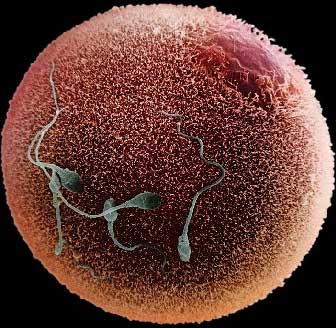
Letʼs start small with the question of how you in particular came to be born and became the person you are today. A study of nature tell us that men produce enough sperm on a daily basis to repopulate the earth in six months. However, many of those sperm are deformed, many have two heads, or two tails, or squiggly tails, or heads that are too large or two small, etc. Was that part of some design or fine-tuned plan to make you? And in the average human ejaculate there are two hundred million sperm. If God wanted specifically to make ‘you’ then only one sperm would have been required. Two to decide between a specific boy or girl. But two hundred million? Talk about a roll of the biological dice that made ‘you.’

Sperm are also subjected to physical stresses during ejaculation and contractions of the female tract, and may sustain oxidative damage, or even encounter the defenses of the female immune system meant for infectious organisms.

Also, in a 5 year study of 11 female volunteers Baker and Bellis (1993) examined the characteristics of sperm loss from the vagina following coitus (also called ‘flowback’). They found that flowback occurred in 94% of copulations with the median time to the emergence of ‘flowback’ of 30 min (range 5—120 min). Furthermore they estimated that a median of 35% of spermatozoa were lost through flowback but that in 12% of copulations almost 100% of the sperm inseminated were eliminated. Does the high flowback ratio sound like efficient design? This suggests that less than 1% of sperm might be retained in the female reproductive tract and this supports the notion that only a minority of sperm actually enter cervical mucus and ascend higher into the female reproductive tract.

Even being the first sperm to reach the egg assures nothing, since the eggʼs wall is too thick at that point and has to be weakened first by a couple thousand sperm attempting to breach it. And on occasion two or more sperm enter the egg before it begins to reharden, in which case the fertilized egg divides a few times then stops, or it may grow to the point of early implantation, implant on the uterine wall and then result in a miscarriage. Sometimes after the sperm enters the egg it triggers a second set of female chromosomes to be produced, and the fertilized egg dies. Sometimes the sperm enters the egg but does not go on to form a pronucleus, leaving only the eggʼs chromosomes functional, and again the process of development shuts down.

In short, your genetic compliment appears to be the result of trivial differences between hundreds of millions of dead sperm, i.e., purely statistical odds. SEE INFOGRAPHIC, “THE ODDS OF YOU BECOMING YOU”.

Now letʼs talk about eggs. During childhood a girlʼs ovaries absorb almost half of the million immature eggs with which she was born. Of the four hundred thousand eggs present during her first menstrual period, only 300 to 500 of them will develop into mature eggs across her reproductive life span. Her body reabsorbs the rest before they complete development. Again, does that sound like efficient design, or a case of the roll of the dice?

Even the circumstances by which oneʼs parents meet, and the time of year or day they make love, and the position they are in during coitus, along with a host of other circumstance, can affect which sperm reaches which egg. So it appears like a crap shoot. Also, what lessons can one be sure that God is teaching us when a baby dies in the womb, or dies during birth, or is born with defects? Up to the mid 1700s half of all children who were born died before reaching the age of eight (according to Buffonʼs estimate). So if we canʼt be sure of what God may be teaching us when lightning strikes one tree or power line rather than another, then what can one say with certainty concerning why one particular egg happened to become fertilized by one particular sperm, or why spontaneous abortions or birth defects occur?

Now letʼs take our discussion to a highest level. If the conception of each individual seems like a crap shoot or toss of the genetic dice due to a plethora of circumstances that do not seem personally planned, then what about the evolution of a species? What if God lets evolution be evolution just as He lets sperm be sperm and eggs be eggs, and lightning strikes be lightning strikes? The human species constitutes one of a small number of extremely large-brained species of mammals on earth, including cetacea (whales, dolphins), elephants, early apes and upright hominids. All with larger brains than average. However many species of cetacea, elephants, early apes, and upright hominids, became extinct, rather like the aforementioned hundreds of millions of eggs and sperm with different compliments of genes that naturally perish during coitus leaving either nothing behind or a single fertilized zygote.

Is our species the apex of creation, or a passing phase? Will future humans look back at our species like we look back at Homo habilis?

Paleontologists have discovered that before the earliest upright hominids arose, the world was covered with diverse ape species, the majority of which went extinct. That same was true in the case of other large-brained mammal species, like dolphins and whales, their ancestors also went extinct. And they appear to have passed through a tinkering period where their rear legs had yet to disappear and their blowholes moved from the nostrils at the ends of their noses to the middle of their noses before reaching their current position atop their heads. Same with the ancestors of birds that have gone extinct. They went through a tinkering period when their bones were still solid and heavy, their skulls still triangle shaped and thick-boned like reptiles, with teeth, and long bony tails that create drag, and a small keel bone in their chests that could not have anchored wide and thick muscles for flapping their wings. Modern birds have light bones, smooth thin helmet shaped skulls, no teeth, a super short bony tail that does not create drag, and a keel bone in their chests so wide and large it extends the entire length of their torso. I guess God spent some time tinkering dolphins, whales, and birds, etc. into existence.

And what of the future? Even if we suppose fine-tuning ended with humanity, that does not mean humanity has plans for its own evolution to end. Humans have learned ways to fiddle with genes, and augment their brains with machines, and it now seems within the realm of possibility that we could produce hybrid species of animals raised to human or greater levels of consciousness. In fact, some human embryonic brain cells were implanted in a rat embryo and thrived inside the ratʼs brain as it grew, but only a small number of such cells were inserted in that experiment. We donʼt know what might happen if the majority of an embryonic ratʼs brain cells were replaced with human cells. Or what would happen if we performed a similar experiment on a dolphin or elephant embryo whose brains naturally grow far larger than a ratʼs.

Or we might create quantum computers with artificial intelligence that wind up superseding humanity. In such a case a learning program might learn to upgrade itself faster than humans can upgrade it so it surpasses humanity—in that case carbon-based life forms will have been superseded by something we gave birth to, and humanity will simply have been a stepping stone in the process toward new entities. Will such new entities then claim the cosmos was fine-tuned so that they would be the premier product?

On the other hand if our species becomes extinct or civilization collapses and we devolve into less brainy animals, will it then be said that God fine-tuned or designed the cosmos such that things would turn out that way?

On the third hand, letʼs say humanity reaches livable planets throughout the cosmos and evolves in different directions on each of them with some or all of the results mentioned above occurring on different planets. Our species fills niches on different planets, evolving into multitudes of diverse species of humans, raising up animal consciousness on some, raising up artificial intelligences on others, and such diversification is followed by extinction events on some or all of those planets, again we would see a whittling process of trial and error, of probabilities. Who knows what future version of humanity (or humanityʼs creations) will be the last one standing?

Need I add that the cosmos still has billions of years ahead of it. New stars are still being churned out in stellar nurseries, and the stars that already exist have enough fuel to continue burning for billions of years via nuclear fusion. It takes even longer for black holes to dissipate, around 100 billion years to release their energy via Hawking Radiation (which is the only kind of energy known at present to escape from black holes). So the cosmos could easily outlive our species and in fact that outcome seems likely given all the objects and energies careening throughout the cosmos, and wild energies beneath the earth, all of which pose dangers for our speciesʼ continued existence. Itʼs only a matter of time before any of the hundreds of objects already known to cross earthʼs orbit collide with our planet again—as evidence of past collisions demonstrates.

Nor can we say with certainty how the cosmos will end, either with a Big Freeze, or Big Rip (if the cosmos continues to expand at the present rate of increasing acceleration then time and space could begin to tear apart at its furthest seams), or, Big Crunch (if the cosmos eventually slows down and begins to contract), or perhaps our cosmos will give birth to another cosmos or several, spontaneously via internal Big Bangs. Cosmologists donʼt know.

Now letʼs take the discussion to an even higher level. Was it Godʼs specific intention to bring this particular cosmos into being? Maybe God allows cosmoses to produce other cosmoses in endless cycles of change and experimentation? Maybe God is a tinkerer of cosmoses?

This cosmos is constantly mixing and swirling, statistically allowing for life to arise in very small regions of the cosmos, and probably only for limited amounts of time due to the explosive swirling nature of the cosmos. And life in this cosmos continues via cycles of reproduction and death. Life does not appear to be a particularly stable phenomena, though single-celled forms have demonstrated better chances of long-term survival than more complex multi-cellular forms.

So, the design in the above case might be a never ending process of change, including the possibility of extinction at every level of such changes. It looks like randomness or chance plays a role in each individualʼs origins, as well as the origin of each species. If one says it was fine-tuned or designed that way, then fine-tuning or design including trial and error or tinkering.

Complexity is how the Cosmos flows. Mathematical Models of Reality and the Fine-Tuning Argument do not constitute proof of the kind that Intelligent Design advocates insist they do. (ADDED BONUS: “The Dexter of Parasites”)

Look at the way a river becomes thousands of separate tributaries as it nears the sea, a neat visual analogy for complexity—a single river that breaks off into multiple branches without direct application of intelligence being involved because thatʼs what water and land do together. That is an increase in complexity that illustrates how basic and inherent in nature complexity is.

Complexity

Lena River Delta, Russia

The island complex at the north end of Spring Lake, Pool 2, in the Mississippi National River and Recreation Area shows a variety of floodplain forests, wetlands, and aquatic vegetation

The Yukon River Delta, Alaska

Changes in the connectivity of the channel network structure on the Wax Lake Delta reflect its growth. The Wax Lake Delta is the only portion of the greater Mississippi River Delta complex that is growing over time.

Mathematical models have been produced to help explain the formation of such complex intricate formations on earth. There are models based on detailed computational fluid dynamics as well as competing models such as rule-based cellular morphodynamic models. As we will see, the formation of such complex intricate non-living formations does not lend distinction to the ideas of Intelligent Design advocates at the Discovery Institute.

To understand how complexity arises from relative simplicity, letʼs start at the beginning…

Our cosmos had to cool down for the first sub-atomic particles to congeal out of the unbelievably high energies and temperatures at our cosmosʼs birth. As it began to cool the first subatomic particles congealed into atoms, and then due to the force of gravity (the basic attraction of masses to other masses) those simple atoms congealed into stars. The pressure of gravity pushed those simple atoms together until atoms with more protons and electrons began to arise. Then many stars eventually exploded and heavier even more complex atoms were formed by the force of such explosions including carbon, nitrogen, oxygen up to uranium and beyond. Then as planets and asteroids cooled down, along with the insides of comets, the carbon and other atoms in space began to bond together forming longer chains of atoms.

Simply by virtue of the process of the cosmos Cooling Down, and also by virtue of Masses Attracting Other Masses, complexity arose.

The earliest most violent energies of the cosmos cooled down and congealed into subatomic particles that congealed into simple atoms that were attracted to one another by gravity that formed stars that formed the whole range of more complex atoms that began to congeal into molecules, some of which congealed into longer self replicating molecules.

So the second law of thermodynamics and the attraction of mass to other masses brought forth ever more complexity.

Consider this further analogy, you take a bottle of ink and throw it at a wall. Smash! The ink spreads forth. In the middle, itʼs dense. But out on the edge, little droplets of ink get finer and finer and make more complicated patterns. In the same way, there was a big bang at the beginning of things and it spread. You and I, sitting here in this room, are way, way out on the fringe of that bang. We are the little curlicues on the furthest edges of the ink. So we define ourselves as being only that… as one very complicated little curlicue, way out on the edge of that explosion. Way out in space, and way out in time. But billions of years ago is when everything including “you” began. You donʼt feel that youʼre still the big bang. But you are… Youʼre not just something thatʼs a result of the big bang. Youʼre not something that is a sort of puppet on the end of the process. You are a moving embodiment of a process that has remained in motion since the big bang.

But weʼve learned to define ourselves as separate from it. Some people even view the intelligibility of the cosmos and humanityʼs intellect as something separate from the cosmos. But we are the cosmos, embodied, which is why it is perfectly reasonable that it is intelligible to us.

But getting back to the river and all those tributaries that multiply and divide and subdivide in increasing complexity, the river of life appears to function in a similar fashion, and involves genes that get duplicated and mutated, which happens all the time. And whatever proteins these genes code for donʼt have to be 100 efficient. As more genes get duplicated they get added to ever growing cascades full of similar gene and hence similar protein complexes. Lifeʼs Ratchet and similar works listed here, here explain how the development of ever more complex processes proceeds by one process building on another, branches continuing to form, like all those tributaries of the river I mentioned. Each step in gene mutation and new protein formation leads to both new possibilities as well as new restrictions as to where future mutated branches as a whole may lead. This is not a sign of organisms being directed with a vast amount of forethought, but it is evidence that complexity is a natural ratcheting process inherent to the cosmos.

As for what nature and the cosmos is in essence, that remains a mystery about which all one can say is that the cosmos is constantly in motion and the evolution of life goes hand in hand with death and extinction. We live in a cosmos as fine-tuned for rainbows and sunny days as it is for floods, droughts—as fine-tuned for the evolution of replicating life forms as it is for their death and extinction—as fine-tuned for zygotes as it is for tumors—as fine-tuned for predators as it is for prey—and as fine-tuned for parasites as it is for parasites that live on those parasites that live on those parasites that live on those parasites, etc., up to five levels deep according to the latest examples known, right down to strands of genomic material parasitizing other strands of genomic material—see, “The Dexter of Parasites” here.

Speaking of the cosmos as a whole, nobody knows exactly what the cosmos is in essence, nor how it functions on every level. It functions in locally observable instances via feedback of one part to another—but feedback is inherent in nature, the simplest sort being the mutual attraction of two masses for one another, and later the way whole molecules attracted other molecules, and later, the way some larger molecules attracted smaller molecules and started replicating themselves (as even a single strand of RNA can do in a test tube with raw materials, or as a strand of viral RNA does inside a living cell, or as other strands of parasitical genomic material do inside living cells).

On some level physicists argue that the cosmos as a whole might even function via feedback from all parts to all parts, without centralized sovereignty, like the Internet, which is to say it is not necessary to imagine the cosmos as having to function in the style of a human despot, an American corporation, or Christian theology. It may function via decentralized intelligence, rich in circular-causal feedback, both local and universal feedback loops. That is also how the brain-mind system appears to function, via a constant feedback process.

How does the human ability to develop and use mathematical equations fit into the picture? Humans are pattern seekers, and when a mathematical equation can be used to model the curve of some observable measurable squiggly line in nature, we take note, just as we take note when a cloud looks like a human face.

As for purely theoretical mathematics, it is a vast enterprise with many different schools, and most of it does not resemble anything in nature, but it follows the axioms of whatever school of mathematics it is related to, and axiomatically speaking 1 = 1, which is no great mystery. Rats, pigeons, raccoons, and chimpanzees—can perform simple mathematical calculations, and human infants also have a rudimentary number sense.

But, do mathematical models equal reality? How can they, when it is plain that no word equals the thing in itself, no map equals the territory in itself, and no model of reality equals reality in itself, not even mathematical models.

Math is a model of reality, not reality itself. Newtonian equations define gravity at one level, via one perspective, but you need different, Einsteinian light-bending equations to model the effects of gravity on vaster levels. As soon as we discover new interactions that bend energies in new directions we need more equations to model those reactions. But reality itself is beyond math.

Some wonder if there is a mathematical basis to the cosmos that is nearer the essence of the cosmos than anything else we see, hear, or feel. But as I said, no word equals the thing in itself, no map equals the territory in itself, and even mathematical models are models of reality, not reality itself in its multi-faceted fullness.

Each field of mathematics is like the game Candyland. You accept certain axioms to begin with. You have a pre-set board and pieces, then you shuffle the cards and deal them out one by one following the directions on each card according to the rules of the game, but the game is determined by the axiomatic rules you agreed to start with, and it unfolds as you play it and move in different directions, whereby you discover your path through Candyland. In similar fashion each field of math unfolds based on the axiomatic rules one starts with, so new “discoveries” in math are not necessarily of things that exist in some Platonic realm of perfect math, nor “in the mind of God the mathematician.” Instead, mathematical discoveries unfold as you play each game by the axiomatic rules you agreed to start with in the first place.

Speaking of axioms, how do we know that 1 is not 2, or as in the case of symbolic logic, A is not B? Well, animals, even single-celled animals such as amoeba can tell the differences between things. They can detect and chase prey, they can tell when things are different and when they are similar, and they learn to react according. In similar fashion, mathematicians and poets with far more than just the single-celled capabilities of an amoeba, but instead with 100 billion cells in their brains connected via a trillion electro-chemical synapses, tend to notice far more astutely than your average amoeba when things are different or when they are similar or analogous to one another, such as when clouds look like faces or mathematical equations look like curves measured in nature, hence the faculty of noticing “differences” and “sameness” is rife in nature, and obviously comes in handy whenever equations from different fields of math or physics resemble one another or contain elements that overlap with one another.

So, on the topic of the discoverability of the cosmos, discoverability is inherent in us because we are children of the cosmos. We did not come into this cosmos, we came out of it. As for the essence of what a “cosmos” is, that remains a great question — we only have limited hypotheses concerning this cosmosʼs origin, as well as limitations concerning our knowledge of its size since telescopes can only see so far, and if the cosmos expanded faster than the speed-of-light early on then most of it still remains invisible to our telescopes since the light from those most distant parts has not yet even reached our telescopes. Even if our telescopes could see to the end of our cosmos this might not be the only cosmos there could be cosmoses outside our own. This cosmos might also begin anew or sprout other cosmoses. Our knowledge in all such cases consists of multiple possible hypotheses, along with our limited knowledge of the cosmoses smallest and largest dimensions, or even the number of dimensions in our cosmos. What IS a cosmos, what can it or canʼt it do?

As for the claim that the cosmos is “fine-tuned,” one can only ask, “fine-tuned” for what exactly? Fine-tuned such that life and evolution are merely in equilibrium with death and extinction?

We see a cosmos that is fine-tuned merely to the extent that there is

  • life/death
  • evolution/extinction
  • hosts/parasites
  • predators/prey
  • calmness/emotional tsunamis
  • clarity/confusion
  • happiness/sorrow
  • pleasure/suffering
  • beauty/ugliness

And our speciesʼ hard won knowledge and wisdom (that took ages to acquire) is merely in equilibrium with ignorance and easily acquired cultural prejudices picked up by each newborn.

Civilization seems to evolve like organisms do, via a lengthy ratchet process, acquiring knowledge slowly and painfully, generation after generation, and the ratcheting isnʼt guaranteed as one can see from historyʼs many pratfalls along the way, kind of like the way so many subspecies or cousin species become extinct for every species that flourishes.

One also cannot help but notice that there are hermit species and social species, herbivores and carnivores, animals that mate for life, others that live to mate… and some that eat their mates. In nature thereʼs also mothers who eat their sons and daughters, fathers who kill other fatherʼs children, daughters who eat their mothers, sons that mate with their mothers, and brothers and sisters who kill and/or devour each other in the womb. For examples see here.

Nature is basically one big buffet. Sometimes they eat you to death, or weaken you to death, sometimes they live off your juices just a little and are relatively benign, and sometimes they produce juices you can eat too (i.e., symbiosis — like the way we breathe the farts of algae and trees). But basically nature is constantly grinding up old organisms and spitting out new ones. Not sure what kind of weird ass Designer or Tinkerer came up with such a scheme.


ADDENDUM BY LANCE EMIL

Ed wrote, “Feedback is inherent in nature, the simplest sort being the mutual attraction of two masses for one another.”

In all factuality there are probably a great many more subtle things going on beneath that attraction than you or I or maybe any human will ever know (re. Higgs field which gives mass to things, search for gravitons, etc); when one studies matter and the universe at a quantum level weird things start to happen: the universe seems to be studying you (or at the very least, interacting strangely with you - like it “wants” what you expect it to do while youʼre watching, but when you look away, not so much; hand-in-the-cookie-jar style).

I think the problem with looking for “intelligent design” in anything is semantic: I know dolphins speak, but their language is beyond my comprehension; dolphins know something I DONʼT AND PERHAPS NEVER WILL. And for the present, they donʼt seem all that inclined to teach me how. If there is an “intelligence” reflected in the way the universe acts with respect to me, and I donʼt have the intellectual fortitude to understand the language of a species of mammal living on my own planet, how am I supposed to understand that intelligenceʼs language? As you so succinctly point out above, complexity becomes form seemingly all on its own. To me - trying hard to avoid purely mystical thinking along the way - this sure looks “intelligent.” But then, so do dolphins.


The Inevitability of Lifeʼs Origin?

Snowflakes, sand dunes, tornadoes, stalactites, graded river beds, and lightning are just a few examples of order coming from disorder in nature; none require an intelligent program to achieve that order. In any nontrivial system with lots of energy flowing through it, you are almost certain to find order arising somewhere in the system. If order from disorder is supposed to violate the 2nd law of thermodynamics, why is it ubiquitous in nature?

From the standpoint of physics, there is one essential difference between living things and inanimate clumps of carbon atoms: The former tend to be much better at capturing energy from their environment and dissipating that energy as heat. Jeremy England, a 31-year-old assistant professor at the Massachusetts Institute of Technology, has derived a mathematical formula that he believes explains this capacity. The formula, based on established physics, indicates that when a group of atoms is driven by an external source of energy (like the sun or chemical fuel) and surrounded by a heat bath (like the ocean or atmosphere), it will often gradually restructure itself in order to dissipate increasingly more energy. This could mean that under certain conditions, matter inexorably acquires the key physical attribute associated with life.

Englandʼs theoretical results are generally considered valid. It is his interpretation — that his formula represents the driving force behind a class of phenomena in nature that includes life — that remains unproven. But already, there are ideas about how to test that interpretation in the lab.

“Heʼs trying something radically different,” said Mara Prentiss, a professor of physics at Harvard who is contemplating such an experiment after learning about Englandʼs work. “As an organizing lens, I think he has a fabulous idea. Right or wrong, itʼs going to be very much worth the investigation.” Click here for more info.

Paul Davies, noted physicist, on naturalism, theism, belief in God, and a third way (assorted quotations):

Paul Davies

Quotations from Paul Davies on God the universe and everything:

I am not comfortable answering the question “Why do you believe in God?” because you havenʼt defined “God”. In any case, as a scientist, I prefer not to deal in “belief” but rather in the usefulness of concepts. I am sure I donʼt believe in any sort of god with which most readers of your article would identify.

I do, however, assume (along with all scientists) that there is a rational and intelligible scheme of things that we uncover through scientific investigation. I am uncomfortable even being linked with “a god” because of the vast baggage that this term implies (a being with a mind, able to act on matter within time, making decisions, etc).

I want to stay away from a pre-existing cosmic magician who is there within time, for all eternity, and then brings the universe into being as part of a preconceived plan. I think thatʼs just a naive, silly idea that doesnʼt fit the leanings of most theologians these days and doesnʼt fit the scientific facts. I donʼt want that. Thatʼs a horrible idea. But I see no reason why there canʼt be a teleological component in the evolution of the universe, which includes things like meaning and purpose. So instead of appealing to something outside the universe — a completely unexplained being — Iʼm talking about something that emerges within the universe. Itʼs a more natural view. Weʼre trying to construct a picture of the universe which is based thoroughly on science but where there is still room for something like meaning and purpose. So people can see their own individual lives as part of a grand cosmic scheme that has some meaning to it. Weʼre not just, as Steven Weinberg would say, pointless accidents in a universe that has no meaning or purpose. I think we can do better than that.

We can — if we try hard enough — come up with a complete explanation of existence from within the universe, without appealing to something mystical or magical lying beyond it. I think the scientists who are anti-God but appeal to unexplained sets of laws or an unexplained multiverse are just as much at fault as a naive theist who says thereʼs a mysterious, unexplained God.

Perhaps we have reached a fundamental impasse dictated by the limits of the human intellect.

If future scientists are human beings, they may be stuck with the same problems that we have. The way we think, the way we like to analyze problems, the categories that we define — like cause and effect, space-time and matter, meaning and purpose — are really human categories that cannot be separated from our evolutionary heritage. We have to face up to the fact that there may be fundamental limitations just from the way our brains have been put together. So we could have reached our own human limits. But that doesnʼt mean there arenʼt intelligent systems somewhere in the universe, maybe some time in the future, that could ultimately come to understand. Ultimately, it may not be living intelligence or embodied intelligence but some sort of intelligent information-processing system that could become omniscient and fill the entire universe. Thatʼs a grand vision that I rather like. Whether itʼs true or not is another matter entirely.

Both religion and science appeal to some agency outside the universe to explain its lawlike order. Dumping the problem in the lap of a pre-existing designer is no explanation at all, as it merely begs the question of who designed the designer. But appealing to a host of unseen universes and a set of unexplained meta-laws is scarcely any better… I propose instead that the laws are more like computer software: programs being run on the great cosmic computer. They emerge with the universe at the big bang and are inherent in it, not stamped on it from without like a makerʼs mark. Man-made computers are limited in their performance by finite processing speed and memory. So, too, the cosmic computer is limited in power by its age and the finite speed of light. Seth Lloyd, an engineer at MIT, has calculated how many bits of information the observable universe has processed since the big bang. The answer is one followed by 122 zeros. Crucially, however, the limit was smaller in the past because the universe was younger. Just after the big bang, when the basic properties of the universe were being forged, its information capacity was so restricted that the consequences would have been profound. Hereʼs why. If a law is a truly exact mathematical relationship, it requires infinite information to specify it. In my opinion, however, no law can apply to a level of precision finer than all the information in the universe can express. Infinitely precise laws are an extreme idealization with no shred of real world justification. In the first split second of cosmic existence, the laws must therefore have been seriously fuzzy. Then, as the information content of the universe climbed, the laws focused and homed in on the life-encouraging form we observe today. But the flaws in the laws left enough wiggle room for the universe to engineer its own bio-friendliness. Thus, three centuries after Newton, symmetry is restored: the laws explain the universe even as the universe explains the laws. If there is an ultimate meaning to existence, as I believe is the case, the answer is to be found within nature, not beyond it. The universe might indeed be a fix, but if so, it has fixed itself.

Yes, the universe looks like a fix. But that doesnʼt mean that a god fixed it.

We will never explain the cosmos by taking on faith either divinity or physical laws. True meaning is to be found within nature.

In science, a healthy skepticism is a professional necessity, whereas in religion, having belief without evidence is regarded as a virtue.

Cancer cells come pre-programmed to execute a well-defined cascade of changes, seemingly designed to facilitate both their enhanced survival and their dissemination through the bloodstream. There is even an air of conspiracy in the way that tumours use chemical signals to create cancer-friendly niches in remote organs… It will be in the convergence of evolutionary biology, developmental biology and cancer biology that the answer to cancer will lie. Nor will this confluence be a one-way street.

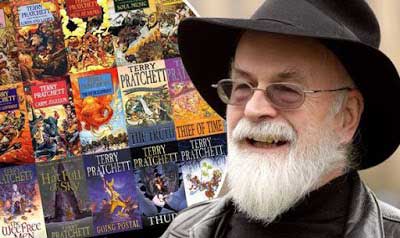
Terry Pratchett's Guide to God, Genesis, Sacred Scriptures, Ethics, Fate, Science, Nature, Philosophy, Funny Lines, History, Politics, and Education

Terry Pratchett's Guide to God

Terryʼs last moments and final words

Death and What Comes Next: A Discworld short story by Terry Pratchett


Personal Opinions

Belief was never mentioned at home, but right actions were taught by daily example. Possibly because of this, I have never disliked religion. I think it has some purpose in our evolution… I number believers of all sorts among my friends. Some of them are praying for me. Iʼm happy they wish to do this, I really am, but I think science may be a better bet.

So what shall I make of the voice that spoke to me recently as I was scuttling around getting ready for yet another spell on a chat-show sofa? More accurately, it was a memory of a voice in my head, and it told me that everything was OK and things were happening as they should. For a moment, the world had felt at peace. Where did it come from? Me, actually — the part of all of us that, in my case, caused me to stand in awe the first time I heard Thomas Tallisʼs Spem in alium, and the elation I felt on a walk one day last February, when the light of the setting sun turned a plowed field into shocking pink; I believe itʼs what Abraham felt on the mountain and Einstein did when it turned out that E=mc2. Itʼs that moment, that brief epiphany when the universe opens up and shows us something, and in that instant we get just a sense of an order greater than Heaven and, as yet at least, beyond the grasp of Stephen Hawking. It doesnʼt require worship, but, I think, rewards intelligence, observation and inquiring minds.

There is a rumor going around that I have found God. I think this is unlikely because I have enough difficulty finding my keys, and there is empirical evidence that they exist.


On God(s)

Night poured over the desert. It came suddenly, in purple. In the clear air, the stars drilled down out of the sky, reminding any thoughtful watcher that it is in the deserts and high places that religions are generated. When men see nothing but bottomless infinity over their heads they have always had a driving and desperate urge to find someone to put in the way.

God moves in extremely mysterious, not to say, circuitous ways. God does not play dice with the universe; He plays an ineffable game of His own devising, which might be compared, from the perspective of any of the other players [i.e. everybody], to being involved in an obscure and complex variant of poker in a pitch-dark room, with blank cards, for infinite stakes, with a Dealer who wonʼt tell you the rules, and who smiles all the time.

It is embarrassing to know that one is a god of a world that only exists because every probability curve must have a far end.

When someone is saved from certain death by a strange concatenation of circumstances, they say thatʼs a miracle. But of course if someone is killed by a freak chain of events - the oil spilled just there, the safety fence broken just there — that must also be a miracle.

“G-d does not play games with His loyal servants,” said the Metatron, but in a worried tone of voice.
“Whooo-eee,” said Crowley. “Where have you been?”

Only a mile away from the shepherd and his flock was a goatherd and his herd. The merest accident of microgeography had meant that the first man to hear the voice of Om, and who gave Om his view of humans, was a shepherd and not a goatherd. They have quite different ways of looking at the world, and the whole of history might have been different. For sheep are stupid, and have to be driven. But goats are intelligent, and need to be led.

After four years of theological college he wasnʼt at all certain of what he believed, and this was partly because the Church had schismed so often that occasionally the entire curriculum would alter in the space of one afternoon. But also—They had been warned about it. Donʼt expect it, theyʼd said. It doesnʼt happen to anyone except the prophets. [But the Great God,] Om doesnʼt work like that. Om works from inside — but heʼd hoped that, just once, that Om would make himself known in some obvious and unequivocal way that couldnʼt be mistaken for wind or a guilty conscience. Just once, heʼd like the clouds to part for the space of ten seconds and a voice to cry out, “Yes, Mightily-Praiseworthy-Are-Ye-Who-Exalteth-Om! Itʼs All Completely True! Incidentally, That Was A Very Thoughtful Paper You Wrote On The Crisis Of Religion In A Pluralistic Society!”

And it came to pass that in time the Great God Om spake unto Brutha, the Chosen One: “Psst!”

There are a hundred pathways to Om. Unfortunately, I sometimes think someone left a rake lying across a lot of them.

Seeing, contrary to popular wisdom, isnʼt believing. Itʼs where belief stops, because it isnʼt needed anymore.

[Pascalʼs Wager] is very similar to the suggestion put forward by the Quirmian philosopher Ventre, who said, “Possibly the gods exist, and possibly they do not. So why not believe in them in any case? If itʼs all true youʼll go to a lovely place when you die, and if it isnʼt then youʼve lost nothing, right?” When he died he woke up in a circle of gods holding nasty-looking sticks and one of them said, “Weʼre going to show you what we think of Mr. Clever Dick in these parts…”

Itʼs a god-eat-god world.

The trouble with gods was that if they didnʼt like something they didnʼt just drop hints.

When you can flatten entire cities at a whim, a tendency towards quiet reflection and seeing-things-from-the-other-fellowʼs-point-of-view is seldom necessary.

The trouble with being a god is that youʼve got no one to pray to.

It was easy to respect an invisible god. It was the ones that turned up everywhere, often drunk, that put people off.

She was, of course, beautiful. You seldom saw a goddess portrayed as ugly. This probably had something to do with their ability to strike people down instantly.

Gods donʼt like people not doing much work. People who arenʼt busy all the time might start to think.

Gods prefer simple, vicious games, where you Do Not Achieve Transcendence but Go Straight To Oblivion; a key to the understanding of all religion is that a godʼs idea of amusement is Snakes and Ladders with greased rungs.

The gods of the Disc have never bothered much about judging the souls of the dead, and so people only go to hell if thatʼs where they believe, in their deepest heart, that they deserve to go. Which they wonʼt do if they donʼt know about it. This explains why it is so important to shoot missionaries on sight.

Thereʼs a tendency [in religion] to declare that there is more backsliding around than the national toboggan championships, that heresy must be torn out root and branch, and even arm and leg and eye and tongue, that itʼs time to wipe the slate clean. Blood is generally considered very efficient for this purpose.

“Blessings be upon this house,” said Granny, but in a voice that suggested that if blessings needed to be taken away, she could do that, too.

I commend my soul to any God that can find it.

Newton Pulsifer had never had a cause in his life. Nor had he, as far as he knew, ever believed in anything. It had been embarrassing, because he quite wanted to believe in something, since he recognized that belief was the lifebelt that got most people through the choppy waters of Life. Heʼd have liked to believe in a supreme God, although heʼd have preferred a half-hourʼs chat with Him before committing himself, to clear up one or two points. Heʼd sat in all sorts of churches, waiting for that single flash of blue light, and it hadnʼt come. And then heʼd tried to become an official Atheist and hadnʼt got the rock-hard, self-satisfied strength of belief even for that. And every single political party had seemed to him equally dishonest. And heʼd given up on ecology when the ecology magazine heʼd been subscribing to had shown its readers a plan of a self-sufficient garden, and had drawn the ecological goat tethered within three feet of the ecological beehive. Newt had spent a lot of time at his grandmotherʼs house in the country and thought he knew something about the habits of both goats and bees, and concluded therefore that the magazine was run by a bunch of bib-overalled maniacs. Besides, it used the word ‘community’ too often; Newton had always suspected that people who regularly used the word ‘community’ were using it in a very specific sense that excluded him and everyone he knew.

A man could be dogmatic, and that was all right, or he could be stupid, and no harm done, but stupid and dogmatic at the same time was too much.

God also helped those who helped themselves, and presumably expected the chosen to bring warm clothing, water purification tablets, basic medication, a weapon such as the bronze knives that were selling these days, possibly a tent - in short, to bring some common sense to the party.

Offer people a new creed with a costume and their hearts and minds will follow.

I can tell you what I feel. That God is not out there somewhere. God is in us, in our everyday lives. In the act of understanding. God is the sacredness of comprehension – no, of the act of comprehension.

Do you know what it feels like to be aware of every star, every blade of grass?… We [gods] have done it for eternity. No sleep, no rest, just endless… endless experience, endless awareness. Of everything. All the time. How we envy you, envy you! Lucky humans, who can close your minds to the endless deeps of space! You have this thing you call… boredom? That is the rarest talent in the universe! We heard a song — it went ‘Twinkle twinkle little star….’ What power! What wondrous power! You can take a billion trillion tons of flaming matter, a furnace of unimaginable strength, and turn it into a little song for children! You build little worlds, little stories, little shells around your minds, and that keeps infinity at bay and allows you to wake up in the morning without screaming!

[The god] Tak does not require that you think of him, but he does require that you think.

Gods didnʼt mind atheists, if they were deep, hot, fiery, atheists like Simony, who spend their whole life hating gods for not existing. That sort of atheism was a rock. It was nearly belief.


On Genesis

Anyone who could build a universe in six days isnʼt going to let a little thing like that happen. Unless they want it to, of course… Like: why make people inquisitive, and then put some forbidden fruit where they can see it with a big neon finger flashing on and off saying ‘THIS IS IT!’?

“I donʼt see whatʼs so terrific about creating people as people and then gettin’ upset ‘cos they act like people,” said Adam severely. “Anyway, if you stopped tellin’ people itʼs all sorted out after theyʼre dead, they might try sorting it all out while theyʼre alive.”

“Some people” – and here the creator looked sharply at the unformed matter still streaming past – “think itʼs enough to install a few basic physical formulas and then take the money and run. A billion years later you got leaks all over the sky, black holes the size of your head, and when you pray up to complain thereʼs just a girl on the counter who says she donʼt know where the boss is.

We might find out why mankind is here, although that is more complicated and begs the question ‘Where else should we be?’ It would be terrible to think that some impatient deity might part the clouds and say, ‘Damn, are you lot still here?’


On Holy Writings / Sacred Scriptures

There are no inconsistencies in the Discworld books; occasionally, however, there are alternate pasts.
[I wonder if defenders of the notions of the Bibleʼs “inerrancy” have used That excuse yet?—EB]

Granny had never had much time for words. They were so insubstantial. Now she wished that she had found the time. Words were indeed insubstantial. They were as soft as water, but they were also as powerful as water and now they were rushing over the audience, eroding the levees of veracity, and carrying away the past.

The stories never said why she was wicked. It was enough to be an old woman, enough to be all alone, enough to look strange because you have no teeth. It was enough to be called a witch. If it came to that, the book never gave you the evidence of anything. It talked about “a handsome prince”… was he really, or was it just because he was a prince that people called handsome? As for “a girl who was as beautiful as the day was long”… well, which day? In midwinter it hardly ever got light! The stories donʼt want you to think, they just wanted you to believe what you were told.

Legislation was passed to put some honesty into reporting. Thus, if a legend said of a notable that “all men spoke of his prowess” any bard who valued his life would add hastily “except for a couple of people in his home village who thought he was a liar, and quite a lot of other people who had never really heard of him.”

And naturally, when you have one rumor, it buds little extra rumors. Just for the fun of it.

The truth isnʼt easily pinned to a page. In the bathtub of history the truth is harder to hold than the soap and much more difficult to find.

“Iʼm just saying man is naturally a mythopoeic creature.”
“Whatʼs that mean?” said the Senior Wrangler.
“Means we make things up as we go along,” said the Dean, not looking up.

The trouble with gods is that after enough people start believing in them, they begin to exist. And what begins to exist isnʼt what was originally intended.

We spray our fantasies on the landscape like a dog sprays urine. It turns it into ours. Once weʼve invented our gods and demons, we can propitiate or exorcise them. Once weʼve put fairies in the sinister solitary thorn tree, we can decide where we stand in relation to it; we can hang ribbons on it, see visions under it—or bulldoze it up and call ourselves free of superstition.

People think that stories are shaped by people. In fact, itʼs the other way around. Stories exist independently of their players. If you know that, the knowledge is power. Stories, great flapping ribbons of shaped space-time, have been blowing and uncoiling around the universe since the beginning of time. And they have evolved. The weakest have died and the strongest have survived and they have grown fat on the retelling… stories, twisting and blowing through the darkness. And their very existence overlays a faint but insistent pattern on the chaos that is history. Stories etch grooves deep enough for people to follow in the same way that water follows certain paths down a mountainside. And every time fresh actors tread the path of the story, the groove runs deeper. This is called the theory of narrative causality and it means that a story, once started, takes a shape. It picks up all the vibrations of all the other workings of that story that have ever been. This is why history keeps on repeating all the time.


On Ethics

Goodness is about what you do. Not who you pray to.

The gods were there to do the duties of a megaphone, because who else would people listen to? [On the other hand] some of the most terrible things in the world are done by people who think, genuinely think, that theyʼre doing it for the best, especially if there is some god involved.

Evil begins when you begin to treat people as things.

Iʼd rather be a rising ape than a falling angel.

“And what would humans be without love?”
RARE, said Death.

Human beings mostly arenʼt particularly evil. They just get carried away by new ideas, like dressing up in jackboots and shooting people, or dressing up in white sheets and lynching people, or dressing up in tie-dye jeans and playing guitars at people. Offer people a new creed with a costume and their hearts and minds will follow. Anyway, being brought up as a Satanist tended to take the edge off it. It was something you did on Saturday nights. And the rest of the time you simply got on with life as best you could, just like everyone else.

I see evil when I look in my shaving mirror. It is, philosophically, present everywhere in the universe in order, apparently, to highlight the existence of good. I think there is more to this theory, but I tend to burst out laughing at this point.


On Fate

You know what the greatest tragedy is in the whole world?… Itʼs all the people who never find out what it is they really want to do or what it is theyʼre really good at. Itʼs all the sons who become blacksmiths because their fathers were blacksmiths. Itʼs all the people who could be really fantastic flute players who grow old and die without ever seeing a musical instrument, so they become bad plowmen instead. Itʼs all the people with talents who never even find out. Maybe they are never even born in a time when itʼs even possible to find out. Itʼs all the people who never get to know what it is that they can really be. Itʼs all the wasted chances.


On Science & Nature

Humans! They lived in a world where the grass continued to be green and the sun rose every day and flowers regularly turned into fruit, and what impressed them? Weeping statues. And wine made out of water! A mere quantum-mechanistic tunnel effect, thatʼd happen anyway if you were prepared to wait zillions of years. As if the turning of sunlight into wine, by means of vines and grapes and time and enzymes, wasnʼt a thousand times more impressive and happened all the time.

Science: A way of finding things out and then making them work. Science explains what is happening around us the whole time. So does religion, but science is better because it comes up with more understandable excuses when it is wrong.

The Universe contains everything and nothing.
There is very little everything.
And more nothing than you can possibly imagine.

It is hard to understand nothing, but the multiverse is full of it.

Once we were blobs in the sea, and then fishes, and then lizards and rats and then monkeys, and hundreds of things in between. This hand was once a fin, this hand once had claws! In my human mouth I have the pointy teeth of a wolf and the chisel teeth of a rabbit and the grinding teeth of a cow! Our blood is as salty as the sea we used to live in! When weʼre frightened, the hair on our skin stands up, just like it did when we had fur. We are history! Everything weʼve ever been on the way to becoming us, we still are… Iʼm made up of the memories of my parents and my grandparents, all my ancestors. Theyʼre in the way I look, in the color of my hair. And Iʼm made up of everyone Iʼve ever met whoʼs changed the way I think.

Animal minds are simple, and therefore sharp. Animals never spend time dividing experience into little bits and speculating about all the bits theyʼve missed. The whole panoply of the universe has been neatly expressed to them as things to (a) mate with, (b) eat, (c) run away from, and (d) rocks. This frees the mind from unnecessary thoughts and gives it a cutting edge where it matters. Your normal animal, in fact, never tries to walk and chew gum at the same time. The average human, on the other hand, thinks about all sorts of things around the clock, on all sorts of levels, with interruptions from dozens of biological calendars and timepieces. Thereʼs thoughts about to be said, and private thoughts, and real thoughts, and thoughts about thoughts, and a whole gamut of subconscious thoughts. To a telepath the human head is a din. It is a railway terminus with all the Tannoys talking at once. It is a complete FM waveband- and some of those stations arenʼt reputable, theyʼre outlawed pirates on forbidden seas who play late-night records with limbic lyrics.

Human beings, little bags of thinking water held up briefly by fragile accumulations of calcium.

Everything starts somewhere, though many physicists disagree. But people have always been dimly aware of the problem with the start of things. They wonder how the snowplow driver gets to work, or how the makers of dictionaries look up the spelling of words.

There are very few starts. Oh, some things seem to be beginnings. The curtain goes up, the first pawn moves, the first shot is fired - but thatʼs not the start. The play, the game, the war is just a little window on a ribbon of events that may extend back thousands of years. The point is, thereʼs always something before. Itʼs always a case of Now Read On.

Extinct. Now thereʼs a terrible word if you like. A word beyond death, because extinction means your children are dead too, and your grandchildren and their children will never even be born.

Light thinks it travels faster than anything, but it is wrong. No matter how fast light travels, it finds the darkness has always got there first, and is waiting for it.

One day when I was a young boy on holiday in Uberwald I was walking along the bank of a stream when I saw a mother otter with her cubs. A very endearing sight, Iʼm sure youʼll agree, and even as I watched, the mother otter dived into the water and came up with a plump salmon, which she subdued and dragged onto a half submerged log. As she ate it, while of course it was still alive, the body split and I remember to this day the sweet pinkness of its roes as they spilled out, much to the delight of the baby otters, who scrambled over themselves to feed on the delicacy. One of natureʼs wonders, gentlemen. Mother and children dining upon mother and children. And that is when I first learned about evil. It is built into the very nature of the universe. Every world spins in pain. If there is any kind of supreme being, I told myself, it is up to all of us to become his moral superior.

Most species do their own evolving, making it up as they go along, which is the way Nature intended. And this is all very natural and organic and in tune with mysterious cycles of the cosmos, which believes that thereʼs nothing like millions of years of really frustrating trial and error to give a species moral fibre and, in some cases, backbone. This is probably fine from the speciesʼ point of view, but from the perspective of the actual individuals involved it can be a real pig.

Youʼve got to face it, all this stuff about golden boughs and the cycles of nature and stuff just boils down to sex and violence, usually at the same time.


On Philosophy

The truth shall make thee fret.

The presence of those seeking the truth is infinitely to be preferred to the presence of those who think theyʼve found it.

“Whatʼs a philosopher?” said Brutha. Someone whoʼs bright enough to find a job with no heavy lifting, said a voice in his head.

Take it from me, whenever you see a bunch of buggers puttering around talking about Truth and Beauty and the best way of attacking Ethics, you can bet your sandals itʼs all because dozens of other poor buggers are doing all the real work around the place.

“Thatʼs right,” he said. “Weʼre philosophers. We think, therefore we am.”

It is said that someone at a party once asked the famous philosopher Ly Tin Weedle “Why are you here?” and the reply took three years.

Philosophy professors are like genies or demons – if you donʼt word things exactly right, they delight in giving you absolutely accurate and completely misleading answers.

When they look into The Life of Wen the Eternally Surprised [philosopher], the first question they ask is: ‘Why was he eternally surprised?’ And they are told: ‘Wen considered the nature of time and understood that the universe is, instant by instant, recreated anew. Therefore, he understood, there is in truth no past, only a memory of the past. Blink your eyes, and the world you see next did not exist when you closed them. Therefore, he said, the only appropriate state of the mind is surprise. The only appropriate state of the heart is joy. The sky you see now, you have never seen before. The perfect moment is now. Be glad of it.’

The truth may be out there, but the lies are inside your head.

Wisdom comes from experience. Experience is often a result of lack of wisdom.

That statement is either so deep it would take a lifetime to fully comprehend every particle of its meaning, or it is a load of absolute tosh. Which is it, I wonder?

His philosophy was a mixture of three famous schools - the Cynics, the Stoics and the Epicureans - and summed up all three of them in his famous phrase, “You canʼt trust any bugger further than you can throw him, and thereʼs nothing you can do about it, so letʼs have a drink.”

Death: “There Are Better Things In The World Than Alcohol, Albert.”
Albert: “Oh, yes, sir. But alcohol sort of compensates for not getting them.”

People who say things like ‘may all your dreams come true’ should try living in one for five minutes.

Time is a drug. Too much of it kills you.

The whole of life is just like watching a film. Only itʼs as though you always get in ten minutes after the big picture has started, and no-one will tell you the plot, so you have to work it out all yourself from the clues.

His job was to make sense of the world, and there were times when he wished that the world would meet him halfway.

If you trust in yourself and believe in your dreams and follow your star, youʼll still get beaten by people who spent their time working hard and learning things and werenʼt so lazy.

The harder I work, the luckier I get.

There isnʼt a way things should be. Thereʼs just what happens, and what we do.

If you donʼt turn your life into a story, you just become a part of someone elseʼs story.

What have I always believed? That on the whole, and by and large, if a man lived properly, not according to what any priests said, but according to what seemed decent and honest inside, then it would, at the end, more or less, turn out all right.

Every intelligent being, whether it breathes or not, coughs nervously at some time in its life.

Even our fears make us feel important, because we fear we might not be.

“You Fear To Die?”
“Itʼs not that I donʼt want… I mean, Iʼve always… itʼs just that life is a habit thatʼs hard to break…”

A Dialogue With Death

Susan: “Youʼre saying humans need… fantasies to make life bearable.”

DEATH: “No. Humans Need Fantasy To Be Human. To Be The Place Where The Falling Angel Meets The Rising Ape.”

Susan: “Tooth fairies? Hogfathers?”

DEATH: “Yes. As Practice. You Have To Start Out Learning To Believe The Little Lies.

Susan: “So we can believe the big ones?”

DEATH: “Yes. Justice. Duty. Mercy. That Sort Of Thing.”

Susan: “Theyʼre not the same at all!”

DEATH: “Really? Then Take The Universe And Grind It Down To The Finest Powder And Sieve It Through The Finest Sieve And Then Show Me One Atom Of Justice, One Molecule Of Mercy. And Yet You Act, Like There Was Some Sort Of Rightness In The Universe By Which It May Be Judged.

Susan: “Yes, but people have got to believe that, or whatʼs the point—”

DEATH: My Point Exactly.


Funny Lines

Mind you, the Elizabethans had so many words for the female genitals that it is quite hard to speak a sentence of modern English without inadvertently mentioning at least three of them.

The question seldom addressed is *where* Medusa had snakes. Underarm hair is an even more embarrassing problem when it keeps biting the top of the deodorant bottle.

Sheʼd become a governess. It was one of the few jobs a known lady could do. And sheʼd taken to it well. Sheʼd sworn that if she did indeed ever find herself dancing on rooftops with chimney sweeps sheʼd beat herself to death with her own umbrella.

“The female mind is certainly a devious one, my lord.”
Vetinari looked at his secretary in surprise. “Well, of course it is. It has to deal with the male one.”

Heʼd noticed that sex bore some resemblance to cookery: it fascinated people, they sometimes bought books full of complicated recipes and interesting pictures, and sometimes when they were really hungry they created vast banquets in their imagination - but at the end of the day theyʼd settle quite happily for egg and chips. If it was well done and maybe had a slice of tomato.

Nanny Ogg looked under her bed in case there was a man there. Well, you never knew your luck.

No-one with their sleeves rolled up who walks purposefully with a piece of paper held conspicuously in their hand is ever challenged.

Inside every old person is a young person wondering what happened.

“Thereʼs a door.”
“Where does it go?”
“It stays where it is, I think.”

They didnʼt know why these things were funny. Sometimes you laugh because youʼve got no more room for crying. Sometimes you laugh because table manners on a beach are funny. And sometimes you laugh because youʼre alive, when you really shouldnʼt be.


On History

It was so much easier to blame it on Them. It was bleakly depressing to think that They were Us. If it was Them, then nothing was anyoneʼs fault. If it was us, what did that make Me? After all, Iʼm one of Us. I must be. Iʼve certainly never thought of myself as one of Them. No one ever thinks of themselves as one of Them. Weʼre always one of Us. Itʼs Them that do the bad things.

Lots of people in history have only done their jobs and look at the trouble they caused.

There are hardly any excesses of the most crazed psychopath that cannot easily be duplicated by a normal kindly family man who just comes in to work every day and has a job to do.

Death: Human Beings Make Life So Interesting. Do You Know, That In A Universe So Full Of Wonders, They Have Managed To Invent Boredom.

The world is full of little people with big dreams! They want dancing girls! They want thrills! They want elephants! They want people falling off roofs! They want dreams!

‘The Pyramids of Tsort by moonlight!’ breathed Ysabell, ‘How romantic!’ [Did you know they were] Mortared With The Blood Of Thousands Of Slaves?

It was nice to think that mankind made a distinction between blowing their planet to bits by accident and doing it by design.

Some humans would do anything to see if it was possible to do it. If you put a large switch in some cave somewhere, with a sign on it saying ‘End-of-the-World Switch. Please Do Not Touch,’ the paint wouldnʼt even have time to dry.


On Politics

You canʼt make people happy by law. If you said to a bunch of average people two hundred years ago “Would you be happy in a world where medical care is widely available, houses are clean, the worldʼs music and sights and foods can be brought into your home at small cost, traveling even 100 miles is easy, childbirth is generally not fatal to mother or child, you donʼt have to die of dental abscesses and you donʼt have to do what the squire tells you” theyʼd think you were talking about the New Jerusalem and say “yes.”

“Heʼs muffed it,” said Simony. “he could have done anything with them. And he just told them the facts. You canʼt inspire people with facts. They need a cause. They need a symbol.”

“Donʼt you want to die nobly for a just cause?”
“Iʼd much rather live quietly for one.”

The poor devils. They thought a king would make them free.

Donʼt put your trust in revolutions. They always come around again. Thatʼs why theyʼre called revolutions.

‘Fear generates big profits.’ ‘Youʼre very cynical.’ ‘Joshua, cynicism is the only reasonable response to the antics of humanity.’

Weʼre really good at it, Teppic thought. Mere animals couldnʼt possibly manage to act like this. You need to be a human being to be really stupid.

The people who really run organizations are usually found several levels down, where it is still possible to get things done.

It was sad, like those businessmen who came to work in serious clothes but wore colorful ties in a mad, desperate attempt to show there was a free spirit in there somewhere.


On Education

Getting an education was a bit like a communicable sexual disease. It made you unsuitable for a lot of jobs and then you had the urge to pass it on.

His progress through life was hampered by his tremendous sense of his own ignorance, a disability which affects all too few.

Cutangle: While Iʼm still confused and uncertain, itʼs on a much higher plane, d’you see, and at least I know Iʼm bewildered about the really fundamental and important facts of the universe.
Treatle: I hadnʼt looked at it like that, but youʼre absolutely right. Heʼs really pushed back the boundaries of ignorance.
They both savoured the strange warm glow of being much more ignorant than ordinary people, who were only ignorant of ordinary things.

“We all think we understand each other,” Kin heard Silver say. “We eat together, we trade, many of us pride ourselves on having alien friends - but all this is only possible, only possible, Kin, because we do not fully comprehend the other. Youʼve studied Earth history. Do you think you could understand the workings of of the mind of a Japanese warrior a thousand years ago? But he is as a twin to you compared with Marco, or with myself. When we use the word ‘cosmopolitan’ we use it too lightly — itʼs flippant, it means weʼre galactic tourists who communicate in superficialities. We donʼt comprehend. Different worlds, Kin. Different anvils of gravity and radiation and evolution.”

Source