

The Famous Thomas More / William Tyndale Polemic. They debated each other for 2000 pages. Both were also executed. Harsh words, harsh times.

Thomas More

An excellent paper concerning The Thomas More / William Tyndale Polemic is now online. This famous debate between a prominent Catholic and Protestant totaled 2000 pages and covered a host of issues on which Catholics and Protestants remain divided even today. An edited version of the introduction to the paper is below. One can see More and Tyndale employing arguments against each other that an agnostic or atheistic scholar might apply against both today.

Also see my blog entry, Tertullianʼs Paradox; Insufficiency of both Reason & Scripture, that highlights the way Catholic scholars employ modern critical biblical scholarship to dispute the Protestant claim that the Bible interprets itself, never contradicts itself, and speaks so plainly and uniformly such that all religious authority lay in the Bible alone (Sola Scriptura). Meanwhile Protestants employ modern critical investigative techniques to dispute Catholic claims that religious authority lay in a visible church that has survived for 2000 years and been preserved from error via Godʼs revelatory care and whose truth is made visible via countless tales of “miracles.” After such scholarly investigations on the part of both Catholics and Protestant one may note that neither:

  1. Protestant claims of “Sola Scriptura,” nor,

  2. Catholic claims of special revelations and miracles, appear highly convincing. They have in effect debunked each other to death and continue to do so today, both using modern techniques of study.

And see The Famous Burgh-Spinoza Exchange, another famous exchange, this time between Spinoza, the first man to have a book published that questioned the divine inspiration of the Bible, and one of his former students who converted to Catholicism.

Besides the finer points of the debate between More and Tyndale that one can read below, More also mentioned that when Lutheran soldiers in Italy took Rome (as forces of the Holy Roman Empire) they committed all kinds of horrors, hanging men by their “privy members,” raping women, roasting children on spits. The full passage from More starts on page 97 of the online manuscript and is reproduced directly below:

Of this [Lutheran] sect was the great part of those ungracious people also, which late entered into Rome with the duke of Bourbon, not only robbing and spoiling the city as well their own friends as the contrary part, but like very beasts did also violate the wives in the sight of their husbands, slew the children in the sight of the fathers. And to extort the discovering of more money, when men had brought out all that ever they had to save themselves from death or further pain, and were at pacts and promises of rest without further business, then the wretched tyrants and cruel tormenters, as though all that stood for nothing, ceased not to put them eftsoons to intolerable torments. And old ancient honourable men, those fierce heretics letted [=obstructed] not to hang up by the privy members [=penises], and from many they pulled them off and cast them in the street. And some brought out naked with his hands bounden behind him, and a cord tied fast unto his privy members. Then would they set before him in his way other of those tyrants with their Moorish pikes the points toward the breasts of these poor naked men. And then one or two of those wretches would stand behind those Moorish pikes, and draw the poor souls by the members toward them. Now then was all their cruel sport and laughter either to see the silly naked men in shrinking from the pikes to tear off their members. Or for pain of that pulling to run their naked bodies in deep upon the pikes. Too piteous and too abominable were it to rehearse the villainous pain and torments that they devised on the silly women, to whom, after that they had beastly abused them, wives in the sight of their husbands, and the maidens in the sight of their fathers, they were reckoned for piteous that did no more but cut their throats. And very certain is it, that not in Rome only, but also in the country of Milan that they kept and oppressed, after torments used and money fet out that way, than some calling himself a gentleman in Almain or Spain, would fain himself fallen in love of his hostʼs daughter, and that he would marry her in any wise, and then make [S6v] much earnest business for to have some money with her. And whether he gat aught or gat naught by that device, he letted not soon after to put the father, the mother, the fair daughter and all the whole house to new torments, to make them tell where any more money were, were there any or none. And some failed not to take the child and bind it to a broche, and lay it to the fire to roast, the father and mother looking on. And then begin to common of a price for the sparing of the child, asking first an hundred ducats, then fifty, then forty, then twenty, then ten, then five, then twain, when the silly father had not one left, but these tyrants had all before. Then would they let the child roast to death. And yet in derision as though they pitied the child they would say to the father and the mother, Ah, fie, fie for shame what marvel is it though God send a vengeance among you. What unnatural people be you that can find in your hearts to see your own child roasted afore your face, rather than ye would out with one ducat to deliver it from death.

Thus devised these cursed wretches so many diverse fashions of exquisite cruelties, that I ween they have taught the devil new torments in hell, that he never knew before, and will not fail to prove himself a good scholar, and surely render them his lesson when they come there, where it is to be feared that many of them be by this. For soon after that they had in Rome exercised a while this fierce and cruel tyranny, and entered into the holy churches, spoiled the holy relics, cast out the blessed sacrament, pulled the chalice from the altar at mass, slain priests in the church, left no kind of cruelty or spite undone, but from hour to hour imbruing their hands in blood, and that in such wise as any Turk or Saracen would have pitied or abhorred, our lord sent soon after such a pestilence among them that he left not of them the third part alive. For this purpose I rehearse you this their heavy mischievous dealing, that ye may perceive by their deeds, what good cometh of their sect. For as our saviour saith ye shall know the tree by the fruit.

Now for the Introduction to The Thomas More / William Tyndale Polemic: A Selection by Matthew DeCoursey, Hong Kong Institute of Education (Most of the work for this edition was done during the term of a postdoctoral fellowship from the Social Science and Humanities Research Council of Canada, spent at the Catholic University of America and the Folger Shakespeare Library.)

Introduction

From the beginning of the Reformation in 1517, philology was a crucial element of Protestant thought. Sola scriptura, “the scripture alone” was a Reformation slogan, and the nature of that scripture was defined in philological terms. Luther used Erasmusʼs edition of the Greek New Testament with a revised Latin translation in an effort to reach the sources of biblical thought. When Luther understood the original languages well enough, he translated the text into German for the common reader. William Tyndale followed his example in English, laying the foundations for most of our King James Version. These new translations were arguably consistent with the original languages, but certainly inconsistent with the Latin Vulgate, the Bible of the Roman church. This break with the past was controversial because it implied a discontinuity in the church, a separation between the church and God. It breached a vision of the church as a unified consensus of the faithful existing continuously since the time of Christ, a vision that motivated More to write the polemical texts excerpted in this book. Each of the two could discredit the other on his own terms: Tyndale argued that mistranslations of particular words in the Bible had created an illusion that the Bible supported the visible church and its hierarchy; More argued that no one in an imperfect world can reason so well as to justify opposition to a visibly sacred church.

For us today, the content of the debate is of more than usual interest. The Reformation in general, of course, changed the course of European and ultimately global history. Nor did these two men merely repeat the conventional arguments made for and against Luther on the Continent. More was a writer of great stature in 1529: at a time when fewer than ten books a year were published either in English, or in Latin by Englishmen, More had published six, all but one in Latin.1 Tyndale would ultimately affect the course of the English language through his deep influence on subsequent English versions of the Bible. They wrote these works in the shadow of violence: besides the threat of execution, the Peasantsʼ War had already taken place, and the relation between theology and violence was an important issue here, as we shall see. Through their stature with their respective religious communities, both of these two writers would be reprinted frequently in future centuries.


Thomas Moreʼs Execution

The importance of this exchange has been recognized by historians and literary historians for many years, but it has never received the scholarly attention its significance would justify. The main reason for this is simply that it is tremendously long, at almost 2,000 pages, and the parts are not all of equal interest. Specialists in Thomas More or William Tyndale work on their author for decades or entire careers without reading the controversy all the way through. Even when one does read these works, it is difficult to keep track of the flow and exchange of ideas because of the enormous bulk of the material and the forbidding hostility of some of the exchange: the two authors accuse each other of “railing,” and each is right about parts of the otherʼs work. Moreʼs writings in particular have attracted negative comment even from those who specialize in them. Timothy DʼAlton writes that the Dialogue is a “long, often tedious work” (52), and Richard Marius writes that the Confutation of Tyndaleʼs Answer is an interminable desert, stretching to a hellish horizon under the untempered sun, and we find burning on every page a monotonous fury that deadens the soul. (p. 425)

Anne OʼDonnell and Jared Wicks wonder whether the Confutation “has ever had more than a dozen readers in any generation” (xxvii). These are typical responses among those few who have read this massive work, but the strength of repulsion masks the virtues of Moreʼs accomplishment: it is in the Confutation that More offers his most cogent criticisms of the Protestant program. Tyndaleʼs writings were of necessity more concise—they were smuggled, after all—but much of what is in them is responsive. A nuanced understanding of what Tyndale has to say is dependent on a reading of More.

The goal of this edition is to bring the major points of the controversy within the reach of both students and specialists. Through this book, readers can gain an understanding of the relations between the two writersʼ ideas, and the ways in which they tried to respond to each other. . . . Those who wish to go further in the study of this fascinating conflict may refer to the full, original-spelling editions of the works, Moreʼs from Yale University Press (now complete) and Tyndaleʼs from Catholic University of America Press (in progress).

William Tyndaleʼs Execution

Both sides of this controversy can be viewed as responses to Martin Luther.

More was involved in refuting Luther from the beginning. He participated in the production of Henryʼs Assertio septem sacramentorum (Marius, Thomas More, 278). By his own account, he had an editorial role, but he may have been responsible for more, given the obvious wisdom of ceding credit to kings. He went on from there to write a Responsio ad Lutherum (Response to Luther, 1523) and an extended letter to Johann Bugenhagen (1526 or 27), also in Latin, which last was not published until much later. In March, 1528, Cuthbert Tunstall, Bishop of London, wrote a letter authorizing More to read heretical books in order to refute them in English. Tyndaleʼs Obedience must have come into Moreʼs hands later the same year. The Dialogue appeared in 1529, and More became Lord Chancellor in October of the same year.

Like many other Lutherans, Tyndale was first a Catholic humanist before he took up the cause of the Reformation. The little evidence we have about his life before he began to publish all refers to Erasmus and not Luther.

The earliest salvo in the controversy between the two was Tyndaleʼs Obedience of a Christian Man. For the most part, Tyndaleʼs Obedience deals with the most urgent aspect of this disagreement: the relation of the new doctrine to political rebellion. The treatise is primarily an effort to construct a view of political authority on biblical terms. Tyndale argues from his philological understanding of the Greek and Hebrew Bible that scripture does not support the existence of a church hierarchy, let alone mandate obedience to it; but it does support the authority of kings (Obedience D5r-E2r). Part of the purpose of the treatise is to counter the accusation against Lutherans that their doctrine is destructive of all authority. Catholic polemicists had maintained that Lutherʼs denial of ecclesiastical hierarchy would lead to the downfall of all hierarchy, and the Peasantsʼ War had greatly strengthened their position. In the passages included here, Tyndale asserted that it was the church hierarchy that encouraged disobedience to kings, by refusing them full sovereignty over their clerical subjects and maintaining a separate kingdom (66-7 infra) Like Luther, Tyndale condemned rebellion against established rulers, but he argued that those who were newly aware of the crimes perpetrated against them were not so much to be blamed if they thought it legitimate to wield a sword in Godʼs name. He told of James and John, who wished that fire should come from heaven to consume the Samaritans, and were rebuked by Christ. “If Christʼs disciples were so long carnal what wonder is it, if we be not all perfect the first day?” Tyndale even blames the [Catholic] church itself for the violence of the rebels, since it had encouraged “bloody imaginations” of violence against heretics, Turks and Jews, and that this bloodiness was now almost justly turning on its authors (p. 66 infra).

We can also perceive in this treatise Tyndaleʼs fondness for typology, and its polemical use to support the Lutheran cause. In the first pages, Tyndale presents the situation of Protestants as identical with that of Christ and his disciples in the time of the Gospels. In so far as Tyndale and his followers were rebellious, they were, Tyndale implies, neither more nor less so than was Christ when he was on earth. The [Catholic] church authorities were behaving like the scribes and pharisees of the stories, collaborating in the deaths of martyrs as the Jewish religious authorities collaborated in the death of Christ. He presents the scribes and pharisees as plotting to deceive the people and Christ as revealing the genuine truth of the Hebrew scripture. In the Obedience, Tyndale offers a quotation that would resonate throughout the controversy:

“By their fruits ye shall know them.”

For Tyndale, that meant that believers should examine the lives of flesh-and-blood clerics among them, and ask themselves whether this life was the result of a true and pure faith in God, or of a “belly wisdom” that taught them how to satisfy their bodily hungers by deceiving the people.

Anticipating the charge of lust against Luther and others who married despite previous religious vows, he [Tyndale] presented priests as taking any number of prostitutes, but hypocritically remaining unmarried (125 infra). In the Prologue (reprinted here) and elsewhere, priests appear as warmongers, creating wars between princes to preserve their own power (66-7 infra). He ironically lists the many rituals of the church, suggesting that their main point is to raise money for priests. He asks why the Mass is in Latin, and replies that it is to keep the people mystified by revealing nothing, and charging money, too, for a ceremony that almost none of the flock could understand (115 infra). By this means, the clergy succeeded in cheating the people at once of their worldly goods and of their salvation.

Moreʼs Dialogue Concerning Heresies Answers the Obedience with Four Kinds of Arguments.

One group of arguments disputes Protestant characterization of church corruption, arguing in effect that Protestant assertions about the “fruits” of clerical sin carried the force only of rumour. More argued that while corruption existed, as it must exist in any human entity, there was no firm evidence that the church was integrally corrupt. To show that the orthodox had always known of such frauds, More told the story of Duke Humphrey exposing a false miracle. More is sure that God will not allow his church to accept anything fraudulent for long, so if a story is old, its age is evidence of truth.

Subordinate to this point, but argued at great length, is a discussion of the nature of evidence. Through a series of thought-experiments, More asks what justifies the fixation of belief. For example, he suggests that a “black” man in India might hear of the existence of white people. Would he believe it? By such illustrations, More builds up a skepticism about the possibility of knowing anything, especially by the reading of texts, and concludes from this skepticism that the only thing to do is accept the authority of the Holy Church, which alone can know certainly. The legitimacy and continued occurrence of miracles is for him a crucial point: God blesses the established church by granting miracles at shrines and on pilgrimages, but no such blessing comes to the Lutherans. This kind of argument takes up much of Books I and II.

Secondly, More argues in Book III against Tyndaleʼs translations of key terms [in the Bible].

Thirdly, he [More] challenges the rationality of Tyndaleʼs trust in sola scriptura, “the scripture alone.” Moreʼs position is that the only way he or Tyndale can know that the scripture is the scripture is from the authority of the church, and that the church therefore has logical precedence. It has the authority to interpret the Bible just has it has the authority to say what the Bible is. He repeatedly quotes Matthew 28:20, “Lo, I am with you all the days to the worldʼs end,” to show that Jesus is still guiding the church.

Finally, More presented a vision of the origin and fate of heresy which served to underpin a negative view of Protestant character, supplying a motivation for the irrationality of Protestant claims. He deals with [the character of] such Englishmen accused of heresy as Richard Hunne and Thomas Bilney, but the model case is that of Luther. More presented Luther as a man of irrational pride, who received a license to sell indulgences from the pope and saw it taken away again. He “fell to railing” against “all pardons,” contradicting himself at every turn. In spite of his irrationality, Lutherʼs ravings were persuasive. The people quickly realized that Lutherʼs heresies freed them from the normal obligations and duties of civilized society, and forgot that the social disorder resulting from this indiscipline would hurt them. Lords found it advantageous to use Lutherʼs ideas as an excuse to seize church lands, and so the heresy grew. The doctrine of predestination was part of this devilish mix, and led the Lutheran soldiers in Italy to believe that they were not responsible for their own actions, but might impute any sin to God. When they took Rome, then, as forces of the Holy Roman Empire, they committed all kinds of horrors, some of which More describes: old men are hung up by their “privy members,” women raped, and children roasted on spits.

Tyndaleʼs Answer to Sir Thomas Moreʼs Dialogue stresses the importance of philology, setting out detailed arguments for each of his translations. Besides that technical argument, his introduction presents a vision of the philological man as spiritual, since the one who genuinely accepts and loves Godʼs law never stops studying it, to see what it really is, what it means. He says the spiritual man
never leaveth searching till he come at the bottom, the pith, the quick, the marrow and very cause why, and judgeth all thing. (p. 112 infra)

Tyndale takes a phrase from More to represent the opposite tendency: More had written that we must “captive and subdue our understanding to serve and follow faith.” In the introduction and throughout the book, Tyndale returns to this phrase in order to present More as wilfully brainless, ready to accept the most illogical rule, as long as authority enjoins it. Later in the treatise, Tyndale further develops the process by which he believed church ceremonies first came about, and then were emptied of their meaning.


Execution of William Tyndale using Strangulation and Burned for Heretical Act of Translation of Bible

It is also in the Answer that Tyndale develops the very characteristic notion of “feeling faith,” which he had adapted from Melancthon. More had criticized Lutheran adherence to “faith alone,” saying that it is very easy to believe in the words of the Gospel, but this would not prevent people from committing crimes.13 Tyndale answers that he is not referring to intellectual assent, as More seems to think, but rather to the powerful conviction that comes of true experience (141 infra). Intellect and emotion, then, relate differently for our two authors:

Tyndale sees the development of understanding as intellectual, but the results of developing faith as emotional. That is, one arrives at faith through intellect (combined with the grace of God), but the proof of true faith is in emotional conviction. For More, faith is a simpler matter of trust, and intellect enters into the question thereafter. He values emotional conviction, but it is not a consequence of faith as it is for Tyndale. He depicts the faithful Christian developing emotion in faith by the contemplation of images, by a process of self-persuasion, as Erasmus had recommended.

This tension between views of emotion and faith is congruent on each side of the debate with views of philology. For Tyndale, if a reader is first intellectual, philological analysis is a natural way of arriving at the truth of a textʼs meaning, and it is after the “spiritual man”ʼs analysis that “feeling faith” emerges. Moreʼs trust in the visible church means that the common believer should first of all trust the teachings of the church, as they come down from the larger church through the parish priest. For More, independent philological analysis of the biblical text must take place with the guidance of the church. More had believed in philology, but only as a way of reinforcing the unity between the Bible and the church: to use philology to split the church is to miss the heart of the matter.

It is only in the last treatise, the Confutation of Tyndaleʼs Answer, that More comes to the strongest part of his case against Tyndale, in the impracticality of Tyndaleʼs vision for ordinary people. They cannot be the “spiritual man” demanded by the reformer, as they have lives to live, and may not be very educated anyway. More creates a fictional dialogue between two ordinary women and Tyndaleʼs fellow reformer Robert Barnes. They ask him a series of questions about the significance of his program for them. Since they are not learned people, and since they cannot spend all their time scrutinizing the Scripture, how are they to know truth from falsehood?

At the outset, the first woman claims to trust Barnes, but wants to know how she is to stay on the right path once he is gone. The second woman, who is illiterate, is more hostile. The standard Protestant answer to their question, which Barnes gives, would be that a good preacher will give them doctrine that is consistent with the scripture. In the Obedience, as we have seen, Tyndale had recommended a program of teaching to enable them to make good judgements. Moreʼs women point out that this will not do—and here Moreʼs understanding of language comes into play in a way that conflicts strongly with Tyndaleʼs. More does not believe that certain knowledge can arise from a text, analyzed by philological means or not. His women are not only the unlearned, but all humanity. At the same time, the inferiority of their femaleness serves to disgrace Protestants: even women can confute the reformers. [A rhetorical ploy that J. P. Holding likes to use today by employing a female bunny character or a female theologian character as seen in one of his videos. — E.T.B.]

Looking globally at the arguments and responses here, it is noticeable that this is not a dialogue of the deaf. The two men understand the nature of each otherʼs arguments very well. Nor is this surprising, for both were Erasmians.

Tyndale went beyond Erasmus . . . For Erasmus, the elements of corruption and superstition were parasitic upon the true religion inherent in the church; for Tyndale, they were symptoms of a rot that went to the core.

Both differ from Erasmus in being very much concerned with political reality and the stability of society. They owed this concern to the earlier history of the debates—for Lutherʼs critics had forced a concern with social stability onto him—and to the concrete history of events. Lutherʼs critics had claimed that his attack on the authority of the church hierarchy would lead to the erosion of all authority and ultimately to anarchy. They claimed victory on the point, not unreasonably, when the Peasantsʼ War broke out in 1524 (Bagchi, 108). Tyndale arrived in Germany the same year, so he must have been there and either seen its effects, or heard of them at close quarters. It was Tyndale, then, who brought up the question of social stability, holding that social order should be determined by the Bible.

More responded with his own version of proper authority, what it should govern, and who should hold it. He believed that the established and visible church was the expression of Godʼs truth in the world, and held legitimate sway over the lives of humanity. He viewed the position of the pope as divinely instituted, and the popeʼs pronouncements as harmonious at once with the Bible and with the “consensus of all the faithful” as expressed in General Councils of the western church. (This is not to say that he believed in the infallibility of the pope, which was not received doctrine at the time.) Militating in Moreʼs favour on this matter was the great longevity of the papacy. The original pope was said to have been St. Peter, invested to his position by Jesus Christ in the words, “Thou art Peter, and on this rock I will build my church” (Matthew 16:18). Even if one insisted on hard historical evidence, the papacy was still at least a thousand years old, and such durability seemed to imply a divine blessing. More than the pope, however, what mattered to More was the sense of unity, of a continuous tradition of belief through the centuries.

In the course of writing against Protestants, More found it increasingly important to develop the ways in which God communicates truth to his church. . . . God spoke to the world in the words of Christ, as written in the Bible and as preserved in church tradition, but also in “secret inspiration,” as Simon Peter knew without being told that Jesus was the son of God. Jesus replied to Peter, “Thou art blessed, Simon the son of John, for neither flesh nor blood hath revealed and showed this to thee, but my father that is in heaven” (Mt 16: 5-7 translation Moreʼs, modernized, CWM 6:143). More argued that this same secret inspiration had shown itself in the church throughout its history. That is why the practices of the church are to be viewed as inspired, even if there is no biblical basis for them, since Godʼs people have been moved to a practice by inner inspiration. This is how he accounts, for example, for the churchʼs practice of adding water to wine during the Eucharist. Similarly, doctrine develops not by reason alone, as Tyndale seemed to imply in his rational figure of the “spiritual man,” but by reason under the guidance of the Spirit. Certainly, a false prophet may emerge at any time, falsely claiming to have divine guidance, but for More the question was resolved in the consensus omnium fidelium, the consensus of all the faithful. All those whose hearts are open to divine inspiration are in time brought to agree, and the heretical branches of the church, deprived of the divine sap, eventually die as old heresies like Arianism had died. That is why More frequently presents lists of saints who he says agreed with the point that More is making at the time (109 and others infra), and why in the Confutation he presents a vision of the church assembled on Salisbury Plain, unanimous in its condemnation of Luther, Tyndale and the other Protestants (188ff. infra).

More [also] exploits an important weakness of the Protestant position: if the church is invisible, how can anyone know what church to follow? More has an answer for this question, and a huge body of texts to refer to, while the sincere questioner tending toward the Lutheran position is left making a complex judgement that might escape doctors of the Sorbonne: which preacher is most rational and most faithful to Scripture?

To Tyndale, the hierarchy of the church from the papacy to the parish priest was a thoroughly human institution, dedicated to perpetuating its own prestige, power, and wealth. A good deal of space in his polemical writings was taken up with the effort to present familiar elements of religious life as parts of a large plot to prevent Christians from understanding that they are being cheated at once of their religious inheritance and of their worldly goods. He asked why the Mass was in Latin, and answered that the papacy believed in the need to keep the people ignorant and unquestioning. He tried to defamiliarize the Mass by speaking of “mumming”: it was a theatrical presentation intended not to communicate, but to keep the people fascinated by revealing nothing (Obedience O1r-v). He noted the peopleʼs belief that presence at mass brings luck and personal security. Like Erasmus, he denounced far-fetched allegorical interpretation; unlike him, he consistently presented allegory as a conscious means of ensuring that the people did not understand. It seemed significant to Tyndale that the Bible passages supporting the power of the popes had to be read allegorically in order to carry this meaning. (Obedience H7r).

For Tyndale, the hope of genuine Christians in the face of this plotting lay in the persistence of Godʼs truth embedded in the institutional fabric of the Catholic church. The church was constantly plotting against religion, but God had not allowed his scriptures to be entirely changed and lost, but only wickedly interpreted and presented with significant flaws. In Tyndaleʼs view, even the ceremonies of the Roman church carried elements of symbolism which came down from a less corrupt time, and which could be used to recover the truth of Christianity (129-30 infra).

It is for this reason that philology was a central concern for Tyndale. What is now called philology is a set of techniques developed by the Renaissance humanists for the understanding of classical texts. Sometimes the words on the page had been corrupted in transmission, but might be reconstructed by the comparison of texts and close reasoning. Sometimes the words had been correctly transmitted, but had been misunderstood because language change had not been properly taken into account: a word in a particular text might be understood as carrying a meaning that had arisen long after the text had been written. Martin Luther had applied such techniques to the interpretation of the Bible: for instance, he used Johannes Reuchlinʼs comments on the Hebrew word sadaq to inform his thought on the key concept of justification (Cummings 66-7).20

When More came to criticize Tyndaleʼs New Testament, he focused his attack on six glosses. Tyndale rendered ekklesia as “congregation” rather than “church”; presbyteros as “elder” rather than “priest”; agape as “love” rather than “charity”; charis as “favour” rather than “grace”; homologia as “knowledging” rather than “confession”; metanoia as “repentance” or “forethinking” rather than “penance.” In each case, Erasmus had raised questions in his commentaries, pointing out that the Vulgate translations were problematic, as they did not match known pre-Christian usage. Erasmus had pointed out the problems, but had reaffirmed his commitment to the unified and universal church. Tyndale, consistently with what we have seen, regarded these translations as showing a plot to prevent the people from perceiving that the visible church had not support in scripture.

In three cases out of six, these terms had direct consequences for the nature of the priesthood.

When we combine these changes in translation with Tyndaleʼs denial that the office of the Pope is referred to in the Bible, the result is a Bible that offers no support for hierarchical church government, and has no priests in the conventional sense.

In the Confutation, More makes a much more serious effort to respond to Tyndaleʼs philological points than he had done in the Dialogue. As with the passage of the women and Barnes, the philological argument in the Confutation is better than anything along the same lines he had previously written. Yet the passages are so long and the expression so obscure that it proved impossible to include any meaningful extract of the argument in this book. 21

In the Confutation, More recognizes the problems raised by philological scholarship. More veers between mocking Tyndale on tendentious grounds and raising serious questions about philological method.

The power of philology and translation to affect oneʼs basic understanding of religion and politics made these, in Moreʼs view, dangerous things to give individuals. More distrusted the goodwill, virtue and intelligence of the ordinary citizen, and consequently, he tended to authoritarian ideas on public morality. In the Utopia, published before Lutherʼs name was known, More had made his Utopians prescribe severe penalties for fornication, saying that no one would ever get married if pleasure were available freely.22 His History of King Richard III, even earlier, had presented the mass of humanity as gullible and prone to wrong judgments in political matters. So in the Dialogue Concerning Heresies, More favours the translation of the Bible into English, but suggests that bishops should keep a tight control over all copies of the translations. Some people, More thinks, should see only a few of the safer parts of the Bible, and the truly foolish and rash should not see any of it. Only a few of the wisest might be trusted with the whole book. In Moreʼs view, it would have been far better if Luther had remained ignorant, unable to use the Bible to support his own pride, ambition and especially lust.

Tyndale, in contrast, had a belief in the capacity of the ordinary Christian which might well seem excessive today. In a passage of the Obedience included here, he asks that the clergy should teach Christians not only the biblical text, but also I would have you to teach them also the properties and manner of speakings of the scripture, and how to expound proverbs and similitudes. And then if they go abroad and walk by the fields and meadows of all manner doctors and philosophers they could catch no harm. (58 infra)

Perhaps there are few Protestant members of clergy—today, or ever—who could confidently say that their flocks understand Hebrew and Greek idiom, and the problems of interpreting idiom in translation. Philological competence is a key issue.

There are dangers in editing these texts, because the issues they discuss are still alive. Protestants may object that More has more pages in this book, or Catholics that I have not included the best of Moreʼs arguments. Any selection is contentious, and I have included less than ten percent of the total. I hope that this selection will give access to an important exchange to many who would not have read the nearly 2000 pages of the original.

End of the Introduction. See the full paper online.

Carnival of Science, The Bible, Philosophy, and Humor

Tweets attributed to “God” on Twitter:

People like to imagine Me coming down to end civilization because itʼs less scary than imagining being left alone and doing it yourselves.

The people who think the world will end all at once will be largely responsible for it ending gradually.

If itʼs any consolation, the nine quintillion other universes I oversee are all going to sh*t too.

Praying is the definition of the least you can do.

The best thing about atheists is they never blame Me.

The people who say “itʼs all part of God's plan” give Me waaay too much credit.

tweets from jmiz8

When people tell me “I found the Lord” I assume the Lord had been hiding from them. Then I pray for Jesus to find some better hiding spots.

I have a Christian friend who is so devout he refuses to covet his own wife.

I get religious people being anti-abortion, but them thinking .25mg of estrogen or 2 grams of latex can stop the “fate of god” I'm fuzzy on.

Carnival

Naked female scientist tries to tame belugas in the freezing Arctic

Green Porno - Dolphins (what kinds of sex WONʼT dolphins have?)

The Simpsons, Quotations!

Marge [praying before having sex]: Dear Lord, thank you for the physical intimacy we are about to enjoy.
Homer: And as always, have fun watching.

Homer ordering ice cream at a Christian theme park: “One Tower of Babel and build it to Heaven” (Ge 11:1-9).

Homer: Whatʼs the big deal about going to some building every Sunday. I mean, isnʼt God everywhere?
Bart: Amen, brother.
Homer: And donʼt you think that the almighty has better things to worry about then where one little guy spends one measly hour of this week?
Bart: Tell it, Daddy.
Homer: And what if we pick the wrong religion? Every week weʼre just making God madder and madder.
Bart: Testify!

Rev. Lovejoy [playing a Protestant in days of Queen Elizabeth]: Lord Jesus, although our country turned protestant for the soleful reason that our fat mean King could dump his faithful wife, we know youʼre on our side. So please destroy these horrible monsters [Catholics] who believe your mother should be revered.

Ned Flanders praying in Israel: ..and Lord, thank you for letting me be in this wonderful place where the end of the world will soon begin.

Pirate: We must pray to Santa Maria to save us. Santa Maria de Guadalope, mystical rosa, interceda por .. (lightning strikes the ship.) One of you were not praying!

Homer: Oh heavenly God, my son is plagued with homework. With Your vast knowledge of “The Shore Birds of Maryland”, I know You can help him.

Homer: Dear Lord, the gods have been good to me, and I am thankful. For the first time in my life, everything is absolutely perfect just the way it is. So hereʼs the deal; you freeze everything as it is and I wonʼt ask for anything more. If that is okay, please give me absolutely no sign. Okay, deal. In gratitude, I present you this offering of cookies and milk. If you want me to eat them for you, give me no sign. Thy will be done.

Futurama Quotations

Zoidberg: Whoʼs brave enough to fly into something we all keep calling a death sphere?

Bender: Dying sucks butt. How do you living beings cope with mortality?
Leela: Violent outbursts.
Amy: General slutiness.
Fry: Thanks to denial, Iʼm immortal.

Reverend Lionel Preacherbot: The only lies worth believing are the ones in the Bible.

Hermes [showing line graph]: As you can see, since Benderʼs death, request to bite one shiny metal ass are down 98%. [Scruffy walks by, using parts of Benderʼs disconnected robot body as a noisy vacuum cleaner] Do you mind doing that later?
Scruffy: Bite my shiny metal ass. [the end of Hermeʼs line graph rises]

God: Bender, being God isnʼt easy. If you do too much, people get dependent on you, and if you do nothing, they lose hope. You have to use a light touch. Like a safecracker, or a pickpocket.
Bender: Or a guy who burns down a bar for the insurance money!
God: Yes, if you make it look like an electrical thing. When you do things right, people wonʼt be sure youʼve done anything at all.

Bender: I choose to believe what I was programmed to believe!

GODʼS BLOG (from the New Yorker, humor)

New novel poses the question whether God might not simply be an adolescent: There Is No Dog by Meg Rosoff – review

Interesting Bible News!

“The Book of Jeremiah is now one-seventh longer than the one that appears in some of the 2,000-year-old manuscripts known as the Dead Sea Scrolls. Some verses, including ones containing a prophecy about the seizure and return of Temple implements by Babylonian soldiers, appear to have been added after the events happened.”

St. Christina The Astonishing!
Her life story was composed by a contemporary! (Witty writer sums up what we know about her, the original flying nun!)

10 Vestigial Traits You Didnʼt Know You Had (The article left out all the vestiges left in the human genome, from genes inserted by viruses in our ancestors to pseudogenes, and multiplying jumping genes that landed in the same relative places in us and our predecessors. What are the odds! Obviously they didnʼt land in the same places, we inherited the same DNA.)

Violence Vanquished: We believe our world is riddled with terror and war, but we may be living in the most peaceable era in human existence. Why brutality is declining and empathy is on the rise.

According to Cavanaugh every concentrated community of power, whether of religion or of the state, is likely to tilt toward violence under certain circumstances. He also thinks that during the 17th century the western world went from religions that deemed themselves beyond criticism to governments that did so, calling it a “migration of the holy.” He judges that the nation-state was formed at the turn of the modern era as a concentration of power for the conduct of war. In order to sustain itself in the violence business the nation-state has taken to itself religious or quasi-religious claims that are shrouded so as not to be subject to the critique that it is a form of religion that is producing violence. In the end the nation-atate--not least the U.S. in its pious, self assured, exceptionalism—has become the core idol in the modern world. “God Bless America.” We are witnesses to an assumed holiness of the state in its aggression that is rooted in a myth that continues to have wide and uncritical acceptance. So says the reviewer of Cavanaughʼs two recent books. Cavanaughʼs view reminds me of Eric Hofferʼs view in The True Believer. Though Cavanaugh is a Christians and Hoffer an atheist.

Quotations From Logan Pearsall Smith, E. M. Cioran, Kierkegaard.

Prey turns on Predator! Beetle larva flaps its tail, enticing the frog to come after it,then the frog swallows it, but canʼt keep it down, then the larva attaches itself to the frogʼs belly and sucks and eats it till the frog is just bones.

“Brain eating” amoeba kills three people

Plants survive animal attacks by creating lots of new DNA. Creationists take note, nature makes more DNA naturally. And portions of that continue to undergo mutation.

The bacterium responsible for the Black Death was once a mild stomach bug.

Rats were not responsible for the Black Death (I thought that the medieval killing of cats contributed to burgeoning rat populations that led to the fleas on rats carrying the plague).

6 Animals That Kill Natureʼs Scariest Creatures For Fun

500+ Atheism versus Theism Debates

“Atheist,” a poem by sci-fi author Dennis Danvers I recommend Circuit of Heaven, and also his recent short story, “The Fairy Princess.”

The Damned Sing The Damnedest Songs

The Word “Objective” is Overused When It Comes to Morality (Christianity and “Absolute” Morality)

Objective Morality

The word “objective” is overused when it comes to morality. In fact, “objective morality” seems to be one of the last bastions left to modern day defenders of classical theism. In ages past they could rely on more than just arguments for “objective morality,” because they could point to the “objective fact” of the immobility of the earth whose foundations could not be moved except by Yahweh, or they could point to the “objective fact” that the earth lay at the center of the cosmos between the underworld and heaven above, or they could point to the “objective fact” that one lone species, Homo Sapiens, was not related to any other species but created directly out of the ground by the power of Yahweh — a species that was central to His whole scheme of creation, having Adam be His gardener, followed by expulsion from the garden, then later, salvation and recreation of the heavens and the earth.

But if humans are not the only large-brained mammalian social species, if they are related to species of upright hominids with larger brains than any living primates (now extinct), and if we do not live in the center of the cosmos, nor even on a particularly stable planet, then what about human morality as well? How “objective” can it be?

I think moralizing is an imperfect process, a relative one, but not “absolutely” relative. For instance, “up and down” are not to be confused as being exactly the same direction, and we can tell the difference between things that are “higher and lower” relative to one another. We know that 99.9% of people would agree that having their lives taken from them at some other personʼs whim is less acceptable than having their belongings taken from them at some other personʼs whim, and so on down the scale. Humans are also a species like other species that is filled with numerous desires and goals, not with just one main desire and goal. Thatʼs why itʼs difficult to define “the meaning of life” for everyone. Humans will risk their lives for “causes,” almost any cause will do, from religious ones to political ones or a bevy of non-religious ones, or they will risk their lives for whatever they are attached to, be it a person, a nation, some physical object(s), to various ideas. Also, the desires and goals of the individual are constantly being tried and weighed against those of family, friends, cities in which one lives, states in which one lives, the nation in which one lives, not to mention pacts between nations, and global issues concerning the environment and economics, and any of those spheres of activity and interaction can be in conflict with one another. So, morality is an imperfect process. (There are at least eight major theories of ethics in philosophy, not to mention the questions and “ethical dilemmas” that impinge upon the legitimacy of each theory. See for instance, Eight Theories of Ethics by Gorden Graham, and, 101 Ethical Dilemmas by Martin Cohen)

Sadly, due to spheres of sometimes conflicting interest, conflicting knowledge, miscommunication and stubbornness, human beings have suffered at each othersʼ hands for as long as human beings have had hands. Throughout history and in fields of human endeavor as diverse as religion, politics, science, art, and education, great minds have suffered at the hands of little minds; great hearts and souls have suffered at the hands of the heartless and the soulless; obstinate hearts, minds and souls have suffered at the hands of equally obstinate hearts, minds and souls. Those inflicting the suffering often thought they were right to do so. And those experiencing it took succor in believing that their faith, or ideas, or actions, were right.

But on the brighter side, the vast majority of humans would sooner receive a handshake or hug than a smack in the face, would sooner have more friends than deadly enemies, would sooner have health, peace and safety than live in a world of violence where their lives or belongings are taken from them at another personʼs whim.

Christianity & “Absolute Morality”

Christianity provides its own evidence that morality is an imperfect process, as one can see when you compare the fact that nowhere in the Bible is mass murder, slavery, polygamy, concubinage, universally condemned, but each is divinely instituted and/or acceptable based on the era and circumstances.

And concerning claims of the “objectivity” of Christian morality, one canʼt help but notice how presumptuous it is to laud such “objectivity” when there remain plenty of disagreements over what a list of such “objective moral laws” might be, aside from the obvious ones that even secularists assent to like laws against murder and theft as mentioned above. The OT books of law contain plenty of divinely inspired laws but nobody but the most hard-nosed Calvinist adores them, and even then they adore them from afar, knowing that theyʼd get arrested if they starting stoning homosexuals, witches, women-not-found-to-be-virgins on their wedding nights, and disobedient children in their mid-teens. As for the NT, Jesus also left a long list of commands to his followers in his sermons, including such things as “take no thought for the morrow, or what ye shall eat or drink” “sell all you have and give it to the poor, then you will have treasure in heaven,” “give to all who ask, asking nothing in return,” “love your enemies,” but again, those are adored from afar, not to be confused with a “morally objective” list of laws to be enforced by government. This leaves us with the two millennial-old panorama of Christians disagreeing over a panoply of laws, for instance, whether or not Christians should be more pro-war or more pro-peace; disagreeing on the slavery question (no where in the Bible is slavery ever declared to be a “sin,” but slaves are to be duly disciplined, as even Jesus taught in a parable); disagreeing on what legal actions ought to be taken in cases of witchcraft, blasphemy, heresy; disagreements on whether or not one should beat oneʼs child blue with a rod and not stop for their crying—as prescribed in the Psalms; disagreeing over whether public and private school teachers should be allowed to physically discipline children; what laws should be made concerning divorce, capital punishment, etc. Even the abortion issue and end-of-life questions provoke disagreements among Christians, theologians, biblical scholars.

Further Thoughts


Thereʼs a lot people gripe about concerning human decision-making and human history. The difference between my views and those of say, a devout Christian like Augustine is that I donʼt think weʼd all be angels if “Adam hadnʼt eaten a piece of forbidden fruit,” or that “original sin” is to blame. Rather, I view the matter biologically, psychologically, and sociologically. Humans are both a social and competitive species, and thereʼs also plain old ignorance and stupidity to blame, as well as inherent difficulties in acquiring knowledge and sharing it, difficulties in learning and communicating. And there are cultural differences that include religious differences. And thereʼs the way the mind makes grandiose assumptions and generalizations, and how we learn to fear and like different things, or fear and like the same things but to different degrees.

We learn to love different things too, different holy books, different literature, different songs, and even within the writings we love thereʼs parts we may love more than others do, and other parts we may dislike more than others do. But none of us can simply turn on love and hate at will, nor can we simply turn on “belief” or “faith” at will. Itʼs all part of a process, and not an easy one. “Instant conversion” stories are far rarer than the norm of lengthy enculturation. In fact “instant conversions” involve a feeling at first, but oneʼs education in whatever religion (or lack of religion) that one has “converted to” comes later.

Michael Shermer also makes some interesting points:

I wanna believe and you do too, in fact I think belief is the natural state of things, itʼs the default option, we just believe, we believe all sorts of things. Belief is natural, while disbelief, science, skepticism is not natural. Itʼs more difficult, itʼs uncomfortable to not believe things. We have a belief engine in our brains. We are pattern seeking primates who seek associations between things. So we connect the dots, thinking A is connected to B, and sometimes it really is connected to B. We find patterns we make connections, whether itʼs Pavlovʼs dog associating the sound of a bell with food and then salivating to the sound of a bell, or a rat pressing a lever expecting food to appear. In fact it was discovered that if you put a pigeon in a box where it has to press one or two keys for a reward in the hopper box, if you start to randomly assign rewards such that there is no pattern, the pigeon will imagine there must be one, such that whatever the pigeon was doing just before the reward appeared, the pigeon will repeat that particular pattern, sometimes it was even spinning around twice counter clockwise, once clockwise, and peck the key twice. And thatʼs called superstition. [Michael Shermer, The Pattern Behind Self Deception, a TED talk, 2010]

Franz de Waal, the primatologist who has studied bonobos for decades, and written some great books, including Peacemaking Among Primates, Our Inner Ape, and Primates and Philosophers: How Morality Evolved, has some fascinating things to say:

The possibility that empathy resides in parts of the brain so ancient that we share them with rats should give pause to anyone comparing politicians with those poor, underestimated creatures.

Iʼve argued that many of what philosophers call moral sentiments can be seen in other species. In chimpanzees and other animals, you see examples of sympathy, empathy, reciprocity, a willingness to follow social rules. Dogs are a good example of a species that have and obey social rules; thatʼs why we like them so much, even though theyʼre large carnivores.

To endow animals with human emotions has long been a scientific taboo. But if we do not, we risk missing something fundamental, about both animals and us.

Review of a Book About Why We Choose The Things We Do

LET there be no mistake: nothing that you remember, think or feel is as it seems. Your memories are mere figments of your imagination and your decisions are swayed by irrational biases. Your emotions reflect the feelings of those around you as much as your own circumstances. In What Makes Your Brain Happy, David DiSalvo takes us on a whistle-stop tour of our mindʼs delusions. No aspect of daily life is left untouched: whether he is exploring job interviews, first dates or the perils of eBay, DiSalvo will change the way you think about thinking. DiSalvoʼs talk in his title of “happy brains” has little to do with joy and well-being, though. Instead, it is shorthand for our grey matterʼs tendency to choose the path of least resistance. When explaining confirmation bias, for instance, DiSalvo cites brain scans showing that we treat conflicting information as if it is a physical threat. As a result, we choose the “happier” option of ignoring details that donʼt fit our views. DiSalvo admits in his introduction that the happy brain metaphor is “intentionally oversimplified”. Indeed, by the end of the book it has been stretched dangerously thin. In a chapter on imitation, for example, he tells us that “a happy brain is happy to copy”. But an “unhappy” brain is just as big a copycat – that is how our mirror neurons work, whatever our mood. If you can ignore these glitches, What Makes Your Brain Happy is an enjoyable manual to your psyche that may change your life. As DiSalvo says: “The brain is a superb miracle of errors, and no one, except the brainless, is exempt.”

On Morality

The vast majority of us heartily dislike having our lives or belongings taken from us at someone elseʼs whim. Such “dislikes” are so universal itʼs not difficult to imagine that how “laws” originated that incorporated such “dislikes.”

Furthermore… to quote De Waal, and also Mary Midgley:

Forgiveness is not, as some people seem to believe, a mysterious and sublime idea that we owe to a few millennia of Judeo-Christianity. It did not originate in the minds of people and cannot therefore be appropriated by an ideology or a religion. The fact that monkeys, apes, and humans all engage in reconciliation behavior (stretching out a hand, smiling, kissing, embracing, and so on) means that it is probably over thirty million years old, preceding the evolutionary divergence of these primates…Reconciliation behavior [is] a shared heritage of the primate order… When social animals are involved…antagonists do more than estimate their chances of winning before they engage in a fight; they also take into account how much they need their opponent. The contested resource often is simply not worth putting a valuable relationship at risk. And if aggression does occur, both parties may hurry to repair the damage. Victory is rarely absolute among interdependent competitors, whether animal or human. [Frans De Waal, Peacemaking Among Primates]

Darwin proposed that creatures like us who, by their nature, are riven by strong emotional conflicts, and who have also the intelligence to be aware of those conflicts, absolutely need to develop a morality because they need a priority system by which to resolve them. The need for morality is a corollary of conflicts plus intellect:

Man, from the activity of his mental faculties, cannot avoid reflection… Any animal whatever, endowed with well-marked social instincts, would inevitably acquire a moral sense or conscience as soon as its intellectual powers had become as well-developed, or anything like as well-developed as in man.(Charles Darwin, The Descent of Man)

That, Darwin said, is why we have within us the rudiments of such a priority system and why we have also an intense need to develop those rudiments. We try to shape our moralities in accordance with our deepest wishes so that we can in some degree harmonize our muddled and conflict-ridden emotional constitution, thus finding ourselves a way of life that suits it so far as is possible.

These systems are, therefore, something far deeper than mere social contracts made for convenience. They are not optional. They are a profound attempt—though of course usually an unsuccessful one—to shape our conflict-ridden life in a way that gives priority to the things that we care about most.

If this is right, then we are creatures whose evolved nature absolutely requires that we develop a morality. We need it in order to find our way in the world. The idea that we could live without any distinction between right and wrong is as strange as the idea that we—being creatures subject to gravitation—could live without any idea of up and down. That at least is Darwinʼs idea and it seems to me to be one that deserves attention. [Mary Midgley, “Wickedness: An Open Debate,” The Philosopherʼs Magazine, No. 14, Spring 2001]

On Evil & God

On the question of evil, Christian theology says that everything arose directly and solely from the omnipotent power, will, intelligence and compassion of “God,” who also remains “in” all things. So what room is there for “evil” to arise? None. There should not be any “evil” if thatʼs what you believe about “God.”

Does God have free will? How can He? By definition He knows everything and only makes the perfect decision, and has all power too, so He can make sure his decisions go where He knows they must go. So God has no free will. And for that matter, neither do we, based on the above definitions of “God.”

“Free will” is not an answer. A totally “free” will is no more beneficial when it comes to making wise decisions than spinning a wheel of fortune. What we need is not “free” will but “intelligence.” We need to make intelligent decisions, not “free” ones, and for intelligent decisions we need to continue to acquire knowledge. Rather than making “free will” decisions that are allegedly “disconnected” from this space-time cosmos, we need to be connected to the cosmos through all the knowledge we can acquire and all the foresight that knowledge can give us, so that we make intelligent decisions.

Lastly, if “free will” is so important will people have it in hell, and still be able to repent? Will people in heaven have “free will” and be able to sin and get damned later?

Søren Kierkegaard quotations

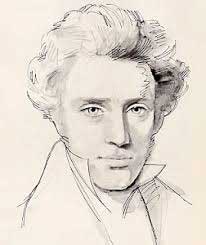
Søren Kierkegaard

“People demand freedom of speech as a compensation for the freedom of thought which they seldom use.”


“I begin with the principle that all men are bores. Surely no one will prove himself so great a bore as to contradict me in this.”


“Since my earliest childhood a barb of sorrow has lodged in my heart. As long as it stays I am ironic — if it is pulled out I shall die.”


“In addition to my other numerous acquaintances, I have one more intimate confidant. My depression is the most faithful mistress I have known — no wonder then that I return the love.”


“Above all do not forget your duty to love yourself.”


“The matter is quite simple. The bible is very easy to understand. But we Christians are a bunch of scheming swindlers. We pretend to be unable to understand it because we know very well that the minute we understand, we are obliged to act accordingly. Take any words in the New Testament and forget everything except pledging yourself to act accordingly. My God, you will say, if I do that my whole life will be ruined. How would I ever get on in the world? Herein lies the real place of Christian scholarship. Christian scholarship is the Church's prodigious invention to defend itself against the Bible, to ensure that we can continue to be good Christians without the Bible coming too close. Oh, priceless scholarship, what would we do without you? Dreadful it is to fall into the hands of the living God. Yes it is even dreadful to be alone with the New Testament.”


“The truth shall set ye free, but first it shall make ye miserable.”


“Far from idleness being the root of all evil, it is rather the only true good.”


“Life can only be understood backwards; but it must be lived forwards.”


“A strange thing happened to me in my dream. I was rapt into the Seventh Heaven. There sat all the gods assembled. As a special dispensation I was granted the favor to have one wish. ‘Do you wish for youth,’ said Mercury, ‘or for beauty, or power, or a long life; or do you wish for the most beautiful woman, or any other of the many fine things we have in our treasure trove? Choose, but only one thing!’ For a moment I was at a loss. Then I addressed the gods in this wise:

Most honorable contemporaries, I choose one thing — that I may always have the laughs on my side.

Not one god made answer, but all began to laugh. From this I concluded that my wish had been granted and thought that the gods knew how to express themselves with good taste: for it would surely have been inappropriate to answer gravely: your wish has been granted.”


“No, I won't leave the world—I'll enter a lunatic asylum and see if the profundity of insanity reveals to me the riddles of life. Idiot, why didn't I do that long ago, why has it taken me so long to understand what it means when the Indians honour the insane, step aside for them? Yes, a lunatic asylum—don't you think I may end up there?”


“I have just come from a party where I was the life and soul. Witticisms flows from my lips. Everyone laughed and admired me - but I left, yes, that dash should be as long as the radii of the earth's orbit ——— and I wanted to shoot myself.”—journal entry [cited by Alastair Hannay in Kierkegaard: a biography]


“How did I get into the world? Why was I not asked about it and why was I not informed of the rules and regulations but just thrust into the ranks as if I had been bought by a peddling shanghaier of human beings? How did I get involved in this big enterprise called actuality? Why should I be involved? Isn't it a matter of choice? And if I am compelled to be involved, where is the manager—I have something to say about this. Is there no manager? To whom shall I make my complaint?”


“My standpoint is armed neutrality.”


“To defend something is always to discredit it. Let a man have a warehouse full of gold, let him be willing to give away a ducat to every one of the poor - but let him also be stupid enough to begin this charitable undertaking of his with a defense in which he offers three good reasons in justification; and it will almost come to the point of people finding it doubtful whether indeed he is doing something good. But now for Christianity. Yes, the person who defends that has never believed in it.”—The Sickness Unto Death

C. S. Lewis said something similar:

“I envy you not having to think any more about Christian apologetics. My correspondents force the subject on me again and again. It is very wearing, and not v. good for one's own faith. A Christian doctrine never seems less real to me than when I have just (even if successfully) been defending it. It is particularly tormenting when those who were converted by my books begin to relapse and raise new difficulties.”—C. S. Lewis to Mary Van Deusen, June 18, 1956, The Collected Letters of C. S. Lewis, Volume III, p. 762.

Emil M. Cioran quotations (did he out-Nietzsche Nietzsche?)

Emil M. Cioran

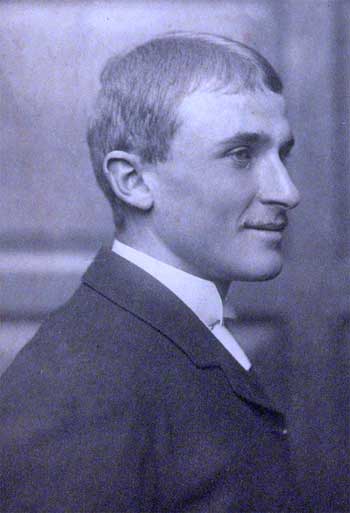
Emil M. Cioran twists my gut with laughter. His own mother once said that if she'd known he would grow up to be so depressed sheʼd have aborted him. He suffered chronic insomnia and rode his bicycle relentlessly through the countryside at night to try and weary himself enough to sleep. He was born in Romania, in 1911, the son of a Greek Orthodox priest. As Hitler rose to power he became anti-communist, anti-Semitic, pro-fascist, and confident that Hitler and his ally, the Romanian fascist dictator, were in the right. Then in the mid-1930s in Romania, when he was still in his early 20s, his first book was published, On the Heights of Despair, followed by The Book of Delusions, and Tears and Saints. In the lattermost work He was looking for a reason to become a believer by exploring the lives of some minor saints but was disillusioned by their penchant for suffering. To share a line from that work, “Schopenhaurer maintains that, if we were to invite the dead back to life, they would refuse. I believe, on the contrary, that they would die a second time from too much joy.” Published in Bucharest in 1937, the book caused quite a stir due to its dark humor that many considered blasphemous. That same year he moved to Paris and wrote A Short History Of Decay, All Gall is Divided: Aphorisms, The Temptation To Exist, History and Utopia, The New Gods, The Trouble With Being Born, Drawn and Quartered, and, Anathemas and Admirations, in that order.

Cioran said his “rejection of God sprung from agonic frenzy.” He complained that he could not feel “at home in God,” that he was a perpetual “exile in Him.” No matter how hard Cioran strove to love and to believe Christianity, his fervor was always undermined by doubt and despair. “My doubts cannot take me further than the shadow of His heart.” Another time he wrote, “One does not need to be a Christian in order to fear the Last Judgment, or even to understand it. Christianity did nothing but exploit human anguish to make profits for an unscrupulous divinity whose best ally was dread… Christianity delights in the sight of bloodstains [or if one is Protestant, singing hymns about ‘the blood’], its martyrs have transformed the world into a bloodbath. In this religion of blazing twilights, evil defeats the sublime… The ultimate cruelty was that of Jesus: leaving an inheritance of bloodstains of the cross.” Jesus, “the bloodthirsty and cruel Christ,” [was] “lucky to have died young. Had he lived to be sixty, he would have given us his memoirs instead of the cross.”

Cioran disagreed with “those who try to eliminate the fear of death through artificial reasoning… because it is absolutely impossible to cancel an organic fear by way of abstract constructs.” (from Searching for Cioran)

His work has been compared to that of the most famous French stylists, and it began appearing in English translation in the 1990s. Late in life Cioran gave up writing, not wanting to “slander the universe” anymore, and died a few years later (in 1995) after an encounter with an over-excited dog. Still, his words continue to provoke and enlighten, though not everyone can take them in large doses. So here's a small dose:

It is difficult, it is impossible to believe that the Good Lord—‘Our Father’—had a hand in the scandal of creation. Everything suggests that He took no part in it, that it proceeds from a god without scruples, a feculent god. Goodness does not create, lacking imagination; it takes imagination to put together a world, however botched. At the very least, there must be a mixture of good and evil in order to produce an action or a work. Or a universe. Considering ours, it is altogether easier to trace matters back to a suspect god than to an honorable one. (The New Gods)

A human being possessed by a belief and not eager to pass it on to others is a phenomenon alien to the earth… Look around you: everywhere, specters preaching, each institution translates a mission; city halls have their absolute, even as the temples — officialdom, with its rules — a metaphysics designed for monkeys… Everyone trying to remedy everyoneʼs life: even beggars, even the incurable aspire to it: the sidewalks and hospitals of the world overflow with reformers. The longing to become a source of events affects each man like a mental disorder or a desired malediction. Society — an inferno of saviors! (from “Genealogy of Fanaticism” in A Short History of Decay)

The compulsion to preach is so rooted in us that it emerges from depths unknown to the instinct for self-preservation. Each of us awaits his moment in order to propose something — anything. he has a voice: that is enough.

From snobs to scavengers, all expend their criminal generosity, all hand out formulas for happiness, all try to give directions: life in common thereby becomes intolerable, and life with oneself still more so; if you fail to meddle in other people's business you are so uneasy about your own that you convert your “self” into a religion, or, apostle in reverse, you deny it altogether; we are victims of the universal game. (from “The Anti-Prophet” in A Short History of Decay)

Consider the polemics of each age: they seem neither motivated nor necessary. Yet they were the very life of that age. Calvinism, Quakerism, Port-Royal, The Encyclopedia, the Revolution, Positivism, etc… what a series of absurdities… which had to be, what a futile and yet fatal expense! From the ecumenical councils to the controversies of contemporary politics, orthodoxies and heresies have assailed the curiosity of mankind with their irresistible non-meaning. Under various disguises there will always be pro and con, whether apropos of Heaven or the Bordello. Thousands of men will suffer for subtleties relating to the Virgin and the Son; thousands of others will torment themselves for dogmas less gratuitous but quite as improbable. All truths constitute sects which end by enduring the destiny of a Port-Royal, by being persecuted and destroyed; then, their ruins, beloved now and embellished with the halo of the iniquity inflicted upon them, will be transformed into a pilgrimage-site.

It is no less unreasonable to grant more interest to the arguments around democracy and its forms than to those which took place, in the Middle Ages, around nominalism and realism: each period is intoxicated by an absolute, minor and tiresome, but in appearance unique; we cannot void being contemporaries of a faith, of a system, of an ideology, cannot avoid being, in short, of our time. (from “The Decor of Knowledge” in A Short History of Decay)

The great philosophical systems are actually no more than brilliant tautologies. What advantage is it to know that the nature of being consists in the “will to live,” in the “idea,” or in the whim of God or of Chemistry? A mere proliferation of words, subtle displacements of meanings. “What is” loathes the verbal embrace, and our inmost experience reveals us nothing beyond the privileged and inexpressible moment. (from “Farewell to Philosophy” in A Short History of Decay)

Ideologies were invented only to give a luster to the leftover barbarism which has survived down through the ages, to cover up the murderous tendencies common to all men. Today we hate and kill in the name of something; we no longer dare do so spontaneously; so that the very executioners must invoke motives, and, heroism being obsolete, the man who is tempted by it solves a problem more than he performs a sacrifice.

Abstraction has insinuated itself into life — and into death; the “complexes” seize great and small alike. From the Iliad to psychopathology — there you have all of human history. (from “Faces of Decadence” in A Short History of Decay)

One of the Ancients said the doctrine of Epicurus has the “sweetness of the sirens.” It would be a waste of effort to look for a modern system that would deserve such praise. (Drawn and Quartered)

“What is truth?” is a fundamental question. But what is it compared to “How to endure life?” And even this one pales beside the next: “How to endure oneself?” – That is the crucial question to which no one is in a position to give us an answer. (Drawn and Quartered)

He who hates himself is not humble.

I have decided not to oppose anyone ever again, since I have noticed that I always end by resembling my latest enemy.

Each opinion, each view is necessarily partial, truncated, inadequate. In philosophy and in anything, originality comes down to incomplete definitions.

I turned away from philosophy when it became impossible to discover in Kant any human weakness, any authentic accent of melancholy. (Book of Delusions)

Never judge a man without putting yourself in his place. This old proverb makes all judgment impossible, for we judge someone only because, in fact, we cannot put ourselves in his place.

Lao-tse, reduced to a few texts, is not more naive than we who have read everything. (Book of Delusions)

I know that my birth is fortuitous, a laughable accident, and yet, as soon as I forget myself, I behave as if it were a capital event, indispensable to the progress and equilibrium of the world.

Dialogue becomes pointless with someone who escapes the procession of the years. I ask those I love to be kind enough to grow old.

If death is as horrible as is claimed, how is it that after the passage of a certain period of time we consider happy any being, friend or enemy, who has ceased to live?

In order to conquer panic or some tenacious anxiety, there is nothing like imagining your own burial. An effective method, readily available to all. In order not to have to resort to it too often in the course of a day, best to experience its benefit straight off, when you get up. Or else use it only at exceptional moments, like Pope Innocent IX, who, having commissioned a painting in which he was shown on his deathbed, glanced at it each time he had to make some important decision. (The Trouble with Being Born)

The human adventure will certainly come to an end… we need only look at man in the face to detach ourselves from him… Thousands of years of sufferings, which would have softened the hearts of stones, merely petrified this steely mayfly, monstrous example of evanescence and hardening, driven by one insipid madness, a will to exist. (Book of Delusions)

Humanity will blush to beget when it sees things as they are… Mind… is only an excuse in the void, as life is only a prejudice.

It's not worth the bother of killing yourself, since you always kill yourself too late.

Logan Pearsall Smith quotations (related to thinking as a function of the natural world)

Logan Pearsall Smith

Self Analysis

Arenʼt they odd, the thoughts that float through oneʼs mind for no reason? But why not be frank? I suppose the best of us are shocked at times by the things we find ourselves thinking.

Microbes

But how is one to keep free from those mental microbes that worm-eat peopleʼs brains—those Theories and Diets and Enthusiasms and infectious Doctrines that we catch from what seem the most innocuous contacts? People go about laden with germs; they breath creeds and convictions on you as soon as they open their mouths. Books and newspapers are simply creeping with them—the monthly Reviews seem to have room for little else. Wherewithal then shall a young man cleanse his way; how shall he keep his mind immune to Theosophical speculations, and novel schemes of Salvation? Can he ever be sure that he wonʼt be suddenly struck down by the fever of Funeral or of Spelling Reform, or take to his bed with a new Sex Theory?

Edification

‘I must really improve my mind,’ I tell myself, and once more begin to patch and repair that crazy structure. So I toil and toil on at the vain task of edification, though the wind tears off the tiles, the floors give way, the ceilings fall, strange birds build untidy nests in the rafters, and owls hoot and laugh in the tumbling chimneys.


Logan Pearsall Smith

Smithʼs remarks on Edification remind me of this quotation from a young and up and coming philosopher:

I will begin with two ordinary cases of weakness of will. First, a case of akrasia (the state of acting against oneʼs better judgment) at bedtime. I am watching television and I realize that it is 2 a.m. I am tired, and I know that I really should go to bed. Tomorrow morning the Formal Epistemology Workshop begins, and I would like to attend as much of it as possible so I can learn something about formal epistemology. But the witty dialogue of the Buffy rerun and the winsome smile of the redheaded supporting actress have their grip, and even as I tell myself that I really should go to sleep, I stay where I am and keep watching television for another hour. (Neil Sinhababu, “The Humean Theory of Motivation Reformulated and Defended,” Philosophical Review 118.4 (2009), pp. 498-99)


All Trivia, click, here, itʼs online! Read Empty Shells, and Vertigo! Great stuff! Some of my other favs appear below.

The Goat

In the midst of my anecdote a sudden misgiving chilled me—had I told about this Goat before? And then as I talked there gaped upon me—abyss opening beneath abyss—a darker speculation: when goats are mentioned, do I automatically and always tell this story about the Goat at Portsmouth?

Desires

These exquisite and absurd fancies of mine—little curiosities, and greedinesses, and impulses to kiss and touch and snatch, and all the vanities and artless desires that nest and sing in my heart like birds in a bush—all these, we are now told, are an inheritance from our prehuman past, and were hatched long ago in very ancient swamps and forests. But what of that? I like to share in the dumb delights of birds and animals, to feel my life drawing its sap from roots deep in the soil of Nature. I am proud of those bright-eyed, furry, four-footed or scaly progenitors, and not at all ashamed of my cousins, the Apes and Peacocks and streaked Tigers.

Longevity

‘But when you are as old as I am!’ I said to the young lady.

‘But I donʼt know how old you are,’ the young lady answered almost archly. We were getting on quite nice.

‘Oh, Iʼm endlessly old; my memory goes back almost for ever. I come out of the Middle Ages. I am the primitive savage we are all descended from; I believe in Devil-worship and the power of the Stars; I dance under the new Moon, naked and tattooed and holy. I am a Cave-dweller, a contemporary of Mastodons and Mammoths; I am pleistocene and eolithic, and full of the lusts and terrors of the great pre-glacial forests. But thatʼs nothing; I am millions of years older; I am an arboreal Ape, and aged Baboon, with all its instincts; I am a pre-simian quadruped, I have great claws, eyes that see in the dark, and a long prehensile tail.’

‘Good gracious!’ said the terrified young lady. Then she turned away and talked in a hushed voice with her other neighbor.

Weltanschauung

When, now then then, on a calm night I look up at the Stars, I reflect on the wonders of Creation, the unimportance of this Plant, and the possible existence of other worlds like ours. Sometimes the self-poised and passionless shining of those serene orbs is what I think of; sometimes Kantʼs phrase comes into my mind about the majesty of the Starry Heavens and the Moral Law; or I remember Xenophanes gazing up at the broad firmament, and crying, ‘The All is One!’ and thus, in that sublime assertion, enunciating for the first time the great doctrine of the Unity of Being.

But these thoughts are not my thoughts; they eddy though my mind like scraps of old paper, or withered leaves in the wind. What I really feel is the survival of a much more primitive mood—a view of the world that dates from before the invention of language. It has never been put into literature; no poet has sung of it, no historian of human thought has so much as alluded to it; astronomers in their glazed observatories, with their eyes glued to the ends of telescopes, seem to have had no notion of it.

But sometimes, far off at night, I have heard a dog howling at the Moon.

Apotheosis

But oh, those heavenly moments when I feel this three-dimensional universe too narrow to contain my Attributes; when a sense of the divine Ipseity invades me; when I know that my voice is the voice of Truth, and my umbrella Godʼs umbrella!

Last Words

I got up with Stoic fortitude of mind in the cold this morning: but afterwards, in my hot bath, I joined the school of Epicurus. I was a Materialist at breakfast; after that an Idealist; and as I smoked my first cigarette I transcendentally turned the world to vapor. But when I began to read The Times I had no doubt of an externally existing world.

So all the morning and all the afternoon opinions kept flowing into and out of my mind; till by the time the enormous day was over, it had been filled by most of the widely-known Theories of Existence, and emptied of them.

This long speculation of life, this syllogizing that always goes on inside me, this running over and over of hypothesis and surmise and supposition—one day this infinite Argument will have ended, the debate will be for ever over, I shall have come to an indisputable conclusion, and my brain will be at rest.