Violence, Primate Psychology, Mass Movements in Religion and Politics

Violence, Primate Psychology, Mass Movements in Religion and Politics

Violence is common to our species. We still follow alpha males (sometimes alpha females too) in religion and politics. And everyone wants to claim more for themselves or their beliefs, secure more territory. The poor many want something for nothing, but it seems the rich will stop at nothing till they get everything. And each group or mass movement desires more converts, more power and influence. Churches have continued to seek power in various ways from the time of Christian Roman Emperors and Medieval rulers to todayʼs Religious Right. But deistic rationalism and scientific advances dethroned the authority of certain biblical tales and helped defang religion in the West. Still we are primates who desire greater control to assuage our fears about lifeʼs uncertainties, and we are eager to join our egos to mass movements, political parties, or to become enthralled with nationalistic fervor, or racist fervor, or other kinds of fervor and lose ourselves in such fervor, a trait we should question if we want greater peace on earth.

Some mass movements claim to hold the key to paradise on earth or in heaven and seek to outlaw all the rest. Marx promised a workerʼs paradise on earth. Religions promise eternal paradise. One at least understands the attraction of grandiose promises—especially when they are accompanied by grandiose fears as well, like eternal hell.

Some apologists for Christianity fear competition from something they call ‘scientism.’ Science has at least greatly increased our food production, introduced vaccines and antibiotics, and along with health and safety and plumbing regulations, increased the average human lifespan by several decades in many countries. Can science create utopia? I doubt any scientist is liable to make such a promise as they are also aware of all the ways nature bites back and ways nature can kill us. Though there are some who promise a singularity is near. But most scientists admit they remain worried about how things can go wrong, how our future technologies can create problems, not only solve them. Science is generally humbler than say, Marxism.

I hold no grudge against any belief system that encourages acts of kindness toward others and eschews violence. But when speaking about the horrors of say, communism, itʼs good to at least level the playing field and also consider the long Criminal History of Christianity (a multi-volume set with that title is available but only in German).

Christians persecuted Hellenists, Jews and rival Christians for centuries.

And the one continent most heavily steeped in Christian churches and prayers for the most centuries was Europe, the same continent that proceeded to blow itself up with a Thirty Years War, and endless smaller wars before and after that one, wars between nations whose people agreed on such beliefs as the Trinity and even creationism. During the 20th century Europe also suffered two World Wars. Germany was still quite Christian at that time, maybe not in the cities as much as the countryside, but there was more countryside back then as well. The votes of Christians in the countryside put Hitler ahead of the rest of the other candidates who were all neck and neck in the cities. Christians elected Hitler to power. The Nazi party itself was founded in a heavily Catholic (and Jew-hating) city in Germany.

European nations have seen more relative peace in the seven or so decades after the second World War, i.e., after the average Europeanʼs religious faith had grown far weaker, than it ever saw during its previous centuries when its religious faith remained much stronger. Of course there has been more peace around the world in general after World War II, with the larger nations concentrating on business ventures rather than military ones.

As for the French Revolution, the Russian communist revolution, and the Chinese communist revolution, true they were all mega-bloody. And often took place in peasant economies where resentments had risen far past the boiling point such as in pre-industrial France, and nineteenth-century Russia and China.

In comparison the American Revolution was also bloody but benefited from the fact that Britain was so far away, and France and Britain had been fighting for centuries, so the revolutionaries in America were able to get France to help them. Also, after the revolutionaries won they were only able to throw out the British soldiers but could not then sail to Britain to overthrow that king and other royals. That is because our revolution did not take place on the same continent or inside the same country like in the French, Russian and Chinese Revolutions. Also keep in mind that America did suffer a bloody war insider her own borders, a Civil War, with Christian ministers being some of the loudest in favor of secession. And the toll of all the Americans killed in that conflict exceeded all the U.S. soldiers killed in both World Wars, Korea, Nam and the first Gulf War. And letʼs not forget all the natives of North and South America and all the African natives who were enslaved persecuted or killed by European colonists for centuries. Europeans who came from the continent with the most churches and most prayers echoed for the most centuries since the birth of Christianity has plenty of blood on its hands. And one can only wonder what the Thirty Years War would have been like if the Catholics and Protestants had had access to modern weapons communications and transportation and if the cities back then were just as populated as in the 20th century.

I suggest reading Eric Hoffer for more information on the similar psychological drives that animate adherents of mass movements be they Christian, Fascist or Communist.

One should also read about Christianityʼs past, because it was Christian rulers who instituted the idea of thought control, who attempted to force specific theological beliefs upon the whole populace, and who claimed that denying such specific theological beliefs was tantamount not just to heresy but to treason. Right at the beginning of the Roman Emperor Justinianʼs famed book of Laws are his declarations concerning religion and how non-Trinitarian Christians must be judged demented and insane and worthy of the Emperorʼs temporal punishment. Theologians for their part pointed out that spreading heretical views was tantamount not just to murdering childrenʼs bodies, but murdering their souls eternally. And a father had a biblical right to protect his child against murder, even the right to kill anyone who dared attack his child. And the ruler was the father figure for his people. Christian popes, as well as the great Reformers Luther and Calvin agreed that magistrates MUST persecute heretics. Click on the highlighted words at the beginning of this list.

See also these declarations by theologians.

Also see, The Great and Holy War: How World War I Became a Religious Crusade (received Christianity Todayʼs Book Award of Merit for 2015).

And see, Is Religion Connected to Violence?

Also check out, The Uniqueness of the Christian Experience?

Rat-Robot Hybrids! Neurons naturally hook up & learn new behaviors based on feedback. They learn to drive robot car around and avoid hitting walls.

Not Exactly Like the Image Below.

Hereʼs the Real Deal…

Rat-Robot Hybrids

Scientists took brain cells from rats, cultured them on a 128-electrode array, and allowed the cells to control a simple robot consisting of two wheels with a sonar sensor. The little toy car has no microprocessor of its own--it depends entirely on a rat embryoʼs brain cells to direct its movements toward and away from objects in its path. Electrical impulses from the bot enter the batch of neurons, and responses from the rat brain cells are turned into commands for the device. The cells can form new connections, making the system a true learning machine. The ability of the car to avoid obstacles often shows clear improvement over time, demonstrating how networks of neurons can grant simple learning to the machines.

To start off a rat brain robot, embryonic neurons are separated out and allowed to grow on an electrode array. Within minutes the neurons start to push out tentacles and link up to each other, becoming interconnected dendrites and axons. A dense mesh of about 100,000 neurons can grow within several days. After about a week, Warwick and his collaborators can start to pulse the electrodes under the neural mesh in search of a pathway — that is, when neurons near an active electrode fire, another group of neurons on a different side of the array shows an inclination to fire as well.

Once they have a pathway — the groups fire in tandem at least a third of the time — the University of Reading researchers can use that connection to get the robot to roam around and learn to avoid crashing into walls. They connect the electrode array to the robot using Bluetooth. When the sonar senses itʼs nearing a wall, it stimulates the electrode at one end of the neural pathway, and at first the brain sends back a coherent response only every once in awhile. The robot interprets the response as an instruction to turn its wheels. With time and repetition, the neural pathways become stronger, and the robot runs into the walls less frequently. In effect, the robot works out for itself how to not bash into obstacles.

Amazing Robot Controlled By Rat Brain Continues Progress by Aaron Saenzon, Oct 06, 2010

Famed Neurobiologists on Free Will vs. Determinism, Emergence in Nature (and how their views and arguments compare with C. S. Lewis's Argument from Reason)

Famed Neurobiologists on Free Will vs. Determinism

Roger Sperry (1913–1994) was a neuropsychologist, neurobiologist and Nobel laureate who, together with two others , won the 1981 Nobel Prize in Physiology and Medicine for his work with split-brain research. A Review of General Psychology survey, published in 2002, ranked Sperry as the 44th most cited psychologist of the 20th century.

Sperryʼs writings on emergence in nature, as well as what he had to say on free will versus determinism are fascinating to read:

“Recall that a molecule in many respects is the master of its inner atoms and electrons. The latter are hauled and forced about in chemical interactions by the over-all configurational properties of the whole molecule. At the same time, if our given molecule is itself part of a single-celled organism such as a paramecium, it in turn is obliged, with all its parts and its partners, to follow along a trail of events in time and space determined largely by the extrinsic over-all dynamics of that paramecium. When it comes to brains, remember that the simpler electric,atomic, molecular, and cellular forces and laws, though still present and operating, have been superseded by the configurational forces of higher-level mechanisms. At the top, in the human brain, these include the powers of perception, cognition, reason, judgment, and the like, the operational, causal effects and forces of which are equally or more potent in brain dynamics than are the outclassed inner chemical forces…”

“We deal instead with a sequence of conscious or subconscious processes that have their own higher laws and dynamics…that move their neuronal details in much the way different program images on a TV receiver determine the pattern of electron flow on the screen…”

“And the molecules of higher living things are… flown… galloped… swung… propelled… mostly by specific holistic, and also mental properties—aims, wants, needs—possessed by the organisms in question. Once evolved, the higher laws and forces exert a downward control over the lower.”

“Evolution keeps complicating the universe by adding new phenomena that have new properties and new forces that are regulated by new scientific principles and new scientific laws—all for future scientists in their respective disciplines to discover and formulate. Note also that the old simple laws and primeval forces of the hydrogen age never get lost or canceled in the process of compounding the compounds. They do, however, get superseded, overwhelmed, and outclassed by the higher-level forces as these successively appear at the atomic, the molecular and the cellular and higher levels.”

“This does not mean these (higher forces) are supernatural. Those who conceived of vital forces in supernatural terms were just as wrong as those who denied the existence of such forces. In any living or nonliving thing, the spacing and timing of the material elements of which it is composed make all the difference in determining what a thing is.”

“As an example, take a population of copper molecules. You can shape them into a sphere, a pyramid, a long wire, a statue, whatever. All these very different things still reduce to the same material elements, the same identical population of copper molecules. Science has specific laws for the molecules by no such laws for all the differential spacing and timing factors, the nonmaterial pattern or form factors that are crucial in determining what things are and what laws they obey. These nonmaterial space-time components tend to be thrown out and lost in the reduction process as science aims toward ever more elementary levels of explanation.”

One might add that taking simple elements found in rocks and arranging them into just the right configurations can lead to the production of not just another rock, but a computer (perhaps even a ‘quantum computer’ one day).

“In determinism, humans are not free from the higher forces in his own decision-making machinery. In particular, our model does not free a person from the combined effects of his own thought, his own impulses, his own reasoning, feeling, beliefs, ideals, and hopes, nor does it free him from his inherited makeup or his lifetime memories. All these and more, including unconscious desires, exert their due causal influence upon any mental decision, and the combined resultant determines an inevitable but nevertheless self-determined, highly special, and highly personal outcome. Thus the question: Do we really want free will, in the indeterministic sense, if it means gaining freedom from our own minds? There may be worse fates, perhaps, than causal determinism. Maybe after all it is better to be an integral part of the causal flow of cosmic forces than to be out of contact with these—free-floating, as it were, with behavioral possibilities that have no antecedent cause, and hence no reason nor any reliability relative to future plans, predictions, or promises. If one were assigned the task of trying to design and build the perfect free-will model, consider the possibility that the aim might be not so much to free the machinery from causal contact as the opposite, that is, to try to incorporate into the model the potential value of universal causal contact. In other words, contact with all related information in proper proportion—past, present, and future.”

“At any rate it is clear that the human brain has come a long way in evolution in exactly this direction [from determinism to free will], when you consider the amount and the kind of causal factors that this multidimensional, intracranial vortex draws into itself, scans, and brings to bear in turning out one of its preordained decisions; potentially included, through memory, are the events and wisdom of most of a human lifetime. Potentially included, also, with a visit to the library, is the accumulated knowledge of all recorded history. And we can add, thanks to reason and logic, much of the forecast and predictive value extractable from all these data as well as creative insights newly conceived. Maybe the total falls a bit short of universal causal contact; maybe it is not even up to the kind of thing evolution has going for it over on galaxy nine; and maybe, in spite of all, any decision that comes out is still predetermined. Nevertheless it certainly represents a very long jump in the direction of freedom from the primeval slime mold, the Pleistocene sand dollar, or even the latest model orangutan.”

Hence, Sperryʼs naturalism does not appear to pose any ‘cardinal difficulties’ for itself, contra C. S. Lewisʼ ‘argument from reason.’

Marvin Minsky, one of the pioneers of computer science, notes in a similar vein to Sperry:

“Even if we understood how each of our billions of brain cells work separately, this would not tell us how the brain works as an agency. The ‘laws of thought’ depend not only upon the properties of those brain cells, but also on how they are connected. And these connections are established not by the basic, ‘general’ laws of physics, but by the particular arrangements of the millions of bits of information in our inherited genes. To be sure, ‘general’ laws apply to everything. But, for that very reason, they can rarely explain anything in particular…”

“It is not a matter of _different_ laws, but of _additional_ kinds of theories and principles that operate at higher levels of organization… Each higher level of description must _add_ to our knowledge about lower levels, rather than replace it.”

And contrary to C. S. Lewisʼ claim that “[Naturalism] leaves no room for the acts of knowing or insight on which the whole value of our thinking depends,” cognitive scientists have clearly demonstrated the validity of positing a level of mental representation. They study “perceptual apparatus, mechanisms of learning, problem solving, classification, memory, and rationality… The conjecture about the various vehicles of knowledge: what is a form, an image, a concept, a word; and how do these ‘modes of representation’ relate to one another… They reflect on language, noting the power and traps entailed in the use of words… Proceeding well beyond armchair speculation, cognitive scientists are fully wedded to the use of empirical methods for testing their theories and hypotheses… Their guiding questions are not just a rehash of the Greek philosophical agenda: new disciplines have arisen; and new questions, like the potential of man-made devices to think, stimulate research.”

“Given the most optimistic scenario for the future of cognitive science, we still cannot reasonably expect an explanation of mind which lays to rest all extant scientific and epistemological problems. Still, I believe that distinct progress has been made on the age-old issues that exercised… Plato, Descartes, Kant, and Darwin.” After all, “If the brain were so simple we could understand it, we would be so simple that we couldnʼt.” [Lyall Watson]

Exaggerations of Biblical Proportions!

Exaggerations of Biblical Proportions!

The Bible contains the same exaggerated speech, boastful lies and holy hyperbole common for its day and age.

Jubal: he was the father of all such as handle the harp and organ [or flute, NIV]. - Genesis 4:21

“All?” Were the ancient Hebrews claiming that one person in particular brought musical instruments to the world, just as the Greeks portrayed Prometheus as the one human-like god who brought fire down from heaven and gave it to all of humanity? It would appear so, even though stringed instruments and blowing instruments were probably invented numerous times by countless numbers of people over the ages and round the world after someone plucked something or blew into something and enjoyed what they heard.


In this passage, Hebrew spies tell their desert-wandering comrades what they found in Canaan:

…all the people that we saw in it are men of a great stature. And there we saw the giants, the sons of Anak, which come of the giants: and we were in our own sight as grasshoppers, and so we were in their sight. - Numbers 13:32-33

The spies are clearly exaggerating (cf. Barker, p. 210). If “all the people” were of such great size, one wonders how to account for the apparently normal size of Rahab, the Gibeonites, and others that Joshua encounters upon entering Canaan 38 years later (cf. Joshua 6:25, 9:3-15). - Peter T. Chattaway, Giants in the Bible, RELG 303, March 10, 1994


The camels were without number as the sand of the sea.
- Judges 7:12

If the entire surface of the earth was filled with camels they would not be “without number,” nor would they be as plentiful as “the sand of the sea.”


As the host of heaven cannot be counted, and the sand of the sea cannot be measured, so I will multiply the descendants of David.
- Jeremiah 33:22

A Hebrew cultural-centric exaggeration. The number of Davidʼs descendants is nowhere near the number of stars in heaven, nor sand in the sea.


Among all this people there were seven hundred chosen men left-handed; every one could sling stones at a hairʼs breath, and not miss.
- Judges 20:16

Seven hundred who could sling stones at “a hairʼs breath,” and “not miss?” Iʼm surprised the authorʼs nose didnʼt grow when he told that one. Even the greatest sharp shooters at the turn of this century, who performed in Wild West traveling shows, and shot cards out of each otherʼs hands, did not retire with all their fingers—because they “missed” some shots by “a hairʼs breath.”


Their slain shall be cast out, and their stink shall come up out of their carcasses, and the mountains shall be melted with their blood.
- Isaiah 34:3

It would take quite a lot of blood to melt a mountain. Isaiah must have been confusing mountains with molehills.


The famine was over all the face of the earth….And all countries came unto Egypt to Joseph to buy corn; because the famine was so sore in all lands.
- Genesis 41:56,57

“Over all the face of the earth… all countries… all lands?” More exaggerated speech. Were folks in far off China and Japan and Australia and North and South America “sorely famished” and had to go to “Egypt” to buy corn?


[In one of the plagues with which the Lord smote Egypt] All the dust of the land became lice throughout all the land of Egypt.
- Exodus 8:17

Doesnʼt the Bible use the word “dust” to describe the ground, mud, and sand upon which we all walk as in “the dust of the earth?” Therefore if “all the dust of the land became lice” would not the Egyptians have drowned in lice and the pyramids been adrift in seas of lice? “Knock, knock.” “Whoʼs there?” “Lice.” “Lice Who?” “Run for your lice!”


In one plague with which the Lord smote Egypt “all the cattle of Egypt died.” But a few days after that, “all the firstborn cattle died.”
- Exodus 9:6 & 12:29

Another exaggerated way of speaking. Or perhaps the Lord resurrected the “firstborn” among the cattle just so he could smite them again?


[The Lord said to the Israelites when they were wandering in the desert] “This day will I begin to put the dread of thee and the fear of thee upon the nations that are under the whole heaven, who shall hear report of thee, and shall tremble, and be in anguish because of thee.”
- Deuteronomy 2:25

A typical Hebrew cultural-centric exaggeration, i.e., to speak of the nations “under the whole heaven… shall hear report of thee… and tremble.”


The Exaggerated Abundance of the “Promised Land”

In the year 1553 Michael Servetus was on trial for his life in Geneva, Switzerland on the charge of heresy. One point raised by the prosecution was Servetusʼs edition of Ptolemyʼs Geography, in which Judea (the “promised land” of the Jews), was spoken of, not as “a land flowing with milk and honey,” but mainly meagre, barren, and inhospitable. In his trial this simple statement of geographical fact was used against him by Protestant Refomer, John Calvin, with fearful power. In vain did Servetus plead that he had simply drawn the words from a previous edition of Ptolemy; in vain did he declare that this statement was a simple geographical truth of which there were ample proofs; it was answered that such language “necessarily inculpated Moses, and grievously outraged the Holy Ghost.”
A. D. White, A History of the Warfare of Science with Theology in Christendom, Vol. 1


Exaggerated Promise

I have set my king upon the holy hill of Zion… Ask of me, and I shall give thee the heathen [as slaves] for thine inheritance, and the uttermost parts of the earth for thy possession. Thou shalt break them with a rod of iron.
- Psalm 2:6,8,9,12

The above psalm is believed to have been sung at the coronations of Hebrew kings. Another Hebrew cultural-centric exaggeration. (Though it must be admitted that this psalm later proved popular with some Catholics and Protestants who used it to justify their “breaking” of the “heathen,” driving them into slavery and stealing their land in alleged fulfillment of this exaggerated Biblical promise.)


[Jesus said] “The Queen of the South [i.e., the Queen of Sheba] came from the uttermost parts of the earth to hear the wisdom of Solomon.”
- Matthew 12:42

The Queenʼs residence, being probably on the Arabian Gulf, could not have been more than twelve or fourteen hundred miles from Jerusalem. If that is the “uttermost parts of the earth” then it is a small world after all.


All the kings of the earth sought the presence of Solomon, to hear his wisdom.
- 2 Chronicles 9:23

“All the kings of the earth?” Another silly Hebrew cultural-centric exaggeration.


The devil took him [Jesus] up into an exceedingly high mountain, and showed him all the kingdoms of the world, and the glory of them.
- Matthew 4:8

Shown “all the kingdoms of the world” from an “exceedingly high mountain?” I suppose so, if the mountain was “exceedingly high” and the earth was flat. Verses in the Bibleʼs book of Daniel presume a flat earth the same way that verses in Matthew do:

I saw a tree in the midst of the earth, and the height thereof was great. The tree grew, and the height thereof reached unto heaven, and the sight thereof to the end of all the earth.
- Daniel 4:10-11

Instead of an “exceedingly high” mountain from which “all the kingdoms of the earth” can be seen, Daniel pictures a tree “whose height was great,” growing from the “midst” or center of the earth and “seen” to “the ends of all the earth.”


Funny how such flagrantly flat-earth verses appear in both the Old and New Testaments. “Bible believers” will of course reply that such verses are only “apparently difficult” to explain, and not the “real truth” as they see it. But it is the “apparent difficulties” that remain in the Bible, as it was written, and they will always remain there, regardless of all the ingenuity employed in explaining them away.


A decree went out from Caesar Augustus that a census be taken of all the inhabited earth.
- Luke 2:1

“All the inhabited earth?” The Romans and Hebrews indulged in the same cultural-centric exaggerations when it came to viewing their cultures as central to “all the earth.”


And there were dwelling at Jerusalem Jews, devout men, out of every nation under heaven.
- Acts 2:5

“Out of every nation under heaven?” Another exaggeration.


A great famine all over the world took place in the reign of Claudius.
- Acts 11:28

“All over the world?” Another exaggeration.


Paul the apostle wrote:

Their voice [of first-century proclaimers of the Christian Gospel] has gone out into all the earth, and their words to the ends of the world.

The mystery is now manifested and… has been made known to all the nations.

The gospel, which has come to you, just as in all the world.

The gospel… which was proclaimed in all creation under heaven, and of which I, Paul was made a minister.

- Romans 10:18; 16:25-26; Colossians 1:5-6,23

Sorry Paul, but “Their voice” (of Christians proclaiming the Gospel) had only reached a handful of churches in the Roman Empire when you wrote the above verses. The Gospel had not reached, nor been proclaimed in “all the earth,” nor “to the ends of the world,” nor “to all nations,” and certainly not “in all creation under heaven,” not like you said it “has” and “was.” (Three billion people on earth still havenʼt heard “the Gospel,” at least not according to a statement made by the Southern Baptist Convention in 2004.)

The early church father, Iraenaeus, maintained Paulʼs charade when he wrote:

“Now the Church, spread throughout all the world even to the ends of the earth;” “….even though she has been spread over the entire world;” “Anyone who wishes to see the truth can observe the apostleʼs traditions made manifest in every church throughout the whole world.” (Iraenaeus, Against Heresies, 1.10.1, 1.10.2, 3.3.1-2)

Not a very big “world,” mind you, leaving out most of Asia and Africa, not to mention the continents of Australia, North America and South America.


Summation of the “Exaggerations of Biblical Proportions”

If an all-wise God had inspired the Bible He would have been able to give its human authors a few inspired geography lessons, just to show them how big the earth really is. Instead the Bible contains the same exaggerated speech, boastful lies and holy hyperbole common for its day and age, rather than evidence of special inspiration.

Furthermore, if the Bible is speaking in an exaggerated fashion when it speaks of “all the earth,” “to the ends of the earth,” “from the uttermost parts of the earth,” “all the inhabited earth,” “in all creation under heaven,” “under all the heavens,” and, “every nation under heaven,” then how can anyone be expected to assume that the statement, “everywhere under the heavens,” as found in the tale of the Flood of Noah isnʼt also an exaggeration? (It says in Gen. 7:17, “The water prevailed… and all the high mountains everywhere under the heavens were covered.” Why couldnʼt the phrase, “everywhere under the heavens,” be another exaggeration to make the Hebrew version of the Flood story (which they stole from the Sumerians/Babylonians) sound more impressive and appeal to the cultural-centrism of the Hebrewʼs? After all, they did also change the name of the storyʼs hero and the name of the mountain upon which the boat eventually rested, just to suit their culture.

Having run across so many instances of cultural-centric exaggerated speech in the Bible one even wonders what is to become of the central Christian boast, the exaggeration par excellence, namely that Jesus died for the sins of “the world?” Believers from every sacred tradition boast that their beliefs affect “the world,” or must be taken utterly seriously by “the world.” Must they? I cannot take seriously many instances in which Biblical authors exaggerate about the extent of a famine, a census, the distance to a queenʼs residence, the extent to which a message has been spread, the extent of a flood, etc. And, didnʼt “orthodox” Christian doctrines and theology arise via exaggerating the importance of some of the alleged teachings of Jesus above others (as well as by exaggerating the importance of some interpretations of those sayings above rival interpretations)?


An Exaggeration Found at the End of the Fourth Gospel

The Gospel of John ends with this verse:

And there are also many other things which Jesus did, the which, if they should be written, every one, I suppose that even the world itself could not contain the books that should be written. Amen.
- John 21:25

“The world itself” could not contain the books of “many other things which Jesus did?” The author of the Fourth Gospel was not displaying much prophetic ability when he wrote that line, I guess he wasnʼt inspired enough to foresee that we can now store whole libraries in a single laptop computer and accompanying CDs.

Moreover, the books we do have that tell of “things Jesus did,” consist of only four slim “Gospels,” not one of them over forty pages in length. Two of them, Matthew and Luke, even repeat over 90% of what appears in Mark. So the four Gospels minus the overlapping portions would be even slimmer. Not a lot of “books” about what Jesus did Iʼm afraid. To reiterate the silly last sentence in the fourth Gospel:

And there are also many other things which Jesus did, the which, if they should be written, every one, I suppose that even the world itself could not contain the books that should be written. Amen.

Is there a less convincing way for an allegedly “inspired” book to end than with the faltering phrase, “I suppose?”

“I suppose” such a last verse made sense to believers back then, who were being regaled and entertained by ever new and fabulous tales of Jesusʼs infancy, youth and adulthood churned out by their fellows and incorporated into additional “Gospels” many of which we only know the titles of today. But ending an inspired book with such a silly exaggeration, followed by the faltering words, “I suppose,” does not make much of an impression, not even strictly literarily speaking.


Exaggerated Commands: “Cut & Pluck” to Avoid “Hell”

Take the following verses:

[Jesus said] If thy right eye offend thee, pluck it out, and cast it from thee: for it is profitable for thee that one of thy members should perish, and not that thy whole body should be cast into hell. And if thy right hand offend thee, cut it off, and cast it from thee: for it is profitable for thee that one of thy members should perish, and not that thy whole body should be cast into hell.
- Matthew 5:29-30, repeated redundantly in Matthew 18:8

[Jesus said] If thy hand or thy foot offend thee, cut them off, and cast them from thee; it is better for thee to enter life halt or maimed, rather than having two hands or two feet to be cast into everlasting fire.
- Matthew 18:8

[Jesus also taught] All men cannot receive this saying, save they to whom it is given. For there are some eunuchs… which have made themselves eunuchs for the kingdom of heaven. He that is able to receive it, let him receive it.
- Matthew 19:12

The inspired words concerning “cutting off” body parts to avoid being “cast into hell,” along with Jesusʼs praise of those who “made themselves eunuchs for the kingdom of heaven,” made a deep impression on Origin (an early church Father). He castrated himself.

During the sixteenth century both Catholics and Protestants liked to cite the verses about “cutting off body parts” as a justification behind the censoring and execution of heretics in order that heresies might not spread to the rest of the “body of Christ” and the whole of Christendom risk being “cast into hell.”

And in the 1700 to 1800s a group of Christians in Russia called the Skoptzies cut off their own testicles and scrotums. Female members mutilated their vulvas, breasts and nipples. (“For the days are coming, in the which they shall say, Blessed are the barren, and the wombs that never bare, and the paps which never gave suck.” Luke 23:29) Furthermore, they taught that if you also removed your penis (or removed both breasts if you were female) you would be granted the highest honors in heaven. Apparently with the aid of a perfect holy book like the Bible and with the promise of the Holy Spirit to “lead believers into all truth,” this was the truth that the Skoptzies came up with. Bodily sexual temptations could lead to hell, so if mutilating the body aided a person in denying those temptations, it increased oneʼs chances of avoiding hell and attaining heaven.

Maybe God could have used less emphatic language and not linked the cutting off of body parts with avoiding hell? “Let him who has ears to hear…”

“Whaaat? I canʼt hear you, I recently cut my ears off. They ‘offended’ me. And I would rather be in heaven without them than be cast into everlasting fire with them.”


Too Much Reverence For the Literal Words of the Bible Coupled with Too Much “Fear of God?”

Construction worker Thomas W. Passmore, 32, filed a lawsuit in April for $3.35 million against Sentara Norfolk, Virginia, General Hospital and four doctors over the loss of his hand. Passmore admits to having cut off the hand because he believed it to be possessed by the devil and to having refused twice to allow doctors to reattach it. However, he claims the hospital was negligent in not asking his family to overrule his poor decision.
- Tulsa World (AP), May 14, 1996

According to the story above, Mr. Passmore thought he saw the number “666” on his right hand, and, “If thy right hand offend thee, cut it off, and cast it from thee, for it is better to enter eternal life maimed than have two hands and be cast into everlasting fire.” Mr. Passmore sued the hospital for not having reattached his hand, but he is an adult and if the hospital had operated against his will he might have sued anyway for violating his wishes, or maybe even for violating his “freedom of religion,” like when Jehovahʼs Witnesses deny themselves blood transfusions, and the doctors must comply even if that person is bleeding to death, because the Jehovahʼs Witness religion interprets the Biblical passage, “the life is in the blood” to mean that blood transfusions are forbidden.

Ivan Henk, of Plattsmouth, Neb., whose son, Brendan Gonzalez, age 4, had been missing since Jan. 6, admitted in a courtroom outburst in April that he killed his son. “The reason I killed Brendan is that he was the Antichrist. He had 666 on his forehead.”
- Lincoln Journal Star, April 30, 2003

A thirty-two-year-old Filipino farmer sliced his genitals off with a machete in a fit of religious fervor because he believed his penis was leading him to sin. In a follow-up to this story: He was right, and it worked.
- Jimmy Fallon, Saturday Night Live News

Jimmy Fallonʼs joke was based on a 2002 or 2003 news story, and not that unusual for the Philippines because every Easter a number of fervent Christians in that country publicly act out Jesusʼs sufferings: They are whipped, or walk down the road carrying a cross from which they are later suspended with ropes. In a few extraordinary cases, some people have even sought to be crucified, but not to death.


An Exaggerated Command: “Give To Everyone Who Asks”

[Jesus commanded] Give to him that asketh thee, and from him that would borrow of thee turn not away.
- Matthew 5:42

Give to every man that asketh of thee; and of him that taketh away thy goods ask them not again… But love ye your enemies, and do good, and lend, hoping for nothing again; and your reward shall be great, and ye shall be the children of the Highest: for he is kind unto the unthankful and to the evil.
- Luke 6:30,35

Next time an evangelical Christian targets you with their soul-seeking missiles, tell them to look up the above verses and read them aloud. After which, ask them for their Bible. If they do not give you their Bible then ask them to please turn to the end of the same sermon in which Jesus spoke the verses above, and read aloud what Jesus said at the very end of that sermon, emphasizing the word “doeth”:

Not every one that saith unto me, Lord, Lord, shall enter into the kingdom of heaven; but he that doeth the will of my Father….Many will say to me in that day, Lord, Lord, have we not prophesied in thy name? and in thy name have cast out devils? and in thy name done many wonderful works? And then will I profess unto them, I never knew you: depart from me, ye that work iniquity. Therefore whosoever heareth these sayings of mine, and doeth them, I will liken him unto a wise man… And every one that heareth these sayings of mine, and doeth them not, shall be likened unto a foolish man.
- Matthew 7:21-24,26

Remind your evangelical friend that if they do not “doeth” what Jesus commandeth them, they risk hearing Jesus say unto them, “Depart from me, ye that work iniquity!” Is that what they want to hear Jesus say to them? Or do they want to give you their Bible, since you asked them for it?

After they have handed it over, tell them, “Thank you,” and say that you donʼt want to keep their Bible forever, nor destroy it. You would just like them to read a few books about the Bible, books that take a more “inquisitive” approach to the Bible and Christianity, like Hitting Below the Bible Belt. And then you will return their Bible to them.

Speaking of “giving to all who ask,” hereʼs an idea for the IRS to try. They should print Mat. 5:42 and Luke 6:30 on all tax forms. Beneath the verses should be a little note from the IRS that says, “We ask all Bible believing Christians, especially wealthy televangelists and pastors of mega-churches, to not claim religious tax exemptions this year.”

In fact, I invite everyone to ask their “Bible believing Christian” friends for money every day and keep asking, especially any fat cat Christian ministers they might know. Call their TV stations and radio stations, stand up in their mega-churches, etc., and quote the above verses and ask them for money. There is no limit put on the above commands.


An Exaggerated Promise: “You Wonʼt Be Hurt”

And these signs shall follow them that believe; In my name… They shall take up serpents; and if they drink any deadly thing, it shall not hurt them.
- Mark 16:17-18

This promise (which does not appear in the earliest known manuscripts of the Gospel of Mark) has inspired crippling illnesses and fatalities, including the death of the founder of the “serpent-handling” sect of Baptists who died from a poisonous snakebite.

Of course, if any Christians truly believe that “if they drink any deadly thing, it shall not hurt them,” why donʼt they move their families to homes built on toxic landfills which they could buy for a prayer?

Toxic Acres is the place for me!
Mark 16 lets me live there comfortably.
Land spreadinʼ out so cheap and wide.
Keep sin city just gimmie that DI-OXIDE!


Exaggerated Numbers of People Wandering in the Desert for Forty Years

According to the Bible the number of people who followed Moses out of Egypt during the Exodus was “about six hundred thousand on foot that were men.” (Ex. 12:37) To that number must be added women, children, and a “mixed multitude” of non-Hebrews who followed Moses out of Egypt, raising the total way above the six hundred thousand Hebrew males, and nearer to a grand total of two million men, women and children. That is like the population of New Orleans (or Columbus, Ohio, or San Antonio, Texas), being kept on the move (following “a pillar of smoke by day and a pillar of fire by night”) every day for forty years. The only day of the week they were not moving was the Sabbath day. Thatʼs a heap of packing and unpacking—of setting up “camp” and breaking it down again. Of course, God miraculously prevented the Israelitesʼ shoes and clothes from wearing out during the 40 years in the wilderness (Deut. 29:5), and their knee joints too, apparently (though the latter miracle is not mentioned). Plus we are to believe that all the men who were “warriors” walked “outside the camp” (a really huge camp) each time they had to go to the bathroom.

Moreover, there were sacrificial/sacramental duties that also needed to be performed for two million people (must have fit those in at night after they had ceased wandering each day), and the Bible only mentions Aaron and his two sons as being available to conduct all the burnt-offerings, meat-offerings, peace-offerings, sin-offerings, trespass-offerings, thank-offerings for all of the Israelites. (Num. 3:10) Just the number of pigeons to be brought as sin-offerings for newly born children, would have averaged, based on a “multitude” of nearly two million “wanderers,” more than 250 a day, not counting all the bulls, sheep, lambs, rams, goats, and turtle doves needing to be sacrificed for reasons too numerous to mention—and their carcasses having to be bled ceremonially, the fat removed meticulously, the organs burned as an offering to God, and the carcass dragged “outside the camp” to be burned (a camp of perhaps 16 miles in diameter).

Miraculously, these two million or so Israelites left no traces of their forty-years in the wilderness. No traces of encampments, tent holes, potshards (or other items discarded during their marches), nor traces of their daily sacrifices—no evidence of large charred ash deposits nor blackened stones nor bones. (Oddly enough archaeologists have discovered the remains of a small fire in the Sinai wilderness that was carbon-dated back to about that time. But one small fire could not have warmed the alleged two million who marched nearly every day for 40 years up and down the Sinai.)

So staggering are the problems raised by the exaggerated Biblical number of “600,000 males” (an embarrassingly well attested number, repeated three more times in the Bible—on each occasion each separate tribe being numbered, the sum of the results making up the whole), that even conservative Christian scholars have admitted that “600,000 men,” beside children, women, and the mixed multitude, is an exaggeration on par with many others found in ancient Near Eastern lore.

Evangelical Christian, W. M. Flinders Petrie, author of Egypt and Israel (London Society for Promoting Christian Knowledge, 1911) pointed out, “There are… two wholesale checks upon the total numbers. The land of Goshen recently supported 4,000 Bedouin living like the Israelites, or at present holds 12,000 cultivators. To get “600,000 men” with their families out of that district would be utterly impossible. Also on going south the Israelites had almost a drawn battle with the Amalekites of Sinai. The climate of that desert peninsula has not appreciably changed; it will not now support more than a few thousand people, and the former inhabitants cannot have exceeded this amount. How could the Israelites have had any appreciable resistance from a poor desert folk, if they outnumbered them as a hundred to one? Again, we are compelled to suppose that the Israelites were not more than a few thousand altogether. Thus we see that more cannot be got out of Goshen or into Sinai.”


Exaggerated Sizes of Armies in the Bible

In the 18th century, Frederick the Great had an army of 83,000 troops when he became King of Prussia. Other states—Austria, France, and Russia—fielded larger armies, but rarely did they approach 100,000 troops. Frederickʼs greatest victories—Rossbach and Leuthen—involved about 75,000 and 115,000 troops respectively on both sides. Napoleonʼs greatest victory—Austerlitz—involved about 150,000 troops total. So did Gettysburg, Americaʼs greatest Civil War battle. Alexander the Great, who controlled Greece, Macedonia, Thrace (Southern Yugoslavia), and a little bit of Western Anatolia, was able to raise between 90,000 and 100,000 troops total. Yet the Bible says that Hebrew kings, David and Saul, fielded far larger armies than those. King David had 1.57 million troops (1 Chron. 21:5)….or 340,000 plus the muster of Issacher….or 1.3 million (depending on which verses you read). While King Saul could field 210,000 troops. (1 Sam. 15:4)

Did the dry scrubland of Judea—populated by scattered villages and small settlements—raise up armies larger than the Persian Empireʼs when it faced destruction at Alexanderʼs hand, larger than Frederick the Greatʼs, larger than Napoleonʼs in all his battles save the invasion of Russia, larger than the Unionʼs and Confederacyʼs in their epic struggle? Truly such a feat must constitute one of the least heralded miracles in the Bible.

In the ancient world only the greatest powers, such as the Bronze Age Egyptians, Hittites, Assyrians, Babylonians, and later the Persians, fielded armies upward of 50,000 or more…When Egyptʼs king Ramesses II fought the Hittites at Kadesh in about 1285 B.C.E., he recorded their force as 37,000 infantrymen and 3,500 chariots and said that the Hittites mustered much of the military power of their empire, which covered most of Anatolia, Syria, and a bit of Iraq (Sir Alan Gardiner, The Kadesh Inscriptions of Ramesses II, 1975, p.41-42). Ramesses had possibly the largest army Bronze Age Egypt ever fielded. It is worth noting that in his poetic account of the battle of Kadesh, Ramesses claimed to have personally killed “hundreds of thousands” of Hittites and their allies (Ibid., pp 10-13), and Ramesses probably lost the battle. (Propaganda was invented long before the Israelites appeared.)
William Sierichs, Jr., “Those Amazing Biblical Numbers: Taking Stock of the Armies of Ancient Israel,” The Skeptical Review, Vol. 6, No. 1, 1995


Exaggerated Numbers of People Slain

According to the Bible, Abishai & Jashobeam each slew 300 men using only a spear (2 Sam. 23:8 & 1 Chron. 11:11). But thatʼs nothing, because Shamgar slew 600 men with an ox-goad (Judges 3:31). And Adino slew 800 with a spear (2 Sam. 23:8) Do ya suppose Adino was the inventor of Shish-ka-bob? Last but not least, Samson slew 1000 men with the jaw-bone of an ass (Judges 15:15). If only their techniques in the lethal arts of the “spear,” the “ox-goad” and the “jaw-bone” had been preserved for posterity, imagine what martial arts films Chinese directors could make today, featuring hundreds of deaths in one long (and obscenely bloody) scene!


Exaggerated Ages of the Biblical Patriarchs

It is certain that one cannot build up a chronology on the spans of years attributed to the Patriarchs, nor regard it as factual that Abraham was seventy-five years old when he left Harran and a hundred when Isaac was born and that Jacob was a hundred and thirty when he went into Egypt, for the evidence from the skeletons in the Jericho tombs shows that the expectations of life at this period was short. Many individuals seem to have died before they were thirty-five, and few seem to have reached the age of fifty.
- Dr. Kathleen Kenyon (the eminent excavator of the city-mound of Jericho)


Exaggerated Ages of the Sumerian/Babylonian Kings Compared with those of the Hebrew Patriarchs

According to ancient Sumerian/Babylonian “king lists,” their kings could live for tens of thousands of years, but of course the worthies of the kings lists were not merely men, but gods or demigods (“kings from heaven”), whose ages could consequently be recorded astronomically. The Hebrew authors dealt only with men, and therefore the ages they assigned to them are comparatively modest, less than a thousand years, because above one thousand years is a perspective proper to God alone. (Ps. 90:4). (The Hebrews were partial to that number, “1000,” as anyone can see who does a “search” for it throughout the Bible.)

Interestingly, both the “king lists” and the Hebrew list of the patriarchs are composed of ten kings/patriarchs. And in both lists the number of years that a king reigned (or patriarch lived) dropped after “the Flood.” (The Sumerian/Babylonians had their own “Flood” story that pre-dates the one found in Genesis.) In fact the Babylonian kingʼs ages dropped after their “Flood story” to ages appropriate to the ages of the Hebrew patriarchs before the Flood, i.e., none of the kings after the Flood reigned longer than 960 years.

Professor Bruce Vawtner in A Path Through Genesis, suggests that “Both the Hebrews and Sumerians/Babylonians knew that many more than ten generations had elapsed during these periods. To bridge over the enormous gaps in time, therefore, both of them assigned tremendous ages to the few names that they possessed. While the Babylonians simply set down astronomical figures, none of them under twenty thousand years, the Hebrew author has been comparatively moderate, and above all, he made his ten generations serve a religious purpose.”

But before discussing the ages of the Biblical patriarchs further, one must note that there are three different sources for the Hebrew Bible, the ancient Masoretic text, the Septuagint text, and the Samaritan text, and they record slightly different ages for the patriarchs, and different totals as well if you added all their ages up in a straight line one after the other. The MT gives a total of 1656 years, the Septuagint gives 2242 years, while the Samaritan text gives 1307 year. The MT is the one used in most modern day Bible translations. According to the MT text, Noah is the first man to be born (in the year 1056) after the death of Adam (in the year 930). Thus the author singles out Noah at birth as the beginning of the new generation of post-Adamic man that will follow after the Flood. This contrivance is further strengthened by the Hebrew authorʼs choice to have Methuselah, the longest lived man of the old generation (before the Flood) die precisely in the year when the Flood begins. A clean sweep, therefore, is made of all the patriarchs that preceded Noah and the Flood. And this neatly excludes any implication that the patriarchs were linked to the corrupt world that had to be destroyed, since the last, and the most aged of them dies immediately prior to the Flood. At least thatʼs according to ages given in the MT version of the Old Testament.

Secondly, in the MT the age at which the patriarchs “begot,” drops progressively till the beginning of the second half of the list is reached with Jared. Adam, who precedes the first five on the list, and Jared, who precedes the last five of the original ten patriarchs, also lives an identical length of time after “begetting,” i.e., 800 years. Jared also begins his “begetting” 32 years later than Adam, which happens to be 1/2 of the 65 years at which Mahalalel and Enoch (who come directly before and after Jared on the list) begin “begetting.” Enoch, the traditional holy man of the period, who occupies the symbolic 7th place on the list (and whom God “took”) also lived a symbolic number of years (365 being the number of days in the solar year). And simply by doubling Enochʼs year at “begetting,” you arrive at Adamʼs. In fact, all of the numbers of the MT for the ages of the patriarchs, aside from the total age of Methuselah, are in multiples of five or in multiples of five with the addition of seven (seven being the most popular number in the Bible, appearing in various capacities at total of over 500 times). The ancient Sumerian/Babylonian kings list employed a similar fancy of “adding seven” to numbers, like when in two places it explicitly stated that the total length of the monarchic period preceding the Babylonian Flood was “a great sar plus seven sar.”

Other aspects also hint of artifice: In Gen. 6:3 God “allows” man 120 years to live. (“120” is “50” plus “70,” much like the way the ages of the patriarchs in the Masoretic Text of Genesis are all divisible by “5” with the addition sometimes of “7.”) Moses, the supposed author of the passage about God “allowing” man to live 120 years, goes on to live exactly 120 years. Yet in Ps. 90:10 we are told that man lives only 70 years (ah, thereʼs that “7” again). Joseph went to Egypt, and lo, lived to be the ideal Egyptian age of 110 years; then Joshua retrieves Josephʼs bones from Egypt and also lives 110 years. Lastly, compare how awkwardly the author of Gen. 11:10-26 and Gen. 25:8 juxtaposes the scene at Abrahamʼs death with the age of his distant relative, Shem, as though he had no idea that people still lived so long as Shem. For the author states that Abraham died “at a good old age, an old man, after a full life,” while Shem, Abrahamʼs 7X great grandfather lived to SEE his 7X great grandson die “at a good old age, an old man, after a full life!” for Shem was, if we take Gen. 11:10-26 literally, alive and 565 years old when Abraham died at a mere 175 years of age.

Vawterʼs book in chapter 6 and 7 discusses some of the other artifices. All in all, the ages of the patriarchs like the ages of the Sumerian/Babylonian kings, appear mythically larger than life, growing less so the nearer each king (or patriarch) came to the authorʼs actual day. “The Flood” was of course a major disjunction in both their mythologies, separating the world of demi-god-kings (or patriarchs whose father was “born at the creation and walked with God”) with the latter world nearer to the authorʼs own day.


Fine-Tuning question is something “we don't understand well enough yet”

Fine-Tuning Question

The fine tuning argument… depends upon making judgments about the likelihood, or probability of something, like, “How likely is it that the mass of the electron would be related to the mass of the proton in a certain way?” Now, one can first be a little puzzled by what you mean by ‘how likely’ or ‘probable’ something like that is. You can ask how likely it is that Iʼll roll double sixes when I throw dice, but we understand the way you get a handle on the use of probabilities in that instance. Itʼs not as clear how you even make judgments like that about the likelihood of the various constants of nature (an so on) that are usually referred to in the fine tuning argument.

Now let me say one more thing about fine tuning. I talk to physicists a lot, and none of the physicists I talk to want to rely on the fine tuning argument to argue for a cosmology that has lots of bubble universes, or lots of worlds. What they want to argue is that this arises naturally from an analysis of the fundamental physics, that the fundamental physics, quite apart from any cosmological considerations, will give you a mechanism by which these worlds will be produced, and a mechanism by which different worlds will have different constants, or different laws, and so on. If thatʼs true, then if there are enough of these worlds, it will be likely that some of them have the right combination of constants to permit life. But their arguments tend not to be “we have to believe in these many worlds to solve the fine tuning problem,” they tend to be “these many worlds are generated by physics we have other reasons for believing in.”

If we give up on that, and it turns out there arenʼt these many worlds, that physics is unable to generate them, then itʼs not that the only option is that there was some intelligent designer. It would be a terrible mistake to think that those are the only two ways things could go. You would have to again think hard about what you mean by probability, and about what sorts of explanations there might be. Part of the problem is that right now there are just way too many freely adjustable parameters in physics. Everybody agrees about that. There seem to be many things we call constants of nature that you could imagine setting at different values, and most physicists think there shouldnʼt be that many, that many of them are related to one another. Physicists think that at the end of the day there should be one complete equation to describe all physics, because any two physical systems interact and physics has to tell them what to do. And physicists generally like to have only a few constants, or parameters of nature. This is what Einstein meant when he famously said he wanted to understand what kind of choices God had —using his metaphor— how free his choices were in creating the universe, which is just asking how many freely adjustable parameters there are. Physicists tend to prefer theories that reduce that number, and as you reduce it, the problem of fine tuning tends to go away. But, again, this is just stuff we donʼt understand well enough yet.
Tim Mauldin, Prof. of Philosophy, NYU.

Above quotations is from an interview in What Happened Before the Big Bang? The New Philosophy of Cosmology: On the big questions science cannot (yet?) answer, a new crop of philosophers are trying to provide answers by Ross Andersen, Atlantic Monthly, Jan 19, 2012

See also, Fine-Tuning Argument Raises More Questions Than It Answers

Divine Providence or Mixed Messages? A collection of news items showing how Christians suffer just like the rest of us.

Divine Providence or Mixed Messages?

Collapsing Church Buildings Kill Many

In 2014, 116 people died when a multistory guesthouse of the Synagogue Church of All Nations collapsed in Lagos, Nigeriaʼs largest city. Most victims were visiting South African followers of the megachurchʼs influential founder T.B. Joshua. Then in 2016 a church in the Nigerian city of Uyo collapsed during services killing at least 23 people. “A building contractor was lifting the steel with cranes to get at dead and injured,” he said.


Over 100 Children Dead after People From Around the World Prayed for their Safe Release

Over a hundred children were taken captive in a schoolhouse hostage situation in Russia (2004), which included several children of Baptist missionaries, who died in the final act of that hostage tragedy. Prior to the childrenʼs deaths an email was sent out worldwide by the Baptist World Alliance begging for prayers for the children.


4-Year-Old-Girl Killed Accidentally by Falling Headstone only Minutes before Her Vacation Bible School Lesson was to Begin

“Peyton Townsend was killed just minutes before a vacation Bible school study. The kids were just burning off energy before the start of class. The churchʼs backyard doubles as a small cemetery, where about two dozen people are buried. The pastor says Peyton was standing on a headstone when a massive cross fell on top of her and crushed her. The pastor estimates the cross weighed more than 1,200 pounds.”
4-Year-Old Girl Killed by Part of Headstone, Deep Gap, N.C., Saturday, June 9, 2012


2 Children Lost in Car Accident on Way to Church

Sunday morning, August 30, 2015, a woman in the car with her two children tried to cross a busy street and drove in front of a moving truck she had not seen which caused her to swerve into the front window of a branch of Arthur State Bank in Greenville, SC after which the bank caught fire. One child ran inside the building that had begun to burn and the mother ran after that child, then the other child ran in after the mother [according to news reports]. The County Coroner said the two boys, ages 3 and 5, died from smoke inhalation. The mother and a passenger made it out alive. A relative said the family was on the way to church.
2 Dead After SUV Crashes into Bank in Fiery Wreck, Updated Sep 01, 2015


Christian Rock Stars Suffer Accidental Deaths

In May, 2008, Maria Sue, the 5-year-old adopted daughter of Grammy-winning Christian music star Steven Curtis Chapman was struck and killed in the familyʼs driveway by a vehicle driven by Chapmanʼs teenaged son. (Previously Chapman had released a book about Maria Sue titled “Cinderella: The Love of Daddy and his Princess”)

Rich Mullins, whom some called the “John Lennon” of Christian Rock, was best known for his worship songs “Awesome God” and “Sometimes by Step,” both of which have been embraced as modern classics by many Christians. On September 19, 1997, Mullins and his friend Mitch McVicker were traveling to a benefit concert when his Jeep rolled over. They were not wearing seat belts and were both ejected from the vehicle. When a passing semi-trailer truck swerved to miss the overturned Jeep, Mullins, who was too injured to move out of the path of the oncoming truck, was hit and died instantly. McVicker was seriously injured but survived.

Another notable Christian rocker killed in a traveling accident is Keith Green. On July 28, 1982, at the age of 28, Keith and two of their young children, Josiah and Bethany, were in a small plane crash. Keith was one of Americaʼs best-selling Christian musicians and songwriters, recording 5 albums in his lifetime with over 1.5 million in distribution.


5 Christian Aid Workers Killed Soon After they Arrived in Iraq Because they Took a Wrong Turn

Five Southern Baptist aid workers were in Mosul, Iraq, to provide clean water to the city. While driving on the east side of the city the Baptistsʼ car came under attack. One couple was new to the mission field. The husband had just graduated from Southwestern Baptist Theological Seminary in 2002, and his wife was still officially a student there. Another couple were longtime missionary veterans, having worked most of the last 25 years in Honduras. They were scheduled to leave Iraq later this month to close their Honduran headquarters and permanently relocate to Iraq. Also killed in the attack was a single woman who converted to Christianity in 1997 and had recently quit her job . . . to work full-time in missions . . . In February, a taxi carrying several Independent Baptist church planters (not Southern Baptists) was attacked as it returned from Babylon to Baghdad. John Kelley, pastor of Curtis Corner Baptist Church in Wakefield, Rhode Island, was killed in the shooting. Three others were injured. [The article further explained that it was not the fact that they were missionaries that got them killed, but they had lost their way in the streets and simply driven into the wrong side of town and were gunned down simply for appearing to be Americans.] — reported in
Christianity Today


3 Missionaries Dead After People Prayed for their Safe Return

In Pucuro, Panama, three missionary men were taken away from their families in 1993. After eight long years of praying for the safe return of the men, their families recently learned that they had been killed by their captors five years previously.


Missionary Dead from Brain Tumor

The Christian (who later became a missionary) and about whom the Oscar winning movie, “Chariots of Fire” was made, died of a brain tumor while a missionary in China.


Missionary Shot Down, Mistaken for Drug Runnerʼs Plane

A few years prior to 2006 on the television news program, 20/20, the story was told of a South American missionaryʼs small airplane that was gunned down with the missionary inside by a military jet aircraft who mistook the tiny missionaryʼs plane as a drug-runnerʼs plane.


Ships Carrying Missionaries Sink at Same Rate as Other Ships Sent Round the World

In the 1800s Francis Galton examined the insurance rates for ships. He reasoned that ships carrying missionaries and pilgrims should have lower rates since frequent praying by the occupants should decrease the number of accidents. He found that the rates were the same; ships carrying missionaries and pilgrims sank just as often as other ships.


Pastor Electrocuted During Baptismal Service in Front of 800 People

Kyle Lake, 33, pastor of University Baptist Church in Waco, Texas, died Sunday after being electrocuted while standing in the church baptismal during a morning service. Lake received a shock while adjusting a microphone before baptizing a woman… About 800 people were attending the service, which was more than usual due to Baylor Universityʼs homecoming weekend, reports the Associated Press. Lake was a rising leader in new church movements such as Emergent. Lake is survived by his wife and three children.
—CT Staff, “Pastor Electrocuted in Baptismal: Pastor of University Baptist Church in Waco Dies After Adjusting Microphone.” Christianity Today, posted 10/31/2005


Youth Pastor Killed by Lightning Strike

Kris Guglielmucci, 39, was a man of God who loved his music and mentoring members of his young congregation. He was a respected Victory Church youth pastor and father of four. He was struck and killed by a bolt of lightning at Cornerstone College, Mt Barker. He had been running a two-day Summerfest Youth Camp for about 100 high school students when he was fatally struck down. My Christian Daily 2016-01-23


Faith Healer Dies in his Early 50ʼs of Cancer Even Though the Survival Rate for his Type of Cancer is Generally Much Greater & he had Thousands Praying for Him

I looked up the survival rate for his disease. “According to the American Cancer Society, the overall 5-year relative survival rate for patients with non-Hodgkinʼs lymphoma is 63% and the 10-year relative survival rate is 51%.” But even with thousands praying for him, he lasted a month.
- John Tyrrell


Famous Faith Healer not Delivered from Booze & Drugs, Dies

Asa Alonzo Allen (1911-1970) was a prominent, flamboyant and controversial Pentecostal ‘healing evangelist’ of the 1940s-1960s. On June 14, 1970, listeners in the United States, the United Kingdom, and the Philippines were hearing a recorded message from A. A. Allen on his radio program saying: “This is Brother Allen in person. Numbers of friends of mine have been inquiring about reports they have heard concerning me that are not true. People as well as some preachers from pulpits are announcing that I am dead. Do I sound like a dead man? My friends, I am not even sick! Only a moment ago I made a reservation to fly into our current campaign. Iʼll see you there and make the devil a liar.” At that moment, at the Jack Tar Hotel in San Francisco, police were removing A. A. Allenʼs body from a room strewn with pills and empty liquor bottles. The man who had once said that ‘the beer bottle and gin bucket’ should have been on his family coat of arms was dead at 59 from what was said to be a heart attack but was in reality liver failure brought about by acute alcoholism.
(p.88, The Faith Healers by The Amazing Randi)


Many Christians Killed by Lightning

Some 400 church towers were damaged by lightning and 120 bell ringers killed in a 30 year period (after which lightning rods were installed). In one church a bolt of lightning struck the tower and melted the bell, electrocuted the priest, deprived a parishioner of her sensibilities and destroyed a painting of the Savior. The Republic of Venice had stored in the vaults of the church of San Nazaro at Brescia, over two hundred thousand pounds of gunpowder. In 1767 it was struck by lightning, the powder in the vaults was exploded, one sixth of the entire city destroyed, and over three thousand lives were lost. In Austria the church of Rosenberg was struck so frequently and with such loss of life that the peasants feared to attend services. Three times the spire had to be rebuilt. Such was also the history of St. Brideʼs and St. Paulʼs in London, the cathedrals of Sienna and Strasburg and of other churches throughout Europe and America. The tower of St. Markʼs in Venice (prior to installing a lightning rod) had been struck again and again by lightning, sometimes with such disastrous effects that it had been almost destroyed.


Five Children Gathered Around a Cross Are Killed by Lightning During Religious Ceremony

Five children between 9 and 16 years old died and several others suffered burns when lightning struck a white-painted metal cross set on a hill in the town of Santa Maria del Rio, Mexico, early on Sunday. “The lightning went straight into them and killed them instantly,” local Red Cross chief Eduardo Suarez said. Several families had been participating in a midnight ceremony as part of a local religious festival that centers around the cross.
Lightning kills 5 Mexican children in prayer,”
Youths between 9 and 16 die praying at metal cross in central Mexico Reuters, April 24, 2006


Eleven Churchgoers Killed by Lightning

About 40 people had gathered in the Church of Central African Presbytery in Mzimba, South Africa, when lightning struck on Saturday afternoon, said Fletcher Ndhlovu, an elder of the church. “Strong lightning struck the church building, sending everybody into shock,” Ndhlovu told AFP. The victims were taken to the district hospital “where 11 people were pronounced dead on arrival,” said Mzimba hospital physician Barton Jere. “The persons arrived here when they were already dead but we admitted eight people and 10 others were treated as out patients,” Jere told AFP. “They were all in a state of shock.”
Lightning Kills 11 In Church,” Dec. 18, 2005


Man Holding Cross During Christian Funeral Killed by Lightning

A man died after lightning struck a metal cross he was holding during a funeral in a village near Ljubljana, the Slovenian news agency STA reported Thursday. It said the 62-year-old man died in hospital Wednesday evening, several hours after the incident in the village of Brezovica. Another person at the funeral was slightly injured.
— Reuters, “Man Dies After Lightning Strikes Metal Cross,” June 23, 2005


Boy Scouts (Who do not Tolerate People who are Atheist or Agnostic) Killed by Lightning

A 15-year old Boy Scout (the Boy Scouts of America do not tolerate people who are openly atheist, agnostic, or unwilling to say in the Scout Oath they they will serve God) was killed and three others were injured last night when a bolt of lightning hit the log shelter they were sleeping in. Last Thursday, a 13-year-old Scout was killed by lightning in California. Four Scout leaders were electrocuted in Virginia earlier that week. — “
Scout killed by lightning strike, Another Tragedy Hits Organization,” August 3, 2005


Woman Struck Down by Lightning While Praying

Worried about the safety of her family during a stormy Memorial Day trip to the beach, Clara Jean Brown, 65, stood in her kitchen and prayed for their safe return as a strong thunderstorm rumbled through Baldwin County, Alabama. She said “Amen” and… lightning suddenly exploded in her house, blowing through the linoleum and leaving a blackened area on the concrete. Brown wound up on the floor, dazed and disoriented by the blast but otherwise uninjured. Fire officials think the lightning likely struck across the street from the coupleʼs home and traveled into the house through a water line. The lightning continued into the coupleʼs backyard and ripped open a small trench.“
Woman Hit By Lightning While Praying,” (WSBTV.com), Associated Press, May 30, 2006


Independent Fundamentalist Church that Had Just Completed a New Addition & Had Plans for Further Expansion, Destroyed by Lightning

Century-old church destroyed by fire: Lightning bolt seen striking buildinga… Charter Oak had completed a new addition within the last year and had plans for further expansion. It is part of the Independent Fundamentalist Churches of America, an association of independent churches.
Lightning Destroys Century-Old Church,” November 17, 2005


Religious Book Seller Struck by Lightning, Dies After Friends Pray for His Recovery

Hailu Kidane Marian was a young man working with others, selling their religious materials door-to-door (to raise money for their religious education) when he was struck by lightning. “I heard a boom, and I looked and the guy jumped back, and he just laid there, stiff,” said witness Maria Martinez. Paramedics say Marian was not breathing and his heart was not beating when they arrived, but they were able to revive him and rushed him to Jackson Memorial hospital, where lay comatose.
Members of his religious group waited outside the hospital throughout the night for word of his condition, praying for a miracle, and sending emails to others around the world to pray for his recovery. But Hailu died.

Instead of taking this as a mixed message from God, his fellow believers saw it as a sign that once again their religion, Seventh-Day Adventism, was the right one:

“I donʼt belive this story is mere coincidence, or God scolding him as some have speculated. He may in fact be sending a wake up call to those of us who remain.”
here

“In considering the facts, hereʼs a guy visiting a country other than his own spreading the Gospel. In the very middle of him taking the Word to the streets, heʼs taken out with one deadly strike. As a missionary, what better testimony? What better strategy to leave this planet than with your last breath honoring and glorifying the One itʼs all about? Even in his death, his dedication to Christ in his life story lives on and has touched the hearts of many. Itʼs unfortunate… this sudden tragedy. But when I consider the widespread coverage of what was supposed to be just an ordinary missionaryʼs venture into America… I know God must have been the mastermind behind this exit strategy. He will be remembered for his passion.”
Janice A. Becca, “Preferred Exit Strategy” on her blog, Adventist Youth

ENDNOTE This was the second incident in as many months of someone being struck down by lightning from a clear sky in South Florida. Last month David Canales, a gardener who worked in the Pinecrest area, was killed when lightning apparently struck him from a rainless sky. CBS Miami Meteorologist Jeff Berardelli said ‘dry lightning,’ which can strike even when the sky is clear, can be very dangerous because victims are not expecting it and donʼt prepare as they might with a storm threatening. Measurement of lightning strikes in the area Sunday showed only a few bolts compared to the last few days, making Marian especially unlucky to be struck by one of them.
Religious Book Seller Struck By Lightning, Jul 9, 2007


After Famous Pentecostal Evangelist & Healer Warns His Daughter-In-Law that she Would Be Killed in a Plane Crash if She Ever Divorced his Son & Left the Ministry, that Same Ministerʼs Daughter (not the Daughter-In-Law) Dies in Plane Crash

Rev. Oral Roberts claimed he had a dream in which God told him that his daughter-in-law, Patti, would be killed in a plane crash if she ever left his ministry. Patti did leave the ministry, distressed at the way her husband, Richard Roberts, was being turned into a clone of Oral, and the way they rationalized their expensive lifestyles. But the year Patti left his ministry, she did not die in a plane crash, while Rebecca, Oralʼs own daughter, did. See Patti Robertsʼ book,
Ashes to Gold


Influential Texas Fundamentalist Minister Dies in Plane Crash While on His Way to Preach at an Evangelistic Rally

On November 2, 1982, Rev. Lester Roloff (who had appeared a year earlier on “60 Minutes” stating his defiance of the what he called “Texasʼs Godless juvenile home system”), along with a female staff member and a ladies singing trio, were killed when their plane crashed during a storm near Normangee, Texas, on their way to a preaching and singing service they were scheduled to conduct.

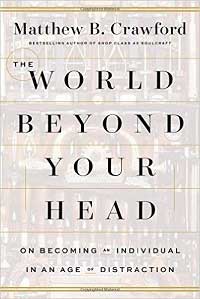
The World Beyond Your Head, quotations from Matthew B. Crawford

The World Beyond Your Head, quotations from Matthew B. Crawford

“In a culture saturated with technologies for appropriating our attention, our interior mental lives are laid bare as a resource to be harvested by others.”

“The advent of hyperpalatable mental stimuli… raises the question of whether the ascetic spirit required for education has a chance. The content of our education forms us, through the application of cultivated powers of concentration to studies that arenʼt immediately gratifying. We therefore had to wonder whether the diversity of human possibilities was being collapsed into a mental monoculture — one that can more easily be harvested by mechanized means.”

“…we need other people to achieve individuality. For others to play this role for me, they have to be available to me in an unmediated way, not via a representation that is tailored to my psychic comfort…”

“When [our shared spaces] are saturated with mass media, our attention is appropriated in such a way that the Public—an abstraction—comes to stand in for concrete others, and it becomes harder for us to show up for one another as individuals.”
— Matthew B. Crawford, The World Beyond Your Head: On Becoming an Individual in an Age of Distraction

In one of the most entertaining and illuminating chapters in the book, Crawford critically interprets the Disney Channelʼs popular childrenʼs program “Mickey Mouse Clubhouse.” In earlier iterations of the show, back in the middle decades of the 20th century, the show entertained kids with slapstick and acrobatics in which beloved Disney characters (Mickey Mouse, Goofy, Donald Duck) interacted (sometimes a little violently) with a recalcitrant physical world.

In our time the show has been radically re-imagined. Computer animation now places the characters in a virtual world in which any conceivable problem they confront is easily solved by a computer (the Handy Dandy machine) that is instantly summoned at any time and place. “Oh, Tootles!” Mickey and his friends exclaim, and up pops a screen, providing ready-made solutions perfectly tailored to any random obstacle or frustration that temporarily stands in the way of achieving their goal in a given episode.

In Crawfordʼs telling, this is our world — or at least the world our culture is scrambling to create. Itʼs one in which there will supposedly be “no conflict between self and world” and “no contingency that hasnʼt been anticipated by the Handy Dandy machine” in our home, in our workplace, in our car, in our pocket or purse.

Further Quotations from Crawford

“The satisfactions of manifesting oneself concretely in the world through manual competence have been known to make a man quiet and easy. They seem to relieve him of the felt need to offer chattering interpretations of himself to vindicate his worth. He can simply point: the building stands, the car now runs, the lights are on. Boasting is what a boy does, because he has no real effect in the world. But the tradesman must reckon with the infallible judgment of reality, where oneʼs failures or shortcomings cannot be interpreted away. His well-founded pride is far from the gratuitous “self-esteem” that educators would impart to students, as though by magic.”
— Matthew B. Crawford, Shop Class as Soulcraft: An Inquiry Into the Value of Work

“Weʼre not as free and independent as we thought. Street-level work that disrupts the infrastructure (the sewer system below or the electrical grid above) brings our shared dependence into view. People may inhabit very different worlds even in the same city, according to their wealth or poverty. Yet we all live in the same physical reality, ultimately, and owe a common debt to the world.”
— Matthew B. Crawford, Shop Class as Soulcraft: An Inquiry Into the Value of Work

“Once upon a time, our problem was guilt: the feeling that you have made a mistake, with reference to something forbidden. This was felt as a stain on oneʼs character. Ehrenberg suggests the dichotomy of the forbidden and the allowed has been replaced with an axis of the possible and the impossible. The question that hovers over your character is no longer that of how good you are, but of how capable you are, where capacity is measured in something like kilowatt hours—the raw capacity to make things happen. With this shift comes a new pathology. The affliction of guilt has given way to weariness—weariness with the vague and unending project of having to become oneʼs fullest self. We call this depression.”
— Matthew B. Crawford