
The Word “Objective” is Overused When It Comes to Morality (Christianity and “Absolute” Morality)

Objective Morality

The word “objective” is overused when it comes to morality. In fact, “objective morality” seems to be one of the last bastions left to modern day defenders of classical theism. In ages past they could rely on more than just arguments for “objective morality,” because they could point to the “objective fact” of the immobility of the earth whose foundations could not be moved except by Yahweh, or they could point to the “objective fact” that the earth lay at the center of the cosmos between the underworld and heaven above, or they could point to the “objective fact” that one lone species, Homo Sapiens, was not related to any other species but created directly out of the ground by the power of Yahweh — a species that was central to His whole scheme of creation, having Adam be His gardener, followed by expulsion from the garden, then later, salvation and recreation of the heavens and the earth.

But if humans are not the only large-brained mammalian social species, if they are related to species of upright hominids with larger brains than any living primates (now extinct), and if we do not live in the center of the cosmos, nor even on a particularly stable planet, then what about human morality as well? How “objective” can it be?

I think moralizing is an imperfect process, a relative one, but not “absolutely” relative. For instance, “up and down” are not to be confused as being exactly the same direction, and we can tell the difference between things that are “higher and lower” relative to one another. We know that 99.9% of people would agree that having their lives taken from them at some other personʼs whim is less acceptable than having their belongings taken from them at some other personʼs whim, and so on down the scale. Humans are also a species like other species that is filled with numerous desires and goals, not with just one main desire and goal. Thatʼs why itʼs difficult to define “the meaning of life” for everyone. Humans will risk their lives for “causes,” almost any cause will do, from religious ones to political ones or a bevy of non-religious ones, or they will risk their lives for whatever they are attached to, be it a person, a nation, some physical object(s), to various ideas. Also, the desires and goals of the individual are constantly being tried and weighed against those of family, friends, cities in which one lives, states in which one lives, the nation in which one lives, not to mention pacts between nations, and global issues concerning the environment and economics, and any of those spheres of activity and interaction can be in conflict with one another. So, morality is an imperfect process. (There are at least eight major theories of ethics in philosophy, not to mention the questions and “ethical dilemmas” that impinge upon the legitimacy of each theory. See for instance, Eight Theories of Ethics by Gorden Graham, and, 101 Ethical Dilemmas by Martin Cohen)

Sadly, due to spheres of sometimes conflicting interest, conflicting knowledge, miscommunication and stubbornness, human beings have suffered at each othersʼ hands for as long as human beings have had hands. Throughout history and in fields of human endeavor as diverse as religion, politics, science, art, and education, great minds have suffered at the hands of little minds; great hearts and souls have suffered at the hands of the heartless and the soulless; obstinate hearts, minds and souls have suffered at the hands of equally obstinate hearts, minds and souls. Those inflicting the suffering often thought they were right to do so. And those experiencing it took succor in believing that their faith, or ideas, or actions, were right.

But on the brighter side, the vast majority of humans would sooner receive a handshake or hug than a smack in the face, would sooner have more friends than deadly enemies, would sooner have health, peace and safety than live in a world of violence where their lives or belongings are taken from them at another personʼs whim.

Christianity & “Absolute Morality”

Christianity provides its own evidence that morality is an imperfect process, as one can see when you compare the fact that nowhere in the Bible is mass murder, slavery, polygamy, concubinage, universally condemned, but each is divinely instituted and/or acceptable based on the era and circumstances.

And concerning claims of the “objectivity” of Christian morality, one canʼt help but notice how presumptuous it is to laud such “objectivity” when there remain plenty of disagreements over what a list of such “objective moral laws” might be, aside from the obvious ones that even secularists assent to like laws against murder and theft as mentioned above. The OT books of law contain plenty of divinely inspired laws but nobody but the most hard-nosed Calvinist adores them, and even then they adore them from afar, knowing that theyʼd get arrested if they starting stoning homosexuals, witches, women-not-found-to-be-virgins on their wedding nights, and disobedient children in their mid-teens. As for the NT, Jesus also left a long list of commands to his followers in his sermons, including such things as “take no thought for the morrow, or what ye shall eat or drink” “sell all you have and give it to the poor, then you will have treasure in heaven,” “give to all who ask, asking nothing in return,” “love your enemies,” but again, those are adored from afar, not to be confused with a “morally objective” list of laws to be enforced by government. This leaves us with the two millennial-old panorama of Christians disagreeing over a panoply of laws, for instance, whether or not Christians should be more pro-war or more pro-peace; disagreeing on the slavery question (no where in the Bible is slavery ever declared to be a “sin,” but slaves are to be duly disciplined, as even Jesus taught in a parable); disagreeing on what legal actions ought to be taken in cases of witchcraft, blasphemy, heresy; disagreements on whether or not one should beat oneʼs child blue with a rod and not stop for their crying—as prescribed in the Psalms; disagreeing over whether public and private school teachers should be allowed to physically discipline children; what laws should be made concerning divorce, capital punishment, etc. Even the abortion issue and end-of-life questions provoke disagreements among Christians, theologians, biblical scholars.

Further Thoughts


Thereʼs a lot people gripe about concerning human decision-making and human history. The difference between my views and those of say, a devout Christian like Augustine is that I donʼt think weʼd all be angels if “Adam hadnʼt eaten a piece of forbidden fruit,” or that “original sin” is to blame. Rather, I view the matter biologically, psychologically, and sociologically. Humans are both a social and competitive species, and thereʼs also plain old ignorance and stupidity to blame, as well as inherent difficulties in acquiring knowledge and sharing it, difficulties in learning and communicating. And there are cultural differences that include religious differences. And thereʼs the way the mind makes grandiose assumptions and generalizations, and how we learn to fear and like different things, or fear and like the same things but to different degrees.

We learn to love different things too, different holy books, different literature, different songs, and even within the writings we love thereʼs parts we may love more than others do, and other parts we may dislike more than others do. But none of us can simply turn on love and hate at will, nor can we simply turn on “belief” or “faith” at will. Itʼs all part of a process, and not an easy one. “Instant conversion” stories are far rarer than the norm of lengthy enculturation. In fact “instant conversions” involve a feeling at first, but oneʼs education in whatever religion (or lack of religion) that one has “converted to” comes later.

Michael Shermer also makes some interesting points:

I wanna believe and you do too, in fact I think belief is the natural state of things, itʼs the default option, we just believe, we believe all sorts of things. Belief is natural, while disbelief, science, skepticism is not natural. Itʼs more difficult, itʼs uncomfortable to not believe things. We have a belief engine in our brains. We are pattern seeking primates who seek associations between things. So we connect the dots, thinking A is connected to B, and sometimes it really is connected to B. We find patterns we make connections, whether itʼs Pavlovʼs dog associating the sound of a bell with food and then salivating to the sound of a bell, or a rat pressing a lever expecting food to appear. In fact it was discovered that if you put a pigeon in a box where it has to press one or two keys for a reward in the hopper box, if you start to randomly assign rewards such that there is no pattern, the pigeon will imagine there must be one, such that whatever the pigeon was doing just before the reward appeared, the pigeon will repeat that particular pattern, sometimes it was even spinning around twice counter clockwise, once clockwise, and peck the key twice. And thatʼs called superstition. [Michael Shermer, The Pattern Behind Self Deception, a TED talk, 2010]

Franz de Waal, the primatologist who has studied bonobos for decades, and written some great books, including Peacemaking Among Primates, Our Inner Ape, and Primates and Philosophers: How Morality Evolved, has some fascinating things to say:

The possibility that empathy resides in parts of the brain so ancient that we share them with rats should give pause to anyone comparing politicians with those poor, underestimated creatures.

Iʼve argued that many of what philosophers call moral sentiments can be seen in other species. In chimpanzees and other animals, you see examples of sympathy, empathy, reciprocity, a willingness to follow social rules. Dogs are a good example of a species that have and obey social rules; thatʼs why we like them so much, even though theyʼre large carnivores.

To endow animals with human emotions has long been a scientific taboo. But if we do not, we risk missing something fundamental, about both animals and us.

Review of a Book About Why We Choose The Things We Do

LET there be no mistake: nothing that you remember, think or feel is as it seems. Your memories are mere figments of your imagination and your decisions are swayed by irrational biases. Your emotions reflect the feelings of those around you as much as your own circumstances. In What Makes Your Brain Happy, David DiSalvo takes us on a whistle-stop tour of our mindʼs delusions. No aspect of daily life is left untouched: whether he is exploring job interviews, first dates or the perils of eBay, DiSalvo will change the way you think about thinking. DiSalvoʼs talk in his title of “happy brains” has little to do with joy and well-being, though. Instead, it is shorthand for our grey matterʼs tendency to choose the path of least resistance. When explaining confirmation bias, for instance, DiSalvo cites brain scans showing that we treat conflicting information as if it is a physical threat. As a result, we choose the “happier” option of ignoring details that donʼt fit our views. DiSalvo admits in his introduction that the happy brain metaphor is “intentionally oversimplified”. Indeed, by the end of the book it has been stretched dangerously thin. In a chapter on imitation, for example, he tells us that “a happy brain is happy to copy”. But an “unhappy” brain is just as big a copycat – that is how our mirror neurons work, whatever our mood. If you can ignore these glitches, What Makes Your Brain Happy is an enjoyable manual to your psyche that may change your life. As DiSalvo says: “The brain is a superb miracle of errors, and no one, except the brainless, is exempt.”

On Morality

The vast majority of us heartily dislike having our lives or belongings taken from us at someone elseʼs whim. Such “dislikes” are so universal itʼs not difficult to imagine that how “laws” originated that incorporated such “dislikes.”

Furthermore… to quote De Waal, and also Mary Midgley:

Forgiveness is not, as some people seem to believe, a mysterious and sublime idea that we owe to a few millennia of Judeo-Christianity. It did not originate in the minds of people and cannot therefore be appropriated by an ideology or a religion. The fact that monkeys, apes, and humans all engage in reconciliation behavior (stretching out a hand, smiling, kissing, embracing, and so on) means that it is probably over thirty million years old, preceding the evolutionary divergence of these primates…Reconciliation behavior [is] a shared heritage of the primate order… When social animals are involved…antagonists do more than estimate their chances of winning before they engage in a fight; they also take into account how much they need their opponent. The contested resource often is simply not worth putting a valuable relationship at risk. And if aggression does occur, both parties may hurry to repair the damage. Victory is rarely absolute among interdependent competitors, whether animal or human. [Frans De Waal, Peacemaking Among Primates]

Darwin proposed that creatures like us who, by their nature, are riven by strong emotional conflicts, and who have also the intelligence to be aware of those conflicts, absolutely need to develop a morality because they need a priority system by which to resolve them. The need for morality is a corollary of conflicts plus intellect:

Man, from the activity of his mental faculties, cannot avoid reflection… Any animal whatever, endowed with well-marked social instincts, would inevitably acquire a moral sense or conscience as soon as its intellectual powers had become as well-developed, or anything like as well-developed as in man.(Charles Darwin, The Descent of Man)

That, Darwin said, is why we have within us the rudiments of such a priority system and why we have also an intense need to develop those rudiments. We try to shape our moralities in accordance with our deepest wishes so that we can in some degree harmonize our muddled and conflict-ridden emotional constitution, thus finding ourselves a way of life that suits it so far as is possible.

These systems are, therefore, something far deeper than mere social contracts made for convenience. They are not optional. They are a profound attempt—though of course usually an unsuccessful one—to shape our conflict-ridden life in a way that gives priority to the things that we care about most.

If this is right, then we are creatures whose evolved nature absolutely requires that we develop a morality. We need it in order to find our way in the world. The idea that we could live without any distinction between right and wrong is as strange as the idea that we—being creatures subject to gravitation—could live without any idea of up and down. That at least is Darwinʼs idea and it seems to me to be one that deserves attention. [Mary Midgley, “Wickedness: An Open Debate,” The Philosopherʼs Magazine, No. 14, Spring 2001]

On Evil & God

On the question of evil, Christian theology says that everything arose directly and solely from the omnipotent power, will, intelligence and compassion of “God,” who also remains “in” all things. So what room is there for “evil” to arise? None. There should not be any “evil” if thatʼs what you believe about “God.”

Does God have free will? How can He? By definition He knows everything and only makes the perfect decision, and has all power too, so He can make sure his decisions go where He knows they must go. So God has no free will. And for that matter, neither do we, based on the above definitions of “God.”

“Free will” is not an answer. A totally “free” will is no more beneficial when it comes to making wise decisions than spinning a wheel of fortune. What we need is not “free” will but “intelligence.” We need to make intelligent decisions, not “free” ones, and for intelligent decisions we need to continue to acquire knowledge. Rather than making “free will” decisions that are allegedly “disconnected” from this space-time cosmos, we need to be connected to the cosmos through all the knowledge we can acquire and all the foresight that knowledge can give us, so that we make intelligent decisions.

Lastly, if “free will” is so important will people have it in hell, and still be able to repent? Will people in heaven have “free will” and be able to sin and get damned later?

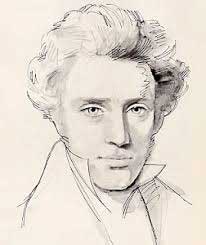
Søren Kierkegaard quotations

Søren Kierkegaard

“People demand freedom of speech as a compensation for the freedom of thought which they seldom use.”


“I begin with the principle that all men are bores. Surely no one will prove himself so great a bore as to contradict me in this.”


“Since my earliest childhood a barb of sorrow has lodged in my heart. As long as it stays I am ironic — if it is pulled out I shall die.”


“In addition to my other numerous acquaintances, I have one more intimate confidant. My depression is the most faithful mistress I have known — no wonder then that I return the love.”


“Above all do not forget your duty to love yourself.”


“The matter is quite simple. The bible is very easy to understand. But we Christians are a bunch of scheming swindlers. We pretend to be unable to understand it because we know very well that the minute we understand, we are obliged to act accordingly. Take any words in the New Testament and forget everything except pledging yourself to act accordingly. My God, you will say, if I do that my whole life will be ruined. How would I ever get on in the world? Herein lies the real place of Christian scholarship. Christian scholarship is the Church's prodigious invention to defend itself against the Bible, to ensure that we can continue to be good Christians without the Bible coming too close. Oh, priceless scholarship, what would we do without you? Dreadful it is to fall into the hands of the living God. Yes it is even dreadful to be alone with the New Testament.”


“The truth shall set ye free, but first it shall make ye miserable.”


“Far from idleness being the root of all evil, it is rather the only true good.”


“Life can only be understood backwards; but it must be lived forwards.”


“A strange thing happened to me in my dream. I was rapt into the Seventh Heaven. There sat all the gods assembled. As a special dispensation I was granted the favor to have one wish. ‘Do you wish for youth,’ said Mercury, ‘or for beauty, or power, or a long life; or do you wish for the most beautiful woman, or any other of the many fine things we have in our treasure trove? Choose, but only one thing!’ For a moment I was at a loss. Then I addressed the gods in this wise:

Most honorable contemporaries, I choose one thing — that I may always have the laughs on my side.

Not one god made answer, but all began to laugh. From this I concluded that my wish had been granted and thought that the gods knew how to express themselves with good taste: for it would surely have been inappropriate to answer gravely: your wish has been granted.”


“No, I won't leave the world—I'll enter a lunatic asylum and see if the profundity of insanity reveals to me the riddles of life. Idiot, why didn't I do that long ago, why has it taken me so long to understand what it means when the Indians honour the insane, step aside for them? Yes, a lunatic asylum—don't you think I may end up there?”


“I have just come from a party where I was the life and soul. Witticisms flows from my lips. Everyone laughed and admired me - but I left, yes, that dash should be as long as the radii of the earth's orbit ——— and I wanted to shoot myself.”—journal entry [cited by Alastair Hannay in Kierkegaard: a biography]


“How did I get into the world? Why was I not asked about it and why was I not informed of the rules and regulations but just thrust into the ranks as if I had been bought by a peddling shanghaier of human beings? How did I get involved in this big enterprise called actuality? Why should I be involved? Isn't it a matter of choice? And if I am compelled to be involved, where is the manager—I have something to say about this. Is there no manager? To whom shall I make my complaint?”


“My standpoint is armed neutrality.”


“To defend something is always to discredit it. Let a man have a warehouse full of gold, let him be willing to give away a ducat to every one of the poor - but let him also be stupid enough to begin this charitable undertaking of his with a defense in which he offers three good reasons in justification; and it will almost come to the point of people finding it doubtful whether indeed he is doing something good. But now for Christianity. Yes, the person who defends that has never believed in it.”—The Sickness Unto Death

C. S. Lewis said something similar:

“I envy you not having to think any more about Christian apologetics. My correspondents force the subject on me again and again. It is very wearing, and not v. good for one's own faith. A Christian doctrine never seems less real to me than when I have just (even if successfully) been defending it. It is particularly tormenting when those who were converted by my books begin to relapse and raise new difficulties.”—C. S. Lewis to Mary Van Deusen, June 18, 1956, The Collected Letters of C. S. Lewis, Volume III, p. 762.

Emil M. Cioran quotations (did he out-Nietzsche Nietzsche?)

Emil M. Cioran

Emil M. Cioran twists my gut with laughter. His own mother once said that if she'd known he would grow up to be so depressed sheʼd have aborted him. He suffered chronic insomnia and rode his bicycle relentlessly through the countryside at night to try and weary himself enough to sleep. He was born in Romania, in 1911, the son of a Greek Orthodox priest. As Hitler rose to power he became anti-communist, anti-Semitic, pro-fascist, and confident that Hitler and his ally, the Romanian fascist dictator, were in the right. Then in the mid-1930s in Romania, when he was still in his early 20s, his first book was published, On the Heights of Despair, followed by The Book of Delusions, and Tears and Saints. In the lattermost work He was looking for a reason to become a believer by exploring the lives of some minor saints but was disillusioned by their penchant for suffering. To share a line from that work, “Schopenhaurer maintains that, if we were to invite the dead back to life, they would refuse. I believe, on the contrary, that they would die a second time from too much joy.” Published in Bucharest in 1937, the book caused quite a stir due to its dark humor that many considered blasphemous. That same year he moved to Paris and wrote A Short History Of Decay, All Gall is Divided: Aphorisms, The Temptation To Exist, History and Utopia, The New Gods, The Trouble With Being Born, Drawn and Quartered, and, Anathemas and Admirations, in that order.

Cioran said his “rejection of God sprung from agonic frenzy.” He complained that he could not feel “at home in God,” that he was a perpetual “exile in Him.” No matter how hard Cioran strove to love and to believe Christianity, his fervor was always undermined by doubt and despair. “My doubts cannot take me further than the shadow of His heart.” Another time he wrote, “One does not need to be a Christian in order to fear the Last Judgment, or even to understand it. Christianity did nothing but exploit human anguish to make profits for an unscrupulous divinity whose best ally was dread… Christianity delights in the sight of bloodstains [or if one is Protestant, singing hymns about ‘the blood’], its martyrs have transformed the world into a bloodbath. In this religion of blazing twilights, evil defeats the sublime… The ultimate cruelty was that of Jesus: leaving an inheritance of bloodstains of the cross.” Jesus, “the bloodthirsty and cruel Christ,” [was] “lucky to have died young. Had he lived to be sixty, he would have given us his memoirs instead of the cross.”

Cioran disagreed with “those who try to eliminate the fear of death through artificial reasoning… because it is absolutely impossible to cancel an organic fear by way of abstract constructs.” (from Searching for Cioran)

His work has been compared to that of the most famous French stylists, and it began appearing in English translation in the 1990s. Late in life Cioran gave up writing, not wanting to “slander the universe” anymore, and died a few years later (in 1995) after an encounter with an over-excited dog. Still, his words continue to provoke and enlighten, though not everyone can take them in large doses. So here's a small dose:

It is difficult, it is impossible to believe that the Good Lord—‘Our Father’—had a hand in the scandal of creation. Everything suggests that He took no part in it, that it proceeds from a god without scruples, a feculent god. Goodness does not create, lacking imagination; it takes imagination to put together a world, however botched. At the very least, there must be a mixture of good and evil in order to produce an action or a work. Or a universe. Considering ours, it is altogether easier to trace matters back to a suspect god than to an honorable one. (The New Gods)

A human being possessed by a belief and not eager to pass it on to others is a phenomenon alien to the earth… Look around you: everywhere, specters preaching, each institution translates a mission; city halls have their absolute, even as the temples — officialdom, with its rules — a metaphysics designed for monkeys… Everyone trying to remedy everyoneʼs life: even beggars, even the incurable aspire to it: the sidewalks and hospitals of the world overflow with reformers. The longing to become a source of events affects each man like a mental disorder or a desired malediction. Society — an inferno of saviors! (from “Genealogy of Fanaticism” in A Short History of Decay)

The compulsion to preach is so rooted in us that it emerges from depths unknown to the instinct for self-preservation. Each of us awaits his moment in order to propose something — anything. he has a voice: that is enough.

From snobs to scavengers, all expend their criminal generosity, all hand out formulas for happiness, all try to give directions: life in common thereby becomes intolerable, and life with oneself still more so; if you fail to meddle in other people's business you are so uneasy about your own that you convert your “self” into a religion, or, apostle in reverse, you deny it altogether; we are victims of the universal game. (from “The Anti-Prophet” in A Short History of Decay)

Consider the polemics of each age: they seem neither motivated nor necessary. Yet they were the very life of that age. Calvinism, Quakerism, Port-Royal, The Encyclopedia, the Revolution, Positivism, etc… what a series of absurdities… which had to be, what a futile and yet fatal expense! From the ecumenical councils to the controversies of contemporary politics, orthodoxies and heresies have assailed the curiosity of mankind with their irresistible non-meaning. Under various disguises there will always be pro and con, whether apropos of Heaven or the Bordello. Thousands of men will suffer for subtleties relating to the Virgin and the Son; thousands of others will torment themselves for dogmas less gratuitous but quite as improbable. All truths constitute sects which end by enduring the destiny of a Port-Royal, by being persecuted and destroyed; then, their ruins, beloved now and embellished with the halo of the iniquity inflicted upon them, will be transformed into a pilgrimage-site.

It is no less unreasonable to grant more interest to the arguments around democracy and its forms than to those which took place, in the Middle Ages, around nominalism and realism: each period is intoxicated by an absolute, minor and tiresome, but in appearance unique; we cannot void being contemporaries of a faith, of a system, of an ideology, cannot avoid being, in short, of our time. (from “The Decor of Knowledge” in A Short History of Decay)

The great philosophical systems are actually no more than brilliant tautologies. What advantage is it to know that the nature of being consists in the “will to live,” in the “idea,” or in the whim of God or of Chemistry? A mere proliferation of words, subtle displacements of meanings. “What is” loathes the verbal embrace, and our inmost experience reveals us nothing beyond the privileged and inexpressible moment. (from “Farewell to Philosophy” in A Short History of Decay)

Ideologies were invented only to give a luster to the leftover barbarism which has survived down through the ages, to cover up the murderous tendencies common to all men. Today we hate and kill in the name of something; we no longer dare do so spontaneously; so that the very executioners must invoke motives, and, heroism being obsolete, the man who is tempted by it solves a problem more than he performs a sacrifice.

Abstraction has insinuated itself into life — and into death; the “complexes” seize great and small alike. From the Iliad to psychopathology — there you have all of human history. (from “Faces of Decadence” in A Short History of Decay)

One of the Ancients said the doctrine of Epicurus has the “sweetness of the sirens.” It would be a waste of effort to look for a modern system that would deserve such praise. (Drawn and Quartered)

“What is truth?” is a fundamental question. But what is it compared to “How to endure life?” And even this one pales beside the next: “How to endure oneself?” – That is the crucial question to which no one is in a position to give us an answer. (Drawn and Quartered)

He who hates himself is not humble.

I have decided not to oppose anyone ever again, since I have noticed that I always end by resembling my latest enemy.

Each opinion, each view is necessarily partial, truncated, inadequate. In philosophy and in anything, originality comes down to incomplete definitions.

I turned away from philosophy when it became impossible to discover in Kant any human weakness, any authentic accent of melancholy. (Book of Delusions)

Never judge a man without putting yourself in his place. This old proverb makes all judgment impossible, for we judge someone only because, in fact, we cannot put ourselves in his place.

Lao-tse, reduced to a few texts, is not more naive than we who have read everything. (Book of Delusions)

I know that my birth is fortuitous, a laughable accident, and yet, as soon as I forget myself, I behave as if it were a capital event, indispensable to the progress and equilibrium of the world.

Dialogue becomes pointless with someone who escapes the procession of the years. I ask those I love to be kind enough to grow old.

If death is as horrible as is claimed, how is it that after the passage of a certain period of time we consider happy any being, friend or enemy, who has ceased to live?

In order to conquer panic or some tenacious anxiety, there is nothing like imagining your own burial. An effective method, readily available to all. In order not to have to resort to it too often in the course of a day, best to experience its benefit straight off, when you get up. Or else use it only at exceptional moments, like Pope Innocent IX, who, having commissioned a painting in which he was shown on his deathbed, glanced at it each time he had to make some important decision. (The Trouble with Being Born)

The human adventure will certainly come to an end… we need only look at man in the face to detach ourselves from him… Thousands of years of sufferings, which would have softened the hearts of stones, merely petrified this steely mayfly, monstrous example of evanescence and hardening, driven by one insipid madness, a will to exist. (Book of Delusions)

Humanity will blush to beget when it sees things as they are… Mind… is only an excuse in the void, as life is only a prejudice.

It's not worth the bother of killing yourself, since you always kill yourself too late.

Logan Pearsall Smith quotations (related to thinking as a function of the natural world)

Logan Pearsall Smith

Self Analysis

Arenʼt they odd, the thoughts that float through oneʼs mind for no reason? But why not be frank? I suppose the best of us are shocked at times by the things we find ourselves thinking.

Microbes

But how is one to keep free from those mental microbes that worm-eat peopleʼs brains—those Theories and Diets and Enthusiasms and infectious Doctrines that we catch from what seem the most innocuous contacts? People go about laden with germs; they breath creeds and convictions on you as soon as they open their mouths. Books and newspapers are simply creeping with them—the monthly Reviews seem to have room for little else. Wherewithal then shall a young man cleanse his way; how shall he keep his mind immune to Theosophical speculations, and novel schemes of Salvation? Can he ever be sure that he wonʼt be suddenly struck down by the fever of Funeral or of Spelling Reform, or take to his bed with a new Sex Theory?

Edification

‘I must really improve my mind,’ I tell myself, and once more begin to patch and repair that crazy structure. So I toil and toil on at the vain task of edification, though the wind tears off the tiles, the floors give way, the ceilings fall, strange birds build untidy nests in the rafters, and owls hoot and laugh in the tumbling chimneys.


Logan Pearsall Smith

Smithʼs remarks on Edification remind me of this quotation from a young and up and coming philosopher:

I will begin with two ordinary cases of weakness of will. First, a case of akrasia (the state of acting against oneʼs better judgment) at bedtime. I am watching television and I realize that it is 2 a.m. I am tired, and I know that I really should go to bed. Tomorrow morning the Formal Epistemology Workshop begins, and I would like to attend as much of it as possible so I can learn something about formal epistemology. But the witty dialogue of the Buffy rerun and the winsome smile of the redheaded supporting actress have their grip, and even as I tell myself that I really should go to sleep, I stay where I am and keep watching television for another hour. (Neil Sinhababu, “The Humean Theory of Motivation Reformulated and Defended,” Philosophical Review 118.4 (2009), pp. 498-99)


All Trivia, click, here, itʼs online! Read Empty Shells, and Vertigo! Great stuff! Some of my other favs appear below.

The Goat

In the midst of my anecdote a sudden misgiving chilled me—had I told about this Goat before? And then as I talked there gaped upon me—abyss opening beneath abyss—a darker speculation: when goats are mentioned, do I automatically and always tell this story about the Goat at Portsmouth?

Desires

These exquisite and absurd fancies of mine—little curiosities, and greedinesses, and impulses to kiss and touch and snatch, and all the vanities and artless desires that nest and sing in my heart like birds in a bush—all these, we are now told, are an inheritance from our prehuman past, and were hatched long ago in very ancient swamps and forests. But what of that? I like to share in the dumb delights of birds and animals, to feel my life drawing its sap from roots deep in the soil of Nature. I am proud of those bright-eyed, furry, four-footed or scaly progenitors, and not at all ashamed of my cousins, the Apes and Peacocks and streaked Tigers.

Longevity

‘But when you are as old as I am!’ I said to the young lady.

‘But I donʼt know how old you are,’ the young lady answered almost archly. We were getting on quite nice.

‘Oh, Iʼm endlessly old; my memory goes back almost for ever. I come out of the Middle Ages. I am the primitive savage we are all descended from; I believe in Devil-worship and the power of the Stars; I dance under the new Moon, naked and tattooed and holy. I am a Cave-dweller, a contemporary of Mastodons and Mammoths; I am pleistocene and eolithic, and full of the lusts and terrors of the great pre-glacial forests. But thatʼs nothing; I am millions of years older; I am an arboreal Ape, and aged Baboon, with all its instincts; I am a pre-simian quadruped, I have great claws, eyes that see in the dark, and a long prehensile tail.’

‘Good gracious!’ said the terrified young lady. Then she turned away and talked in a hushed voice with her other neighbor.

Weltanschauung

When, now then then, on a calm night I look up at the Stars, I reflect on the wonders of Creation, the unimportance of this Plant, and the possible existence of other worlds like ours. Sometimes the self-poised and passionless shining of those serene orbs is what I think of; sometimes Kantʼs phrase comes into my mind about the majesty of the Starry Heavens and the Moral Law; or I remember Xenophanes gazing up at the broad firmament, and crying, ‘The All is One!’ and thus, in that sublime assertion, enunciating for the first time the great doctrine of the Unity of Being.

But these thoughts are not my thoughts; they eddy though my mind like scraps of old paper, or withered leaves in the wind. What I really feel is the survival of a much more primitive mood—a view of the world that dates from before the invention of language. It has never been put into literature; no poet has sung of it, no historian of human thought has so much as alluded to it; astronomers in their glazed observatories, with their eyes glued to the ends of telescopes, seem to have had no notion of it.

But sometimes, far off at night, I have heard a dog howling at the Moon.

Apotheosis

But oh, those heavenly moments when I feel this three-dimensional universe too narrow to contain my Attributes; when a sense of the divine Ipseity invades me; when I know that my voice is the voice of Truth, and my umbrella Godʼs umbrella!

Last Words

I got up with Stoic fortitude of mind in the cold this morning: but afterwards, in my hot bath, I joined the school of Epicurus. I was a Materialist at breakfast; after that an Idealist; and as I smoked my first cigarette I transcendentally turned the world to vapor. But when I began to read The Times I had no doubt of an externally existing world.

So all the morning and all the afternoon opinions kept flowing into and out of my mind; till by the time the enormous day was over, it had been filled by most of the widely-known Theories of Existence, and emptied of them.

This long speculation of life, this syllogizing that always goes on inside me, this running over and over of hypothesis and surmise and supposition—one day this infinite Argument will have ended, the debate will be for ever over, I shall have come to an indisputable conclusion, and my brain will be at rest.

Are You a “True Christian®”?

Southpark Religion

God made it so easy to find the “one true faith” that your parents can pick it out for you even before you are born, and, in most places on earth, they do. Itʼs even easier to find a “true” Christian as opposed to a false one, or a “true” Moslem as opposed to a false one: The “true” believer—the one who understands what their religion "really" teaches, or what their holy book “really” says—always happens to be the one addressing you.

— ETB

Iʼve never understood how God could expect His creatures to pick the one true religion by faith—it strikes me as a sloppy way to run a universe.
— Robert A. Heinlein (Jubal Harshaw in Stranger in a Strange Land)

One day a man was asked if there were any true atheists. Do you think, he replied, that there are any true Christians?

— Denis Diderot (1713-1784)

Live long enough and youʼll encounter a lot of folks who say you are not a “true” Christian. Iʼve found the “no-true-Christian-would-do-or-believe-XYZ” game one of the more popular among, well, Christians.

— Jonathan (at the yahoo group ExitFundyism)

Were the Protestant leaders, Martin Luther and John Calvin, “true Christians?” If so, then that proves a “true Christian” can believe that a society in which Christians rule also ought to implement Old Testament laws, because those were revealed by God to be of the greatest satisfaction to Himself and to society. Both Luther and Calvin defended such a view, namely that it was the duty of public rulers and public magistrates to persecute “heretics” as well as exile Jews (or worse if you read what Luther thought ought to be done to them), and execute witches.

— ETB

Christianity Runs the Gamut…

From silent Trappist monks and quiet Quakers — to hell raisers and serpent-handlers;

From those who believe nearly everyone (excepting themselves and their church) will be damned — to those who believe everyone may eventually be saved (“Universalist” Christians);

From those who argue that they are predestined to argue in favor of predestination — to those who argue for free will of their own free will;

From those who argue God is a “Trinity” — to “Unitarian” Christians (which include not only the “Arian” churches of early Christianity, but also modern day Unitarian-Universalist churches, Oneness Pentecostal churches, some modern day Messianic Jewish groups, some primitive Baptist groups, other Jesus-loving sects/cults, and, all of Judaism (which isnʼt “Christian,” but itʼs worth mentioning here that Godʼs chosen people in the earliest “Testament” where taught, “The Lord Your God is One God”);

From those who “hear the Lord” telling them to run for president, seek diamonds and gold (via liaisons with bloody African dictators), or sell “Lake of Galilee” beauty products (see Rev. Pat Robertson) — to those who have visions of Mary, the saints, or experience bleeding stigmata (Catholics);

From those who believe the communion bread and wine remain just that — to those who believe the bread and wine are miraculously transformed into “invisible” flesh and blood (and can vouch for it with miraculous tales of communion wafers turning into human flesh and wine curdling into blood cells during Mass);

From those who believed that priests who delivered communion should never have ever denied their faith in the past even under threat of persecution — to those who believed it did not matter whether or not priests forsook their faith when threatened with persecution (I am speaking of a major controversy in early Christianity between “Donatist” and “Catholic” Christians, both of whom presumed they were the true church on the basis of the division cited above, a division that was never healed, and which ceased only after the North African region where most Donatist churches were located was overrun first by Vandals then later by Muslims.);

From the many Christians that once taught (or teach today as Reconstructionist Christians do) that heretics and apostates ought to be executed — to Albigensian and Cathar Christians who outlawed violence and taught that the shedding of blood and the killing of any living thing, even the slaughtering of a chicken or ensnaring a squirrel, was a mortal sin (a belief they based on the spirituality and metaphors of Christʼs meekness and forgiveness in the Gospel of John). [See The YellowCross: The Story of the Last Catharsʼ Rebellion Against the Inquisition 1290-1329 by René Weis];

From Christians who believe in damning their enemies by calling down Godʼs wrath on them (as in certain imprecatory psalms) and who cite the verse, “an eye for an eye, a tooth for a tooth” — to Amish Christians (among others) who believe in helping the families of those who have offended them. (Case in point, in 2006 a man entered an Amish schoolhouse, gunned down several young female students then shot himself. The Amish later asked what they could do to help the family of the shooter. They planned a horse-and-buggy caravan to visit Charles Carl Robertsʼs family with offers of food and condolences.);

From Christians who view Eastern religious ideas and practices as “Satanic” — to Christian monks and priests who have gained insights into their own faith after dialoguing with Buddhist monks and Hindu priests;

From those who find demons or Satan at work in their fellow Christians and who stress the importance of “deliverance” services — to those who believe demons and Satan were defeated by Jesus when he was enthroned at Godʼs right hand(Preterist inerrantist Christians) and donʼt believe either demons or Satan have power over Christians today — to liberals who donʼt believe in a literal “Satan;”

From those who stress New Testament commands to not judge anyone outside (or inside) the church (depending on the passage of Scripture one reads), who also believe in the blessings of “peacemaking,” who “love enemies” and “control their tongues” that are the “rudders” of their souls, who also believe in following the command to act “meekly” and “humbly” even in the face of curses from others and certain death, and hence who have little difficulty getting along even with those whose beliefs differ radically from their own (1 Peter 2:21-23; 1 Cor. 4:5, 1 Cor. 5:12-13; 2 Cor. 10:1; Matthew 5:5-9, Matthew 5:44; Col. 3:8, Col. 3:17, Col. 4:5-6; James 4:11-12) — to those who believe itʼs best to ridicule and curse “enemies of God,” just as Jesus, Paul, and the prophets once did;

From those who cultivated the castrati (boys in Catholic choirs who underwent castration to retain their high voices) — to the development of Protestant hymns and Gospel quartets — to “Christian rap” and “Christian death metal;”

From those who reject any behavior that even mimics “what homosexuals do” (including a rejection of fellatio and cunnilingus between a husband and wife) — to Christians who accept committed, loving, homosexual relationships (including gay evangelical Church groups like the nationwide Metropolitan Baptist Church);

From Catholic nuns and Amish women who dress to cover their bodies — to Christian nudists (viz., there was a sect known as the “Adamites,” not to mention modern day Christians in Florida with their own nude Christian churches, campgrounds and even an amusement park), and letʼs not forget born-again strippers [click here for more info];

From those who believe that a husband and wife can have sex for pleasure — to those who believe that sex should be primarily for procreation — to those who believe celibacy is superior to marriage (i.e., Catholic priests, monks, nuns, and some Protestant groups like the Shakers who denied themselves sexual pleasure and only maintained their membership by adopting abandoned children until the last Shaker finally died out in the late 1900s) — all the way to those who cut off their genitals for the kingdom of God (the Skoptze, a Russian Christian sect) [click here for more info];

From those who believe sending out missionaries to persuade others to become Christians is essential — to the Anti-Mission Baptists who believe that sending out missionaries and trying to persuade others constitutes a lack of faith and the sin of pride, and that the founding of “extra-congregational missionary organizations” is not Biblical;

From those who believe that the King James Bible is the only inspired translation — to those who believe that no translation is totally inspired, only the original “autographs” were perfect — to those who believe that “perfection” only lay in the “spirit” that inspired the writing of the Bibleʼs books, not in the “letter” of the books themselves;

From those who believe Easter should be celebrated on one date (Roman Catholics) — to those who believe Easter should be celebrated on another date (Eastern Orthodox). And, from those who believe that the Holy Spirit proceeds from the Father and the Son (Roman Catholics) — to those who believe it proceeds from the Father alone (Eastern Orthodox view as taught by the early Church Fathers). Those disagreements, as well as others, sparked the greatest schism of church history (the Schism of 1054) when the uncompromising patriarch of Constantinople, Michael Cerularius, and the envoys of the uncompromising Pope Leo IX, excommunicated each other, thus dividing the Christians of the eastern and western Roman Empire;

From those who worship God on Sunday — to those who worship God on Saturday (Saturday being the Hebrew “sabbath” that God said to “keep holy” according to one of the Ten Commandments) — all the way to those who believe their daily walk with God and love of their fellow man is more important than church attendance;

From those who stress “Godʼs commands” — to those who stress “Godʼs love;”

From those who believe that you need only accept Jesus as your “personal savior” to be saved — to those who believe you must accept Jesus as both savior and “Lord” of your life in order to be saved. (Two major Evangelical Christian seminaries debated this question in the 1970s, and still disagree);

From those who teach that being “baptized with water as an adult believer” is an essential sign of salvation — to those who deny it is;

From those who believe that unbaptized infants who die go straight to hell — to those who deny the (once popular) church doctrine known as “infant damnation.”

From those who teach that “baptism in the Holy Spirit” along with “speaking in tongues” are important signs of salvation — to those who deny they are (some of whom see mental and Satanic delusions in modern day “Spirit baptism” and “tongue-speaking”);

From those who believe that avoiding alcohol, smoking, gambling, dancing, contemporary Christian music, movies, television, long hair (on men), etc., are all important signs of being saved — to those who believe you need only trust in Jesus as your personal savior to be saved;

From those who disagree whether the age of the cosmos should be measured in billions or only thousands of year — whether God pops new creatures into existence or subtly alters old ones — even some who disagree whether the earth goes round the sun or vice versa;

From pro-slavery Christians (there are some today who still remind us that the Bible never said slavery was a “sin”) — to anti-slavery Christians;

From Christians who defend the Biblical idea of having a king (and who oppose democracy as “the meanest and worst of all forms of government” to quote John Winthrop, first governor of the Massachusetts Bay Colony, with whom some Popes agreed, as well as some of todayʼs Protestant Reconstructionist Christians)—to Christians who oppose kingships and support democracies;

From “social Gospel” Christians — to “uncompromised Gospel” Christians;

From Christians who do not believe in sticking their noses in politics — to coup dʼetat Christians;

From “stop the bomb” Christians — to “drop the bomb” Christians;

From Christians who expect in a highly enthusiastic fashion that they could rocket through the air at any moment to be with their Lord — to those with other interpretations concerning such Bible passages.

All in all, Christianity gives Hinduism with its infinite variety of sects and practices a run for its money.

True Christian Quiz!

Determining whether or not you are a true Christian has never been more imperative than today! According to the World Christian Encyclopedia (Oxford University Press, 2001 edition), Christianity now has 150 major ecclesiastical traditions and 33,800 distinct denominations, dioceses, jurisdictions, missions, assemblies, and fellowships. So, the odds that the tradition or denomination you belong to is the “true one” do not look good! Never fear, this simple quiz can help determine whether you are a true Christian. All you need do is “Let your yea be yea, and your nay be nay.”

  1. Do you lead “a sober and upright existence?” (Titus 2:11-13) (Or do you lean a little to the left?)

  2. Are you afraid of being locked out of the heavenly wedding party for being a “foolish virgin?” (Did you ever get a foolish virgin in trouble?)

  3. When Jesus said, “Depart from me you accursed into the hellfire prepared for the devil and his angels,” do you think he was referring to telemarketers, or you?

  4. Do you fear that when Jesus returns he will “spew” you out of his mouth for being “lukewarm?” (Or do you have no fear Jesus will do that to you, since youʼve eaten Mexican your whole life?)

  5. Do you fear “the blood of other people” will be “on your hands” if you donʼt tell everyone about the Gospel? (Alternatively, do you remember to wash your hands every time you leave a Gospel tract in a rest room?)

  6. Are you ever tempted to “love the world?” (How about after swallowing a handful of Viagra?)

  7. Do you ever wonder why killing Godʼs son was not the greatest sin of all? Or wonder how we could be forgiven for that sin, except by killing another savior whose blood must be shed to “atone” for the sin of killing the first one? And so forth and so on…

End of Quiz

Scoring: If you laughed…even once…youʼre damned.

How Have Christians Proven That Their Teachings Are the True Ones?

By the same book they proved that nearly everybody is to be lost, and that all are to be saved; that slavery is a divine institution, and that all men should be free; that polygamy is right, and that no man should have more than one wife; that the powers that be are ordained of God, and that the people have a right to overturn and destroy the powers that be; that all the actions of men were predestined—preordained from eternity, and yet that man is free; that all the heathen will be lost; that all the heathen will be saved; that all men who live according to the light of nature will be damned for their pains; that you must be baptized by sprinkling; that you must be baptized by immersion; that there is no salvation without baptism; that baptism is useless; that you must believe in the Trinity; that it is sufficient to believe in God; that you must believe that a Hebrew peasant was God; that at the same time he was half man, that he was of the blood of David through his supposed father Joseph, who was not his father, and that it is not necessary to believe that Christ was God; that you must believe that the Holy Ghost proceeded; that it makes no difference whether you do or not; that you must keep the Sabbath holy; that Christ taught nothing of the kind; that Christ established a church; that he established no church; that the dead are to be raised; that there is to be no resurrection; that Christ is coming again; that he has made his last visit; that Christ went to hell and preached to the spirits in prison; that he did nothing of the kind; that all the Jews are going to perdition; that they are all going to heaven; that all the miracles described in the Bible were performed; that some of them were not, because they are foolish, childish and idiotic; that all the Bible is inspired; that some of the books are not inspired; that there is to be a general judgment, when the sheep and goats are to be divided; that there never will be any general judgment; that the sacramental bread and wine are changed into the flesh and blood of God and the Trinity; that they are not changed; that God has no flesh or blood; that there is a place called “purgatory;” that there is no such place; that unbaptized infants will be lost; that they will be saved; that we must believe the Apostlesʼ Creed; that the apostles made no creed; that the Holy Ghost was the father of Christ; that Joseph was his father; that the Holy Ghost had the form of a dove; that there is no Holy Ghost; that heretics should be killed; that you must not resist evil; that you should murder unbelievers; that you must love your enemies; that you should take no thought for the morrow, but should be diligent in business; that you should lend to all who ask, and that One who does not provide for his own household is worse than an infidel. [From his Complete Works, Volume 3, About The Bible]

An Exaggerated Command: An Exaggerated Command: “Give To Everyone Who Asks”

[Jesus commanded] Give to him that asketh thee, and from him that would borrow of thee turn not away.
- Matthew 5:42

Give to every man that asketh of thee; and of him that taketh away thy goods ask them not again… But love ye your enemies, and do good, and lend, hoping for nothing again; and your reward shall be great, and ye shall be the children of the Highest: for he is kind unto the unthankful and to the evil.
Luke 6:30,35

Next time an evangelical Christian targets you with their soul-seeking missiles, tell them to look up the above verses and read them aloud. After which, ask them for their Bible. If they do not give you their Bible then ask them to please turn to the end of the same sermon in which Jesus spoke the verses above, and read aloud what Jesus said at the very end of that sermon, emphasizing the word “doeth”:

Not every one that saith unto me, Lord, Lord, shall enter into the kingdom of heaven; but he that doeth the will of my Father…Many will say to me in that day, Lord, Lord, have we not prophesied in thy name? and in thy name have cast out devils? and in thy name done many wonderful works? And then will I profess unto them, I never knew you: depart from me, ye that work iniquity. Therefore whosoever heareth these sayings of mine, and doeth them, I will liken him unto a wise man… And every one that heareth these sayings of mine, and doeth them not, shall be likened unto a foolish man.
— Matthew 7:21-24,26

Remind your evangelical friend that if they do not “doeth” what Jesus commandeth them, they risk hearing Jesus say unto them, “Depart from me, ye that work iniquity!” Is that what they want to hear Jesus say to them? Or do they want to give you their Bible, since you asked them for it?

After they have handed it over, tell them, “Thank you,” and say that you donʼt want to keep their Bible forever, nor destroy it. You would just like them to read a few books about the Bible, books that take a more “inquisitive” approach to the Bible and Christianity, like the one on this list [click here]. And then you will return their Bible to them.

Speaking of “giving to all who ask,” hereʼs an idea for the IRS to try. They should print Mat. 5:42 and Luke 6:30 on all tax forms. Beneath the verses should be a little note from the IRS that says, “We ask all Bible believing Christians, especially wealthy televangelists and pastors of mega-churches, to not claim religious tax exemptions this year.”

In fact, I invite everyone to ask their “Bible believing Christian” friends for money every day and keep asking, especially any fat cat Christian ministers they might know. Call their TV stations and radio stations, stand up in their mega-churches, etc., and quote the above verses and ask them for money. There is no limit put on the above commands.

Additional definition of “True Christian” seen round the web

5 major variables on which the decisions of a conscious being are based; robot directed by rat brain cells; we are “strange loops”

Decisions of a conscious being

Decisions for a conscious being are based on a lot of variables, some random ones (circumstances of birth, language, culture, and questionable ideas one imbibes while young), but also include desires, wishes, goals, that arise naturally out of what we each find to be

  1. most interesting, intellectually stimulating and attractive in the special sense/feeling called “mental fulfillment” (“Oh wow, I never connected the dots THAT way before!” “Wow, did you hear how those chords go together!” “That makes sense!”)

  2. our most happy/sad, secure/insecure sensations/feelings, i.e., “emotional and physical fulfillment”

  3. what our hindsight and foresight reveals about practical results and how we might best achieve them, including whatever memories we have about the state of our lives over time, and what we learn about the state of other people's lives, the results of decisions others have made concerning their lives, and the results of larger historical decisions, which is all part of analyzing each trajectory of our lives loves and interests, and the lives loves and interests of others as they have moved from “here” to “there” over time — a knowledge of the history of our interactions, and what we've learned about the history of everyone else's interactions.

  4. repeating our own thoughts inside our heads, and repeating our own verbal and physical interactions with others plays a major role in reinforcing each of the previous 3 factors, making each desire, wish, goal more likely of being sought after again in future. Reinforcement and the subsequent development of “habits” play a powerful role in how our brains learn things even from birth when brain cells begin getting whittled down. To a neuron electrical stimulation is a “treat” as has been proven in laboratories. Unstimulated they die, stimulated they flourish. A recent experiment involved giving positive feedback to a couple hundred thousand rat neurons hooked to a machine that directed a small wheeled device. The device's direction and speed was determined by cultured rat brain cells, and according to one article they were given a positive jolt of electricity whenever they directed the device to avoid a barrier. Eventually the rat brain cells continued that behavior even after the positive electrical “treat” was no longer given them, simply by force of habit. According to another account the rat brain cells learned on their own to avoid hitting walls, there's several videos of such experiments on youtube:

    1. here

    2. here

    3. here

    So reinforcement over time forms habits that play a major role in how trajectories become increasingly more “set in mental stone.” Also, all of our decisions involve feedback loops of vast amounts of information, or as Hofstadter says, we are strange loops. That includes helping your mom, dreaming about leaving a good legacy, going to church, doing philosophy, etc.

  5. the fact we are primates and our likes/dislikes, and social behaviors, both empathetic and aggressive, reflect that.

The Secular Saints of Johns Hopkins… and a case of “faith in medicine” healing a paralyzed woman

John Hopkins Medical School

Johns Hopkins Hospital and University were the product of a great change in the direction of North American philanthropy. Throughout the nineteenth century, most giving by the wealthy had been religiously directed-to churches, seminaries, and other church-based charities. In 1867, however, the Baltimore merchant and financier Johns Hopkins-for reasons not totally known but certainly related to his being an adherent of the education-friendly Quaker sect-had drawn up a will bequeathing his then-vast fortune of $7 million (perhaps $300-$500 million in todayʼs purchasing power) to found a university and a hospital mandated to compare favorably with like institutions anywhere in the world. The Johns Hopkins institutions, created faithfully by trustees after the merchantʼs death in 1873, were secular and scientific and uncompromising in their commitment to excellence. They trained professors and scientists and doctors, not preachers.

In the late nineteenth century surgery began making spectacular progress under the double impact of the introduction of anesthesia and asepsis [keeping the surgical area and instruments relatively free of germs], that made it possible to surgeons to enter most cavities of the body and with the prospect of doing their patients more good than harm. From about the mid-1880s (appendectomies were first performed in 1886, and surgically sutured cures for hernias were first performed in 1887, saving numerous lives), surgery entered its first golden age. More than any other specialty, it became the driving force behind the transformation of hospitals from places for end-of-life care of the indigent into temples for the treatment of rich and poor alike.

Just take the case of a strangulated hernia before surgery could successfully treat it:

Natives in Central Africa suffer much oftener than Europeans from strangulated hernia, in which a portion of the intestines pokes out through the abdominal muscles and becomes blocked, so that it can no longer empty itself. It then becomes enormously inflated with gases which form, and this causes terrible pain. Then after several days of torture death takes place, unless the intestine can be got back through the rupture into the abdomen. Our ancestors were well acquainted with this terrible method of dying, but we no longer see it in Europe because every case is operated upon as soon as it is recognized…But in Africa this terrible death is quite common. There are few who have not as boys seen some man rolling in the sand of his hut and howling with agony until death came to release him. [Albert Schweitzer, On the Edge of the Primeval Forest (1961)]

Returning to the history of Johns Hopkins…When Harvey Cushing removed part of a diseased nerve from the thigh of a distinguished Johns Hopkins scientist, Simon Newcomb, the grateful patient hailed him as a miracle worker who had restored his ability to walk. “Prof. Newcomb believes himself to be entirely cured,” a newspaper reported, “and leaves his crutches at Johns Hopkins as a souvenir just as the poor cripples who are cured by miracles leave theirs at the shrine of St. ann de Beaupre.” When even scientists were said to leave their crutches at Johns Hopkins a new and powerful shrine was in the making.

Cushing also found a way to treat the extreme facial pain of trigeminal neuralgia, a condition that drove many of its victims to madness or suicide. In 1899 Cushing operated on a patient who complained that in the early stages of a spasm he could feel, “a devil twisting a red-hot corkscrew into the corner of the mouth,” and that was just the start of the suffering. Cushing completely eliminated the patientʼs pain by severing the connection between the brain and the trigeminal nerve, and he discovered a better place to sever the nerve on its way to the brain that cut the mortality rate of these operations from about 20% to near zero.

Harvey Cushing also became the first surgeon who could access the human brain at will and with the near certainty of doing more good than harm. He was able to relieve patients of torments that for many centuries had often been considered the product of demonic possession. In some cases he could literally make the lame walk and the blind see. The second patient on whom Cushing operated for trigeminal neuralgia told his surgeon that he felt “resurrected.” Cushing also began removing tumors from the brain that had caused pituitary disorders leading to severe distortions of growth, and became the worldʼs expert on the pituitary gland, previously a mysterious organ.

Meanwhile, Cushingʼs friend George Crile was making efforts to restore patients to life after their hearts had stopped beating, what he called “resurrecting” them. And the surgeons built on one anotherʼs advances.

As the gospel of the new scientific medicine spread, other philanthropists, such as the Baptist, John D. Rockefeller, began to give at least as much money to health causes as to religious ones.

Osler began to argue that medicine, a universal and borderless brotherhood, had done more than any other profession, including the church, to alleviate the ills of suffering humanity. Speaking in 1905 Osler said,

In little more than a century a united profession, working in many lands, has done more for the race than has ever before been accomplished by any other body of men. So great have been these gifts that we have almost lost our appreciation of them. Vaccination, sanitation, anaesthesia, antiseptic surgery, the new science of bacteriology, and the new art in therapeutics [one might add the discovery of necessary vitamins and minerals and treatments for their deficiences to the list] have effected a revolution in our civilisation.

At its best, Osler argued, medicine (or rather a faith in medicine) could even effect cures in the gray areas where mind and body interacted to create hysterical paralysis, neurasthenia, and like disorders. If patients had as much faith in their physicians as they did in their clergy, if they had faith in “Saint” Johns Hopkins Hospital, they would experience the same “cures” that “faith healers” offered. “I have had cases any one of which could have been worthy of a shrine or made the germ of a pilgrimage,” Osler wrote in his essay, “The Faith That Heals,” and went on to give an instance.

For more than ten years a girl lay paralysed in a New Jersey town. A devoted mother and loving sisters had worn out lives in her service. She had never been out of bed unless when lifted by one of her physicians…The new surrounding of a hospital, the positive assurance the she could get well with a few simple measures sufficed, and within a fortnight she walked round the hospital square. This is a type of modern miracle that makes one appreciate how readily well meaning people may be deceived as to the true nature of the cure effected at the shrine of a saint. Who could deny the miracle? And miracle it was, but not brought about by any supernatural means

Osler even suggested, “The less the clergy have to do with the bodily complaints of neurasthenic and hysterial persons the better for their peace of mind and for the reputation of the Cloth.”

Another example involved Oslerʼs ability to fascinate children:

[A child had severe whooping-cough and bronchitis, was unable to eat and unresponsive to parents and nurses. Recovery seemed unlikely. Osler walked in with his doctorʼs robes, and to the small child this man in the white robe fascinated him.] Osler sat down, peeled a peach, sugared it, and cut it in pieces. He then pressed it bit by bit with a fork into the entranced patient, telling him to eat it up, and that he would not be sick but would find it did him good as it was a most special fruit. The child ate. When leaving Osler patted the boyʼs father on the back and told him, “Iʼm sorry, Ernest, but I donʼt think I shall see the body again, thereʼs very little chance when theyʼre as bad as that.” Happily events turned out otherwise, and for the next forty days this constantly busy man [Osler] came to see the child, and for each of these forty days he put on his doctorʼs robes in the hall before going in to the sick room. After some two or three days, recovery began to be obvious and the small body always ate or drank and retained some nourishment which Osler gave him with his own hands. If the value of personal approach, the quick turning to effect of an accidental psychological advantage (in this case decor), the consideration and extra trouble required to meet the needs of an individual patient, were ever well illustrated, here it was in its finest flower. It would, I submit, be impossible to find a fairer example of healing as an art. [Patrick Mallan, “Billy O,” in Oxford Medicine, ed. Kenneth Dewhurst (London: Sandford, 1970, 94-99]

The great triumphs to come, in Oslerʼs view, would involve medicine actually being able to cure organic disorders, not just cut nerves to relieve excruciating pain, or remove tumors, or restart hearts (as mentioned earlier). Having witnessed the dawn of bacteriology, he could see, for example, that science would one day discover antibacterial agents that would cure tuberculosis or cholera or pneumonia.

In the 1890s experimental work in several centers discovered that patients suffering from cretinism and myxedema were suffering a thyroid deficiency, so they gave the patients thyroid extract, which came to be known as the first “miracle treatment” of an organic disorder. The unfortunate young victims of cretinism were formerly doomed to live in “hopeless imbecility” an “unspeakable affliction to their parents and to their relatives.” Before and after photos of the first patients “emphasized as words cannot the magical transformation which follows treatment.” Medical science was beginning to unravel the mysteries of the secretions of hormones from glands, raising the prospect of elevating organotherapy from quackery to serious therapy. Then Osler added, prophetically, “and as our knowledge of the pancreatic function and carbohydrate metabolism become more accurate we shall probably be able to place the treatment of diabetes on a sure foundation.”

In 1922 a substance was isolated from the pancreas that appeared to work in the treatment of diabetic animals, and it was administered to a diabetic human child with results that were immediate and spectacular-a “resurrection.”

SOURCE: The Making of Modern Medicine: Turning Points in the Treatment of Disease by Michael Bliss

Christians 0, Christians 0… From The Reformation To Today

Anabaptists

The burning of Anabaptist Christians, the 16th Century

It is startling how much the first half of the 16th century calls to mind the 20th and 21st centuries. Islamic jihad threatens the West, even laying siege to great cities like Vienna (in 1529). Central Europe—the Holy Roman Empire—is divided into warring and bloodthirsty factions. There is widespread racial and religious distrust, often leading to military action and ruthless ethnic cleansing (the expulsion of the Moors from Spain, the forced conversion of its Jews, the burning of heretics). Arrogant civic leaders behave like swaggering bravos wholly convinced that God is on their side, or even in their pocket. New communications technology—the printing press—speeds the dissemination of information and subversive ideas. Visionaries like Savanorola and John Calvin call for a total recasting of society, a return to fundamentalist principles and a rejection of the modern worldʼs gross secularism. Other dogmatists, fanatics and martyrs arise, reinforcing the eraʼs disorientation, pervasive uneasiness and latent hysteria. Inevitably, extremism results in heavy-handed government regulation and a call for order from the lofty ecclesiastical powers that be. More and more people choose to die for principles and beliefs that strike an outsider as utterly trivial, if not insane. It is widely believed that the world is coming to an end.

— From a review of Diarmaid MacCullochʼs The Reformation: A History that appeared in The Washington Postʼs Book World (See also MacCullochʼs more recent work, Christianity: The First Three Thousand Years)


There was a time [during the Reformation] when religion played an all-powerful role in European politics with Protestants and Catholics organizing themselves into political factions and squandering the wealth of Europe on sectarian wars. English liberalism emerged in direct reaction to the religious fanaticism of the English Civil War. Contrary to those who at the time believed that religion was a necessary and permanent feature of the political landscape, liberalism vanquished religion in Europe. After a centuries-long confrontation with liberalism, religion was taught to be tolerant.

In the sixteenth century, it would have seemed strange to most Europeans not to use political power to enforce belief in their particular sectarian faith. Today, the idea that the practice of religion other than oneʼs own should injure oneʼs own faith seems bizarre, even to the most pious churchmen. Religion has been relegated to the sphere of private life—exiled, it would seem, more or less permanently from European political life except on certain narrow issues like abortion.

Religion per se did not create free societies; Christianity in a certain sense had to abolish itself through a secularization of its goals before liberalism could emerge.

Political liberalism in England ended the religious wars between Protestant and Catholic that had nearly destroyed that country during the seventeenth century: with its advent, religion was defanged by being made tolerant.

— Francis Fukuyama, The End of History and the Last Man


The Thirty Yearsʼ War: The Worst Thus Far in European History?

By the division of Christianity at the Reformation, religious authority itself became the cause of conflict. The Protestant states thereafter rejected the right of the Universal Church to judge their actions, while the Catholic states took that rejection as grounds to make war against them in clear conscience. The outcome was the Thirty Yearsʼ War, the worst thus far in European history, which may have killed a third of the German-speaking peoples and left Central Europe devastated for much of the seventeenth century.

— John Keegan, War and Our World (the Reith Lectures, 1998, broadcast on the BBC, recorded at the Royal Institution, the Royal Military Academy Sandhurst, Kingʼs College, London)


The last great spasm of the Reformation was its worst. The Thirty Yearsʼ War, from 1618 to 1648, killed millions in Central Europe and left Germany a wasteland of misery. It began because Catholic Habsburg rulers of the Holy Roman Empire tried to suppress growing Calvinism in regions already smoldering with Catholic-Lutheran tensions. Evangelical princes formed a defensive alliance, the Protestant Union. The other side formed the Catholic League. They faced each other like ticking bombs—which finally exploded over a trifle: Protestant nobles entered the imperial palace in Prague and threw two Catholic ministers out a window onto a dung heap, touching off war.

Catholic armies quickly slaughtered the Protestant forces. The conflict might have ended then, but Catholic Emperor Ferdinant II decided to eradicate Protestantism entirely. The faith was outlawed and cruel persecution was inflicted.

Protestants appealed for foreign help, and Protestant King Christian IV of Denmark, sent an army to their rescue. Lutheran and Calvinist German princes joined him. Once again the Protestants were defeated, once again Ferdinand resumed religious oppression, and once again the victims sought outside aid.

Next, Protestant King Gustav Adolph of Sweden marched into Germany to rescue his fellow believers. His soldiers sang Martin Lutherʼs hymn “Ein Feste Burg” in battle. Terrible slaughter occurred. A Catholic army captured Magdeburg and massacred its Protestant residents. King Gustav was killed, and his troops weaked vengeance on Catholic peasants.

Eventually the war turned more political than religious. Catholic France entered on the side of the Protestants, in an attempt to cripples the rival Habsburgs. The killing dragged on decade after decade until both sides were too exhausted to continue.

The Thirty Yearsʼ War was a human catastrophe. It settled nothing, and it killed uncountable multitudes. One estimate says Germanyʼs population dropped from 18 million to 4 million. Hunger and deprivation followed. Too few people remained to plant fields, rebuild cities, or conduct education or commerce. This disaster helped break the historic entwinement of Christianity and politics. The concluding Peace of Westphalia prescribed an end to the popeʼs control over civil governments.

— James A. Haught, Holy Horrors: An Illustrated History of Religious Murder and Madness (Buffalo, N.Y.: Prometheus Books, 1990)


The terrible Thirty Yearsʼ War had evolved out of religious as well as political differences. It ended in 1648 with the Peace of Westphalia. The provisions of the Treaty having an effect upon the idea of tolerance were few. In the first place, all stipulations regarding tolerance that the Peace produced pertained only to the Christian denominations; these were the religious parties that were granted equality in the eyes of the law. Only the Reformed (Zwinglians and Calvinists), the Catholics, and those who associated themselves with the Augsburg Confession (the Lutherans) were to enjoy equality and religious liberty according to the provisions of the Peace. As for all other faiths, Article VII, 2, expressly declared, “Besides the above-mentioned religions no other ones may be introduced into or tolerated within the Holy Roman Empire.” It was on this account that Pope Innocent X, in the Bull Zelo domus dei of Nov. 20, 1648, protested that dissidents were being allowed to express their heresies freely… The idea that religious liberty is an inalienable right of man, first officially pronounced by a state in North America, was doubtless an effect of the Enlightenment. It influenced the French Nation Assemblyʼs famous Declaration on Human Rights of Aug. 26, 1789. The Assembly also demanded freedom of religion and worship as human rights.”

— Gustav Mensching [one of Europeʼs most respected comparative religionists], Tolerance and Truth in Religion, trans., Hans-J. Klimkeit (Alabama: The University of Alabama Press, 1971), p.98, 99.


Herbert Langer in The Thirty Yearsʼ War, says that more than one quarter of Europeʼs population died as a result of those thirty years of slaughter, famine and disease. Ironically, the majority of Europeans who killed each other shared such orthodox Christian beliefs as Jesusʼs deity, the Trinity, and even “creationism.” So you cannot blame the horrific spectacle of the Thirty Yearsʼ War on modern day scapegoats like atheism, humanism or the theory of evolution. Such a war demonstrates that getting nations to agree on major articles of faith does not ensure peace, far from it. Some of the most intense rivalries exist between groups whose beliefs broadly resemble one another but differ in subtle respects.

— E.T.B.


The Anabaptists

Although Catholic and Protestants were mortal enemies during most of the Reformation, they united to kill certain Christians [named derogatorily, “Anabaptists”] for the crime of double baptism. “A larger proportion of Anabaptists were martyred for their faith than any other Christian group in history—including even the early Christians on whom they modeled themselves,” British scholar Bamber Gascoigne wrote. [p.109]

— James A. Haught, Holy Horrors: An Illustrated History of Religious Murder and Madness (Buffalo, N.Y.: Prometheus Books, 1990)


It is a fact recognized by many recent historians that the persecution of the Anabaptists surpassed in severity the persecution of the early Christians by pagan Rome. Persecution began in [Protestant] Zurich soon after the [Anabaptist] Brethren had organized a congregation. Imprisonment of varying severity, sometimes in dark dungeons, was followed by executions. Felix Manz was the first martyr to die in Zurich, but at least two Brethren had been martyred earlier in other cantons of Switzerland by Roman Catholic governments. Within a short period the leaders of the Brethren lost their lives in the persecution…

Anabaptism was made a capital crime. Prices were set on the heads of Anabaptists. To give them food and shelter was a made a crime. In Roman Catholic states even those who recanted were often executed. Generally, however, those who abjured their faith were pardoned except in Bavaria and, for a time, in Austria and also in the Netherlands. The duke of Bavaria, in 1527, gave orders that the imprisoned Anabaptists should be burned at the stake, unless they recanted, in which case they should be beheaded. King Ferdinand I of Austria issued a number of severe decrees against them, the first general mandate being dated August 28, 1527. In Catholic countries the Anabaptists, as a rule, were executed by burning at the stake, in Lutheran and Zwinglian states generally by beheading or drowning. [p.299-302]

Persecution, a chapter in Mennonites in Europe (Rod & Staff Publishers)


During the Reformation, Protestants rejected early cures for malaria and syphilis because Catholics were the first to come up with them.

From a review (of Diarmaid McCullochʼs The Reformation: A History) that appeared in The Washington Postʼs Book World


In 1844 in Philadelphia, the “city of brotherly love,” Protestants besieged Catholic neighborhoods with cannon fire and pistols, and also set houses aflame, because the Catholics had protested the use of the Protestantʼs King James Bible in public schools. Martial law was declared, and it took two thousand federal troops to quell the rioting; eighteen people were killed and scores more were injured.

— Michael Feldberg, The Philadelphia Riots of 1844: A Study of Ethnic Conflicts


Neighbors say the trouble began eight years ago when a second storefront church opened next door to an existing one in Brooklyn. From that time on there were accusations of slashed tires, hung-up phone calls, and parking in each otherʼs driveways. The differences were resolved, however, when the pastor of the Prince of Peace Disciples and his three sons confronted members of the Church of the Lord Jesus Christ and accused them of firing gunshots at their building. The pastorʼs sons then took out their guns and fired away, killing one of the parishioners and wounding the other two.

A holy war was set off in Brazil when a Pentecostal pastor, opposed to the “image-worship” of the nations 110,000 Catholics, displayed a statue of a black version of the Virgin Mary called Our Lady of Aparecida, and referred to it as “a horrible, disgraceful doll” while kicking and slapping it. Screaming, rock-throwing crowds surrounded the church of the Pentecostal pastor while thousands of Catholics protested by carrying images of the Virgin through the streets.

— J. D. Bell, “Nuts in the News,” The American Rationalist, May/June 1997


There has never been a kingdom given to so many civil wars as that of Christʼs.

— Charles de Montesquieu

Indians 0, Christians 1

Native American Indian Genocide

The film Unrepentant: Kevin Annett and Canadaʼs Genocide documents the “deliberate and systematic extermination” of non-Christian indigenous people within the Indian residential school system by the Catholic, United, Presbyterian and Anglican churches, in collusion with the federal government. First-hand testimonies from residential school survivors are interwoven with Annettʼs own story of how, as a United Church minister in Port Alberni, he was fired, publicly defrocked, and had his reputation maligned by church officials after he uncovered evidence of murder and other crimes committed by the church through its Indian boarding schools.

Around 1929, the churches were given legal guardianship of all the children who attended the schools, and Annett says this gave school staff free rein to perpetrate any atrocity upon their wards without having to answer to anyone.

The list of crimes is long, and includes beatings, electric shocks, forced sterilization, medical experimentation, starvation, rape as well as various other forms of sexual abuse, and murder.

As the residential school survivors in Unrepentant tell their stories, the pain evident on their stoic faces, an understanding of what went on in those institutions gradually emerges. Some spoke of young girls becoming pregnant as a result of rape, or nuns becoming pregnant after sexually abusing boys; some described being made to dig graves for the babies who would be killed after birth.

Rick Lavalee talked about hearing the agonized cries of his only brother as he was being tortured with a cattle prod. The boy died on the spot. Belvy Breber recounted how her brother was hanged in the gym of the Kuper Island school. She was told heʼd committed suicide, but she didnʼt believe it. While the boy was still hanging, the other kids were paraded through the gym as a warning that this could happen to them if they didnʼt behave.

Of the 100,000 who went through the schools, it is estimated that at least 50,000 were killed. Many of those who died were buried in unmarked graves on or around the school grounds; most of the bodies were never returned to the families.

Harriet Nahanee, who spent five years at the Alberni Residential School, said she remembered the RCMP arriving at her village in a gunboat to round up the children who were to be taken to the school. Children as young as three were often taken even though the schools werenʼt supposed to accept anyone under the age of seven. If the parents fought this abduction of their children, they were liable to be arrested under the provisions of the Indian Act, something Annett calls “a piece of race-based legislation” in that it almost completely took away the rights of the native peoples.

Germ warfare was also used. Narrator Lori OʼRorke said deliberately-spread smallpox epidemics in the 1700s and 1800s killed “untold millions” of the worldʼs indigenous people and wiped out many Canadian aboriginals even before the residential schools began operating. Annett says approximately 98 percent of native populations on the west coast were decimated by smallpox. Survivors in Unrepentant describe how, during a tuberculosis outbreak, they were made to play and sleep with infected children so that they too would become infected with the highly contagious disease.

While most of the schools had closed by 1984, the last federally run facility, the Gordon Residential School in Saskatchewan, closed in 1996. The legacy of Canadaʼs residential schools, says Annett, is evident in the high rates of suicide, substance abuse and poverty seen in aboriginal communities across the country.

Unrepentant: Kevin Annett and Canadaʼs Genocide is written by Kevin Annett and Louie Lawless, directed by Louie Lawless, and produced by Kevin Annett, Louie Lawless and Lori OʼRorke. For more information go to: hiddenfromhistory.org


They came with a Bible and their religion—stole our land, crushed our spirit, and now tell us we should be thankful to the “Lord” for being saved.

Chief Pontiac, American Indian Chieftain, died 1769

[See Missionary Conquest: The Gospel and Native American Cultural Genocide by George Tinker; A Violent Evangelism: The Political and Religious Conquest of the Americas by Luis N. Rivera; and, “Satanizing the American Indian,” New England Quarterly, Vol. 67, No. 4, Dec. 1994]


On average two thirds of the native population were killed by colonist-imported smallpox before violence began. This was a great sign of “the marvelous goodness and providence of God” to the Christians of course, e.g., the Governor of the Massachusetts Bay Colony wrote in 1634, as “for the natives, they are near all dead of the smallpox, so as the Lord hath cleared our title to what we possess.”

Although none of the settlers would have survived winter without native help, they soon set out to expel and exterminate the Indians. Warfare among (North American) Indians was rather harmless, in comparison to European standards, and was meant to avenge insults rather than conquer land. In the words of some of the Pilgrim fathers: “Their Wars are far less bloody,” so that there usually was “no great slaughter of either side.” Indeed, “They might fight seven years and not kill seven men.” What is more, the Indians usually spared women and children.

In the spring of 1612 some English colonists found life among the (generally friendly and generous) natives attractive enough to leave Jamestown—”being idle…did run away unto the Indians”—to live among them. “Governor Thomas Dale had them hunted down and executed: ‘Some he appointed to be hanged. Some burned. Some to be broken upon wheels, others to be staked and some shot to death.’” Such were the measures reserved for fellow Englishmen “who wished to act like Indians.” But “for the native people of Virginia” methods were different: “When an Indian was accused by an Englishman of stealing a cup and failing to return it, the English response was to attack the natives in force, burning the entire community” down.

On the territory that is now Massachusetts the founding fathers of the colonies were committing genocide in what has become known as the Peqout War. The killers were New England Puritan Christians, refugees from persecution in their own home country England. When however, a dead colonist was found, apparently killed by Narragansett Indians, the Puritan colonists wanted revenge. Despite the Indian chiefʼs pledge they attacked. Somehow they seem to have lost the idea of what they were after, because when they were greeted by Pequot Indians (long-time foes of the Narragansetts) the troops nevertheless made war on the Pequots and burned their villages. The puritan commander-in-charge, John Mason, wrote after one massacre: “And indeed such a dreadful Terror did the Almighty let fall upon their Spirits, that they would fly from us and run into the very Flames, where many of them perished…God was above them, who laughed his Enemies and the Enemies of his People to Scorn, making them as a fiery Oven…Thus did the Lord judge among the Heathen, filling the Place with dead Bodies.” So “the Lord was pleased to smite our Enemies in the hinder Parts, and to give us their land for an inheritance.” Because of his readersʼ assumed knowledge of Deuteronomy, there was no need for Mason to quote the words that immediately follow: “Thou shalt save alive nothing that breatheth. But thou shalt utterly destroy them…” (Deut. 20) Masonʼs comrade Underhill recalled how “great and doleful was the bloody sight to the view of the young soldiers” yet reassured his readers that “sometimes the Scripture declares women and children must perish with their parents.” Other Indians were killed in successful plots of poisoning. The colonists even had dogs especially trained to kill Indians and to devour children from their mothers breasts, in the colonistsʼ own words: “blood Hounds to draw after them, and Mastiffs to seize them.” In this way they continued until the extermination of the Pequots was near. The surviving handful of Indians “were parceled out to live in servitude. John Endicott and his pastor wrote to the governor asking for ‘a share’ of the captives, specifically ‘a young woman or girl and a boy if you think good.’”

Other tribes were to follow the same path. Comment the Christian exterminators: “Godʼs Will, which will at last give us cause to say: How Great is His Goodness! and How Great is his Beauty!” “Thus doth the Lord Jesus make them to bow before him, and to lick the Dust!” Moreover, “Peace treaties were signed with every intention to violate them: when the Indians ‘grow secure upon (sic) the treaty’, advised the Council of State in Virginia, ‘we shall have the better Advantage both to surprise them, & cut down their Corn.’”

In 1624 sixty heavily armed Englishmen cut down 800 defenseless Indian men, women and children. In a single massacre in “King Philipʼs War” of 1675 and 1676 some “600 Indians were destroyed. A delighted Cotton Mather, revered pastor of the Second Church in Boston, later referred to the slaughter as a ‘barbecue.’”

To summarize: Before the arrival of the English, the western Abenaki people in New Hampshire and Vermont had numbered 12,000. Less than half a century later about 250 remained alive—a destruction rate of 98%. The Pocumtuck people had numbered more than 18,000, fifty years later they were down to 920—95% destroyed. The Quiripi-Unquachog people had numbered about 30,000, fifty years later they were down to 1500—95% destroyed. The Massachusetts people had numbered at least 44,000, fifty years later barely 6000 were alive—81% destroyed. These are only a few examples of the multitude of tribes living before Christian colonists set their foot on the New World. All this was before the smallpox epidemics of 1677 and 1678 had occurred. And the carnage was not over then. All of the above lay only at the beginning of European colonization before the frontier age actually had begun. A total perhaps exceeding 150 million Indians (of both Americas) were destroyed from 1500 to 1900, on average two thirds by smallpox and other epidemics, that leaves some 50 million killed directly by violence, bad treatment and slavery.

Reverend Solomon Stoddard, one of New Englandʼs most esteemed religious leaders, in “1703 formally proposed to the Massachusetts Governor that the colonists be given the financial wherewithal to purchase and train large packs of dogs ‘to hunt Indians as they do bears.’”

Massacre of Sand Creek, Colorado 1864: Colonel John Chivington, a former Methodist minister and still elder in the church (“I long to be wading in gore”) had a Cheyenne village of about 600, mostly women and children, gunned down despite the chiefsʼ waving with a white flag: 400-500 killed. From an eye-witness account: “There were some thirty or forty squaws collected in a hole for protection; they sent out a little girl about six years old with a white flag on a stick; she had not proceeded but a few steps when she was shot and killed. All the squaws in that hole were afterwards killed.”

In the 1860s in Hawaii “the Reverend Rufus Anderson surveyed the carnage that by then had reduced those islandsʼ native population by 90 percent or more, and he declined to see it as tragedy; the expected total die-off of the Hawaiian population was only natural, this missionary said, somewhat equivalent to ‘the amputation of diseased members of the body,’”

Kelsos, Victims of the Christian Faith

Much of the information for the above was derived from D. Stannard, American Holocaust, Oxford University Press 1992